

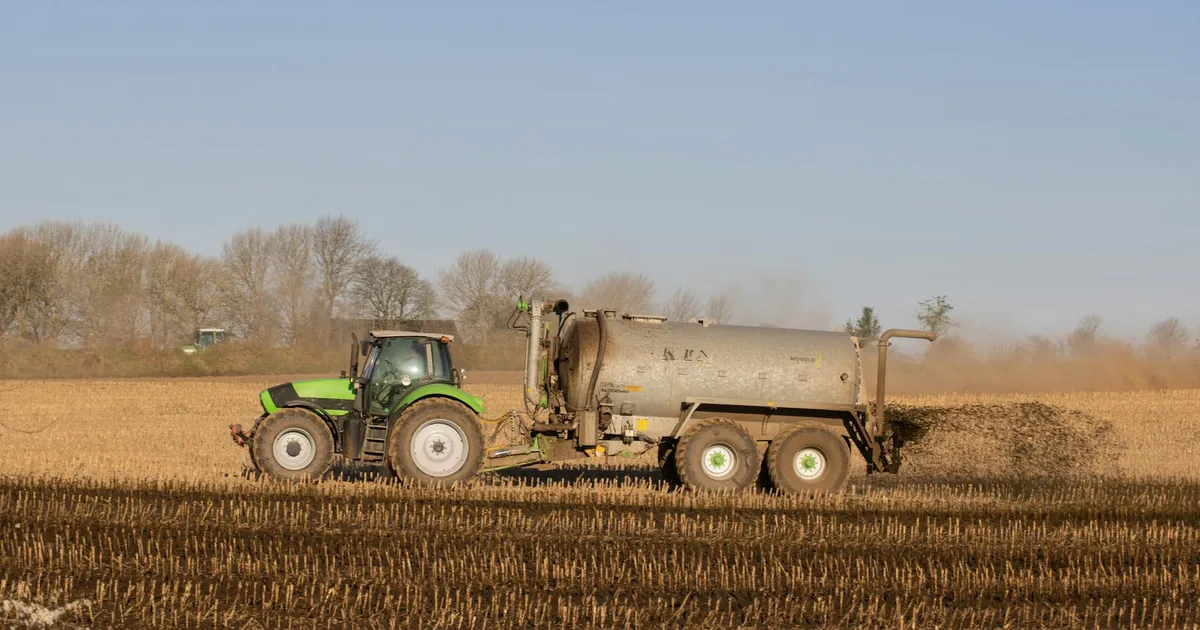
Autumn is covered, spring is not
Ravensdown COO Mike Whitty told RNZ in early March that the country has enough fertiliser in stock or on the water to cover all autumn needs. That sounds reassuring until you read the qualifier he attached: “it won’t be an issue until later in the year but that’s only if the conflict continues.”
The conflict is continuing. The Strait of Hormuz remains blockaded following US-Israeli strikes on Iran in late February. China has simultaneously restricted exports of nitrogen-potassium blends and certain phosphate varieties, removing between half and three-quarters of its total fertiliser export volume from the market. Five salespeople at a Shanghai fertiliser conference said they did not expect the bans lifted before August.
New Zealand’s two dominant supply sources are both offline at the same time. That is not a price problem. It is a structural availability problem.
The numbers that should worry every farmer
MFAT’s March 2026 analysis documents the exposure clearly. Fertilisers represent 22% of New Zealand’s total imports from the Middle East, valued at $236 million in 2025. Saudi Arabia alone supplies over 21.7% of the country’s global fertiliser imports. BERL’s analysis shows New Zealand imported 290,010 tonnes of urea from Saudi Arabia in 2024. China supplied roughly one-third of all fertiliser imports last year.
Add those together and more than half the country’s fertiliser supply chain runs through two chokepoints that are now simultaneously compromised.
The price response has been savage. Urea moved from the mid-USD 440s in late February to USD 585 per tonne by March 10, a 30% increase in under two weeks. Egypt’s granular urea benchmark jumped to $700 per tonne from $400-490 pre-war levels. At the New Orleans import hub, urea surged 32% in a single week.
You cannot skip nitrogen
Ninety One’s Dawl Heyl put the problem simply: “You can skip a season of potash, you can skip a season of phosphates, but you can’t skip a season of nitrogen.” Rabobank senior analyst Vítor Caçula Pistóia explained the stakes: “If fertilisers disappeared, we wouldn’t be able to produce as much food as we need.”
Modern agriculture depends on the Haber-Bosch process, which transforms natural gas into ammonia and ammonia into urea. The Persian Gulf built vast capacity because it sits on some of the cheapest gas in the world. Even modest reductions in nitrogen application produce disproportionately large declines in yield.
New Zealand does have one domestic urea plant at Kāpuni, producing around 260,000 tonnes annually. But it runs entirely on natural gas, which means the Hormuz blockade drives up its cost base too. The country has no domestic phosphate rock, no potash, and since Marsden Point closed, no domestic sulphur. The Fertiliser Association told the Productivity Commission exactly this in April 2023, calling New Zealand “uniquely vulnerable” to supply disruption. That warning produced no visible policy response.
The double squeeze on margins
Farmers are being hit from both directions. Diesel costs are rising because of the same Hormuz disruption that is pushing up fertiliser prices. RNZ’s analysis frames it as a simultaneous compression of input costs that leaves nowhere to hide.
BMI senior commodities analyst Matthew Biggin described the China dynamic as predictable: “China restricts supplies rather than coming to the rescue during global tightness.” The market assumed Beijing would fill the gap left by the Hormuz blockade. Instead, China prioritised its own food security and insulated its domestic market from price shocks.
Ravensdown’s Whitty identified Malaysia, Brunei, Indonesia and some African countries as alternative sources. But those are smaller markets that will face competing demand from every country simultaneously locked out of Middle Eastern and Chinese supply. The idea that New Zealand, population five million, will outbid larger economies for limited alternative supply is optimistic at best.
Hope is not a supply chain strategy
The government’s posture mirrors its approach to fuel after Marsden Point closed. Rely on existing inventory, hold roughly seven weeks of supply, and hope the disruption is short. There is no public indication of strategic stockpiling, no supply diversification programme, no contingency plan for a disruption extending into spring when the next major application window opens.
Treasury has modelled a scenario where inflation hits 3.2% by June. Fresh produce price transmission takes as little as two months. For a country whose export earnings depend heavily on pastoral and horticultural production, reduced fertiliser application rates translate directly into lower yields, weaker export volumes, and a wider current account deficit.
The Fertiliser Association warned three years ago that this would happen. It has now happened. The question is whether a government that offshored its fuel refining capacity and maintains seven weeks of fuel reserves will treat fertiliser security any differently, or whether the pattern holds and the next crisis finds the same cupboard bare.
Sources
- Hormuz blockade sparks fertiliser crisis for farmers (B2B News) (2026-03)
- War-driven fertiliser shortage risks higher fresh food prices for shoppers (NZ Herald) (2026-03)
- China restricts fertiliser exports, further crimping war-tightened supply (RNZ) (2026-03)
- Enough fertiliser to cover autumn, Ravensdown says (RNZ) (2026-03)
- Trade and economic implications of the Iran conflict (MFAT) (2026-03)
- A strait in crisis reveals our agricultural vulnerabilities (BERL) (2026-03)
- Improving Economic Resilience – Submission from Fertiliser Association of New Zealand (Treasury/Productivity Commission) (2023-04)
- How the Iran war could create a fertiliser shock (The Conversation) (2026-03)
- The Invisible Fertilizer Crisis (Market Minute) (2026-03-17)
- Distant conflict, local crisis: Is this oil shock the wake-up call NZ needed? (RNZ) (2026-03)