

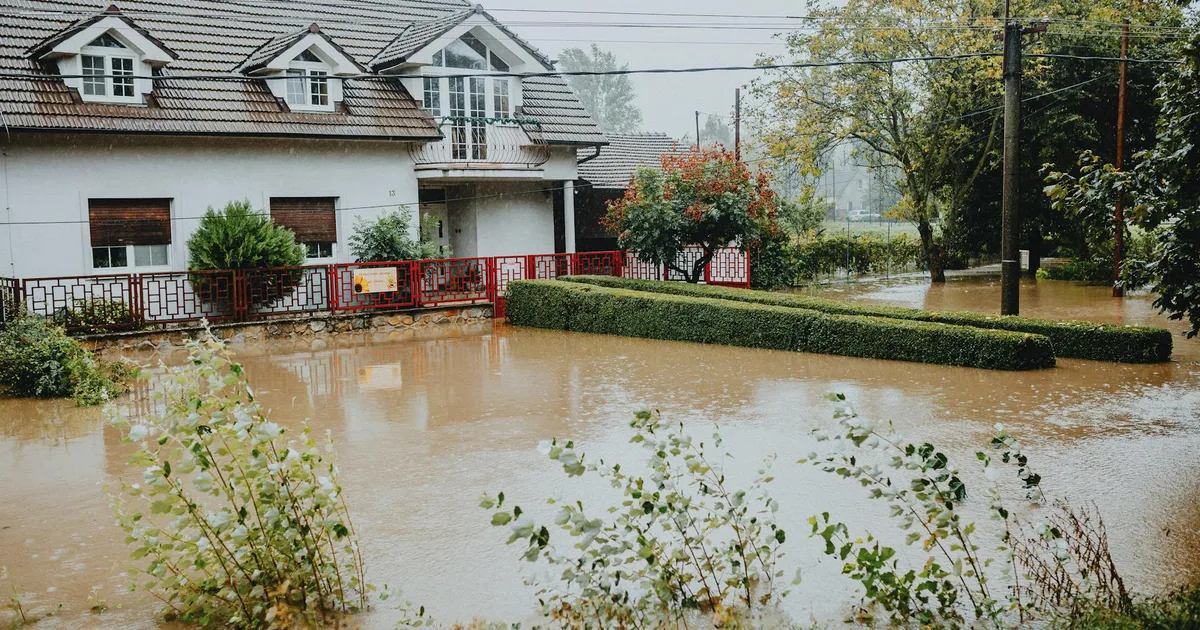
The price of waiting is already on your premium notice
The Insurance Council of New Zealand is not making a speculative argument about future risk. It is describing a cost transfer that is already underway. Dwelling insurance prices have increased 98% since 2015, more than triple the 30% rise in general CPI over the same period. Annual dwelling insurance inflation hit 25% in 2024 following the North Island weather events, and the trajectory is steepening, not flattening.
ICNZ chief executive Kris Faafoi has put the exposure in plain terms: around 750,000 people and over 460,000 buildings are vulnerable to flooding. What those people need, he says, is “clear policy, clear investment intentions, clear communication and a clear plan.” What they have is a framework and a deferral.
Two deliberate deferrals, one compounding bill
The government has made two explicit decisions to push costs into the future. First, the Natural Hazards Commission levy increase has been delayed to at least mid-2027. Treasury consulted on lifting the $552 annual cap by between $207 and $311, but Finance Minister Nicola Willis declined, citing cost-of-living pressure. Second, a Cabinet paper revealed Climate Change Minister Simon Watts proposed deferring decisions on adaptation cost-sharing to the next electoral term.
Both decisions are politically rational in an election year. Neither is fiscally neutral. The NHC currently holds about $600 million in reserves, and Treasury has assessed there is only a 37% probability that levy income will cover costs over the next five years. The NHC recorded 824 claims for January and February 2026 alone.
Regional pain is where the politics breaks down
The national averages obscure the places where insurance is already becoming a barrier to commerce and homeownership. Treasury’s November 2024 Finity report found Gisborne premiums rose 42.1% since tracking began, equivalent to $826 per policy. Wellington Central and the Hutt Valley rose 32.5%. Wellington’s median combined premium hit $3,824 in 2025, compared to $2,227 in Dunedin.
Then there is the Westport precedent. AA Insurance temporarily halted new home and landlord policies in parts of the town due to flood risk. Environmental law specialist Mike Wakefield has warned that identifying risks without resolving funding “may well feed interest from the insurers as to whether or not they should continue to provide cover in certain parts of the country.” Councils are being asked to map hazards without the tools to fix them, and the maps themselves are already affecting property sales and premiums.
Global reinsurers do not wait for election cycles
This is the thread most domestic coverage underplays. Pre-Canterbury, reinsurance costs were 0.2% of GDP; they are now nearly 0.9%. The Reserve Bank has identified rising reinsurance costs as one of three structural drivers of premium inflation. Faafoi has said explicitly that “global reinsurers closely watch how countries manage their exposure to risk.” If New Zealand signals that adaptation investment is perpetually deferred, reinsurers will price accordingly, and that cost flows directly into every domestic policy.
Prevention pays, and the numbers prove it
The Awanui Flood Protection Scheme cost $15 million and has avoided an estimated $50 million in damage. The $4 million Taradale stop bank improvements prevented billions in damage to around 10,000 properties during Cyclone Gabrielle. Climate Club chief executive Emily Mabin Sutton puts the aggregate ratio at six times more for emergency repair than planned investment. Total infrastructure damage from the 2023 weather events is estimated at up to $14.5 billion.
Yet Budget 2024 dismantled a $6 billion national resilience fund and ended ring-fencing of ETS revenue for the Climate Emergency Response Fund. The replacement is a $1.2 billion regional infrastructure fund with $200 million for flood protection. The maths does not add up.
Deferral is a decision with a price tag
An ICNZ-commissioned survey shows 87% of respondents favour acting early to protect communities, with 61% believing government should lead. The political risk of acting is lower than the current calculation suggests. Every year the adaptation framework goes unfunded, the bill compounds through higher premiums, tighter cover, lower property values and rising reinsurance costs. The government can defer the decision. It cannot defer the cost.
Sources
- RNZ: ‘Urgency’ needed over climate adaptation funding, Insurance Council says (2025-06-11)
- NZ Herald: Natural Hazards Commission to remain underfunded as Government delays levy hike (2025)
- Treasury/Finity: Insurance Data Collection November 2024 (2024-11)
- Insurance Business Mag: Residential insurance squeeze raises questions over NZ hazard scheme (2025)
- RNZ: Insurer temporarily halts new policies in Westport due to flood risk (2025)
- Insurance Business Mag: NHC logs surge of early-2026 natural hazard claims (2026)
- ICNZ: Act now or pay later – hazard resilience policies a must in the ’26 election (2025)
- RNZ: Deadly storms expose growing gap between disaster recovery and climate preparation (2025)
- Insurance Business Mag: ICNZ urges swift climate action as risks and costs increase (2024)
- Insurance Business Mag: ICNZ seeks faster action on natural hazard resilience (2025)
- Insurance Business Mag: Councils, insurers fill climate policy gap as law delayed (2025)