

Bookings are up, but so is everything else
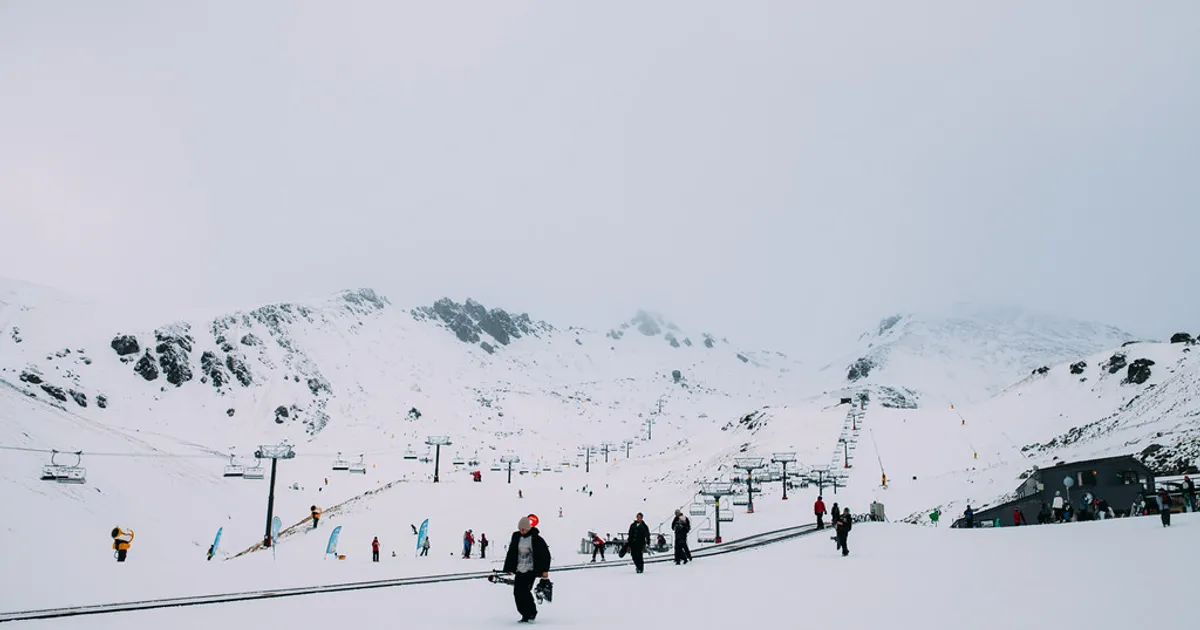
NZSki CEO Paul Anderson wants the market to know Queenstown is “open for business”. Both Queenstown fields opened on June 14, bookings are “well up”, and wholesale operator Mountain Watch Travel reports 30,000 to 40,000 Australians heading to Queenstown this winter, up 15 to 20 percent on 2019.
Queenstown Airport backs the optimism with hard numbers. International visitor arrivals hit about 192,000 between January and August 2025, up 14% on last year and just 5% below pre-Covid levels. Holiday travellers rose nearly 20%. Australians make up 40% of all arrivals, the single largest source market by a wide margin.
That is the headline story. The data underneath tells a different one.
More visitors, less money
MBIE’s International Visitor Survey for the year ending June 2025 shows Australian arrivals to New Zealand rose 5% to 3.38 million. But Australian visitor spending fell 2% to $3.5 billion. More Australians are coming. Each one is spending less. Total international visitor spend sits at just 86% of 2019 levels in real terms.
Queenstown operators confirm the pattern. Rees Hotel CEO Mark Rose put it plainly: “It’s no busier than 2019, but definitely a higher yield.” Sno’n’Ski Holidays managing director Dan Walker reports Australian passenger numbers down 13% on 2019 but per-customer spend up 37%. Destination Queenstown’s own February 2025 data snapshot showed commercial guest nights down 5% and visitor expenditure down 3%, even while occupancy held at 89%.
Higher yield, lower volume. That works for luxury operators. For the mid-market accommodation, hospitality and transport businesses that need bodies through the door, it is a structural problem.
Airfares are the pressure point
Air New Zealand’s Tasman fares are up about 20% year-on-year, with the airline projecting a $1.83 billion fuel bill next financial year. Forsyth Barr forecasts the carrier will lose $229 million this year before recovering. An airline burning cash has every incentive to keep raising fares.
Air New Zealand’s own short-haul manager Jeremy O’Brien was measured rather than bullish, noting that Australia-to-Queenstown demand is “slightly lighter compared to winter 2023”, with school holidays from Victoria and New South Wales the strongest demand windows, not the full season.
The budget segment is showing stress. A Crux report noted that Australian discount retailer Aldi’s annual ski sale, which usually sells out immediately, had significant stock remaining. When the bargain hunters stop buying, the volume pipeline has a problem.
The $100 million gap operators are gambling on
Regional economist Benje Patterson has modelled the range. His analysis puts Queenstown’s net winter gain at between $20-25 million if only 60% of usual Australian volume returns, and $125 million at full capacity. That $100 million spread is the real stakes for operators making staffing, inventory and pricing decisions right now.
Queenstown’s competitive advantage against Canada and Japan remains intact. Return airfares from Australia sit around A$900, compared with roughly A$4,000 to Canada. And the NZD’s slide to about A$0.82, down from A$0.92 a year ago, makes New Zealand materially cheaper for Australians in relative terms.
But the threat is not Canada stealing the market. It is the Australian ski tourist deciding not to go anywhere. Destination Queenstown’s research shows 95% of Australian respondents find Queenstown highly appealing. Whether that intention converts to bookings at current fare levels is the question the season will answer.
The split nobody is talking about
NZSki has 1,300 staff across three mountains, 900 in Queenstown, a record 6,000-plus applications for seasonal roles, and a return rate above 50%. The supply side is solid. Anderson’s confidence is rational for a ski field operator that captures the premium end of the market.
But NZSki’s upside does not automatically flow to the ecosystem around it. Future Hospitality Group director Bert Haines acknowledged “there’s still a bit of that discretionary spend missing”. Swiss-Belresort Coronet Peak was sitting at 65% occupancy heading into July, banking on last-minute bookings to fill the gap.
The premiumisation trend is real. Fewer visitors spending more is a viable model for the top end. For the cafes, shuttle operators, rental shops and mid-range hotels that run on foot traffic, the bet NZSki is making is someone else’s risk.
Sources
- Queenstown operators upbeat with visitor numbers up 14% on last year – NZ Herald (2025)
- Skifields on schedule to open: CEO – Otago Daily Times (2025)
- Bookings boom for Queenstown – Lakes Weekly Bulletin (2025)
- International Visitor Survey – Year end June 2025 Data Release – MBIE (2025)
- Aussies reconsidering ski holidays as cost of living bites – Crux (2025)
- Air New Zealand ticket prices soar as analysts tip years of losses – NZ Herald (2025)
- Winter will still be tough for some destinations – Benje Patterson (2025)
- New Zealand Dollar Hits 13-Year Low Against Australian Dollar: Travel Impact (2025)
- Market Insights Guide – Australia – Destination Queenstown (2025)