

The bill arrives in August
Wellington property owners have been paying roughly $2,100 a year for water, buried inside council rates where nobody had to think about it. That illusion ends on 1 July when Tiaki Wai, the new council-owned water entity covering Wellington, Lower Hutt, Upper Hutt and Porirua, starts billing property owners directly. The first quarterly invoices arrive in late July or early August.
The initial sticker shock was brutal. Tiaki Wai’s draft strategy projected average bills of $2,418 in 2026-2027, a 14.7% jump, followed by a 28.9% increase to $3,118 in 2027-2028. By 2036, the projection hit $6,831 per household. After public outrage and a phone call from Local Government Minister Simon Watts to Wellington Mayor Andrew Little, Tiaki Wai trimmed the 2026-2027 increase to 12.8% and the 2036 forecast to $6,206.
The catch: the reduction came from stretching the capital programme, not finding efficiencies. The pipes stay broken for longer. The bill is lower; the risk is higher.
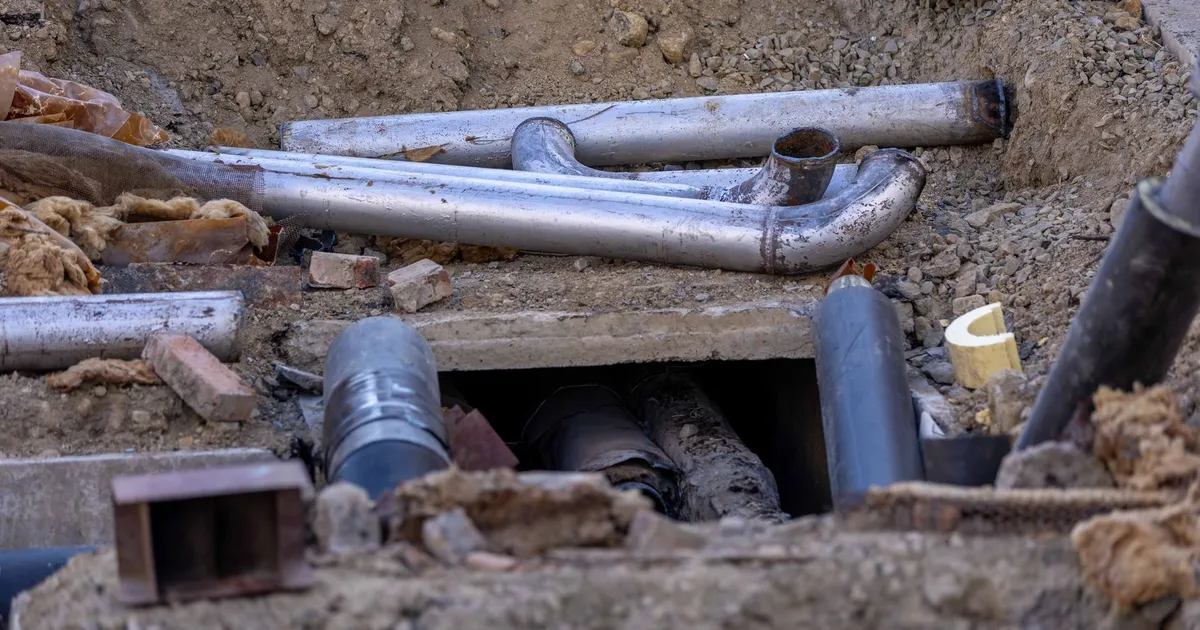
What decades of neglect actually look like
Tiaki Wai inherits $9 billion in water assets and $1.7 billion in existing debt from the five councils. The revenue those councils collected, approximately $385 million in 2025-2026, was never enough. Three of the four wastewater treatment plants are non-compliant. The Moa Point plant was discharging raw sewage into Cook Strait for nearly six weeks before the handover.
The Commerce Commission’s May consultation document is forensic about what went wrong: “longstanding capability, asset condition, information system and financial challenges, including limited asset condition information, weak core systems, historical reliance on manual processes, and high underinvestment.”
Money alone was not the problem. Wellington Water recorded a $15 million underspend of Wellington City Council capital funding in its final financial year. The organisation could not spend the money it had.
Wellington is the first domino, not the exception
The Independent Infrastructure Commission’s chief executive Geoff Cooper put the national figure plainly: “The number that we have here from the water service delivery plans is about $49 billion over the next 10 years.” Minister Watts independently estimated $4 billion per annum over the decade.
For context, the Commission’s 30-year plan found that councils’ planned $50 billion water spend is roughly equivalent to all inflation-adjusted water infrastructure investment from 1885 to 2012. That is 127 years of building, compressed into one decade, because successive councils chose the politically painless option of deferral.
A June report by economist Shamubeel Eaqub, commissioned by Civil Contractors NZ, Infrastructure NZ, and Water NZ, quantified the cost of that habit: $11.8 billion over 25 years from pausing, deferring and cancelling infrastructure projects. A modelled $500 million roading project paused for two years lost about 65% of its direct workforce and spent $18 million on recruiting and retraining. Water NZ chief executive Gillian Blythe summarised the dynamic: “Communities ultimately pay more through higher future costs, reduced resilience.”
No bailout is coming
Watts was explicit that the Crown will not provide financial assistance. Under the Local Water Done Well model, the cost falls entirely on users and ratepayers. He defended debt financing as appropriate given asset lifespans of 50-100 years, but the political reality is that Wellington households are being asked to absorb a tripling of water costs over a decade with no central government support.
Porirua Mayor Anita Baker called bills approaching $7,000 “horrendous” and warned they could drive people away from the region.
What this means for business
NZ Herald business commentator Ethan Manera described the charges as “like spraying Roundup on any fragile green shoot” in Wellington’s recovering economy. The comparison with Hamilton is damning: IAWAI reduced average charges by 34% for Hamilton City and 59% for Waikato District compared to previous projections, while still funding $3 billion in investment. Governance and delivery capability matter, not just the size of the deficit.
For any Wellington business planning a 10-year lease, a development, or a workforce expansion, the message is clear: price this in. Higher water charges feed through to commercial property costs, operating expenses, and the wage pressures of staff facing household bills that are about to triple. Tiaki Wai has a $6.8 billion capital programme and is considering a $500-$590 million water meter rollout on top. The spending is coming whether the city can absorb it or not. The only question is whether Wellington gets a functioning water network at the end, or just the bill.
Sources
- RNZ: Wellingtonians face average $2400 water bill next year, massive increases to follow (2026-06-11)
- NZ Herald: Wellington water bills – Local Govt Minister Simon Watts steps in over higher-than-expected charges (2026-06-12)
- RNZ: Wellington residents facing slightly lower water bills after Tiaki Wai backs down (2026-06-13)
- Commerce Commission: Economic regulation for Tiaki Wai consultation document (2026-05-07)
- NZ Herald: New Wellington water entity Tiaki Wai opens books, warns of higher costs (2026-06-11)
- RNZ: The $49 billion cost of fixing water infrastructure woes laid bare (2026-06-15)
- RNZ: Local Government Minister Simon Watts on challenges building water infrastructure (2026-06-15)
- 1News: What NZ’s new 30-year infrastructure plan really means (2026-02-17)
- Newswire: Stop-start infrastructure decisions have cost NZ an estimated $11.8 billion (2026-06-15)
- RNZ: Wellington water woes – A price which is not in the plan (2026-06-12)
- NZ Herald: Andrew Little right to hit back as soaring water charges threaten Wellington’s recovery (2026-06-13)
- RNZ: Wellington’s new water entity facing scrutiny from Commerce Commission over proposed bills