

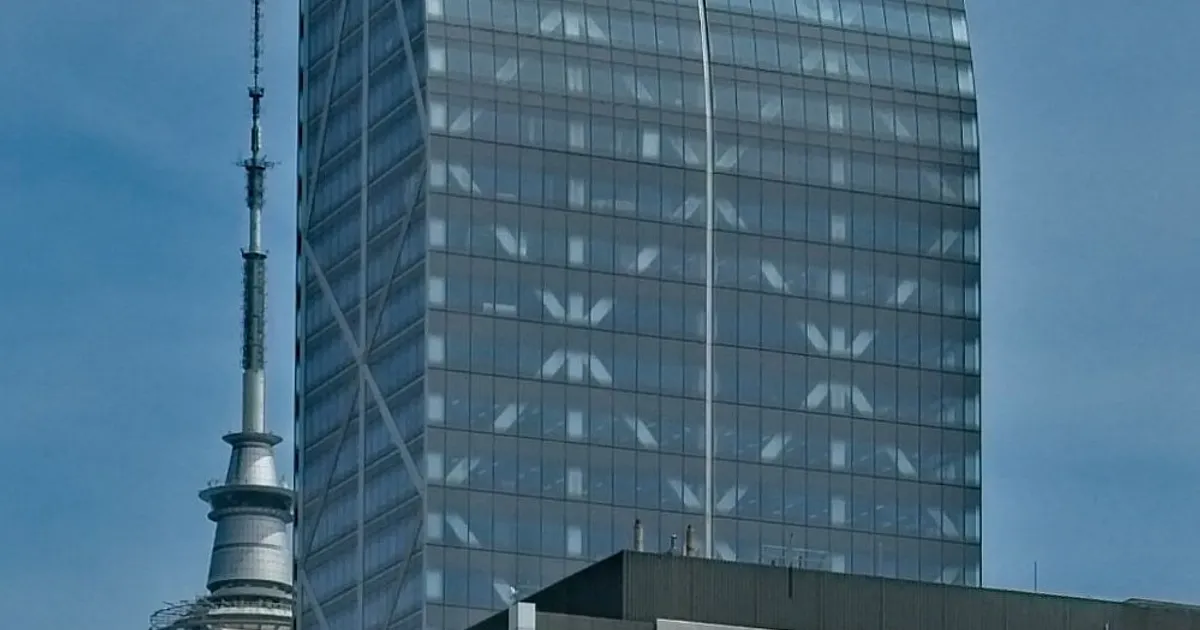
The deal that sets the benchmark
Precinct Properties is in exclusive negotiations with a global institutional investor to form a 50:50 joint venture over PwC Tower, Auckland’s tallest office building and the centrepiece of the Commercial Bay precinct. The implied total asset valuation sits around $600 million, making it one of the largest single office transactions in New Zealand history.
This is not a fire sale. Precinct’s portfolio occupancy is 97% with a 6.1-year weighted average lease term. The company recorded 10.3% growth in contract rents across its office portfolio in the six months to December 2025, and signed over 25,000 square metres of new lease deals in that period, materially above recent years. When an asset is 97% leased and growing rents at double digits, selling half of it is a strategic choice, not a distressed one.
The strategic logic is capital recycling. Precinct has declared a $3.7 billion development pipeline and is targeting $4-5 billion in capital partnerships across its portfolio. Selling half of a mature tower funds the next generation of development without blowing out the balance sheet. The company has already brought its pro forma gearing down to 33.7% after a $325 million equity raise and hotel disposals.
The PwC Tower deal follows an earlier partnership with GIC, Singapore’s sovereign wealth fund, on the $205 million acquisition of ASB North Wharf. A separate process is underway for 256 Queen Street. The template is clear: bring in global institutional capital, retain management control, redeploy the proceeds.
Foreign money is flooding back in
The PwC Tower deal sits inside a broader wave. According to CBRE’s Q1 2026 Transaction Monitor, total New Zealand investment transactions reached $2.96 billion in H2 2025, the highest since H1 2018 and a 58% increase on the prior half. Overseas investors ran a net inflow of $801 million in the $20 million-plus bracket, close to 3.5 times the five-year average.
Global capital is not buying Auckland office because the city’s economy is booming. Auckland’s real GDP grew just 0.1% for the year ended December 2025, and the unemployment rate hit 6.4% in the December quarter. Institutional investors are buying because a fully leased, long-WALT premium tower offers income security that is largely decoupled from the broader economic cycle. The asset, not the city, is the thesis.
Secondary stock is in structural trouble
JLL’s Q1 2026 Auckland office report makes the bifurcation explicit. Prime CBD vacancy has fallen to 10.8%, down 90 basis points since mid-2025. Premium rents have hit NZD 718 per square metre per annum. Meanwhile, secondary office vacancy has risen to 22.1%.
That gap is not cyclical. Campbell Pritchard, head of office leasing at CBRE New Zealand, noted in 2026 commentary that occupiers are “prioritising quality, location and sustainability, and are more willing to commit when the right space becomes available.” CBRE’s research found about 70% of space occupied by Auckland’s 100 largest prime office tenants sits in buildings with at least a 4-Star NABERS or Green Star rating. As those leases roll, non-sustainable space faces pressure regardless of price.
A transaction that validates a $600 million valuation for a 97%-leased premium tower does nothing for the owner of a half-empty B-grade building on the fringe. If anything, it widens the gap. Tenants see the flight to quality confirmed, and secondary landlords lose another argument for staying put.
What business owners should actually do with this information
For occupiers, the bifurcation creates a genuine upgrade window. Secondary landlords facing 22.1% vacancy are competing hard on incentives. Prime landlords with 97% occupancy are not. If a business is currently in B-grade space with lease flexibility, this is probably the best relative pricing to upgrade that will exist for several years.
For property investors and lenders, the PwC Tower price will set a benchmark, but only for the top tier. Even Precinct still recorded a $29.3 million net loss in fair value of investment properties in H1 FY26. Premium assets have not fully recovered their pre-rate-cycle valuations. Secondary assets are further behind and face structural headwinds that no rate cut will fix.
The PwC Tower deal tells a clean story about where institutional money wants to be. It tells an equally clear story about where it does not.
Sources
- BusinessDesk: Precinct looks for investor in Auckland’s PwC Tower (2026-02-26)
- BusinessDesk: Precinct looking for capital partners for PwC Tower (2025-08-27)
- NZ Herald: Precinct Properties’ revenue, profit up (2025-06-30)
- NZX: Precinct FY26 Half Year Results
- NZX: PCT Company Analysis (2026-02-26)
- JLL: Auckland Office Market Report Q1 2026 (2026-05-20)
- Auckland Economic Update – May 2026 (2026-05-01)
- OneRoof: Office leasing outlook strengthens (2026)