

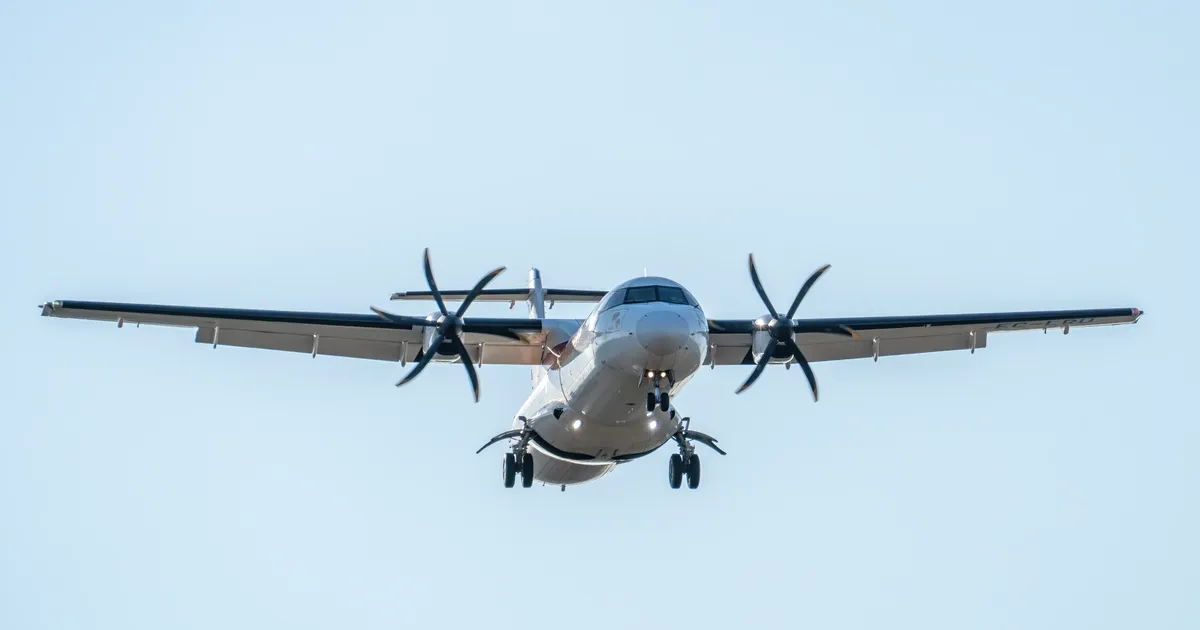
When Air Chathams CEO Duane Emeny told the country there was “no real point in operating the services if we can’t even cover the direct cost”, he was not describing a temporary cash flow problem. He was describing a business model that only works when nothing goes wrong.
The Strait of Hormuz crisis turned a monthly fuel bill of roughly $500,000 into one exceeding $1 million. Air Chathams responded by slashing 45% of Whakatāne flights, 22% of Whanganui services, and 10% of Kāpiti routes. The government scrambled together concessionary loans: $17.2 million for Air Chathams, $4.5 million for Sounds Air, $1.1 million for Golden Bay Air, and $252,000 for Island Air. It was the first time in 42 years Air Chathams had taken government money outside of COVID.
But the Middle East panic is easing. The loans are disbursed. So why does this still matter?
Because the fuel shock did not break regional aviation. It revealed that regional aviation was already broken.
The problem existed before anyone heard of Hormuz
Domestic airfares had already risen 12.8% by February 2026, before the geopolitical crisis hit. The Aviation Industry Association’s chief executive Simon Wallace puts the government-imposed cost stack, including CAA levies, air traffic control charges, and airport landing fees, at up to 20% of a domestic airfare. New Zealand Airports Association chief executive Billie Moore points to a structural trend towards larger aircraft that has been progressively hollowing out the economics of thin regional routes.
IATA director-general Willie Walsh put it plainly: “Instead of spreading those costs over 200 passengers on an aircraft you’re spreading them over 30, 40, 50 passengers. So there’s no simple answer to that other than government support.”
The industry’s own data supports him. IBISWorld’s 2026 analysis shows 33 airline businesses generating $7.4 billion in revenue, but that topline figure is driven overwhelmingly by Air New Zealand and international carriers. Regional operators live on the margin.
Government charges are part of the cost problem
Barrier Air chief executive Grant Bacon has argued the most valuable thing government could do is provide relief on airways charges and CAA levies. Golden Bay Air’s operator made the same point: longer-term support should focus on reducing compliance and airport costs rather than directly subsidising routes.
The absurdity of the current system is best illustrated by one detail. Air Chathams asked Whanganui District Council to temporarily waive aeronautical fees that would have saved $20,000 per month. The council declined. The same government that handed the airline $17.2 million in loans cannot coordinate a $20,000 monthly fee waiver from a district council. That is not a policy framework. It is improvisation.
This is now a permanent price problem
The Board of Airline Representatives chief executive Cath O’Brien drew a critical distinction: “In New Zealand we do not have a supply problem for jet fuel… but we do have a price problem.” More significantly, she warned this is “no longer a short term situation”, with airlines planning 2027 routes “in the knowledge that fuel prices are potentially going to be 100 percent higher”. Associate Energy Minister Shane Jones described it as a “continuous price problem”.
Wallace has also flagged that operators contracted to Fire and Emergency New Zealand cannot pass fuel cost increases through under existing contracts, putting air ambulance and firefighting operations at risk alongside passenger routes.
Loans are not a strategy
Associate Transport Minister James Meager has acknowledged that crucial routes are at risk but conceded that long-term structural support is “not something we’ve been willing to take the step into”. He admitted the Regional Connectivity Fund “is not going to deal with the ongoing operational cost” of making thin routes commercial.
After the loan disbursements, approximately $7 million remains in the ring-fenced Regional Infrastructure Fund. That is not a buffer. It is loose change.
Emeny has called for “a Government-led system to support regional aviation in places where it is marginal to operate”. Not emergency loans that add to already-strained balance sheets, but a permanent framework. Walsh confirmed this is standard practice in other countries facing identical economics.
For tourism operators in Whakatāne, freight users in Whanganui, and businesses across provincial New Zealand, a 45% flight cut is not an airline problem. It is a constraint on economic activity, paid for entirely by the communities that can least afford it. Government can keep treating regional air links as a commercial problem for small carriers to absorb, but the cost of that indifference will keep landing on the regional economy. Eventually, the flights just stop.
Sources
- Air Chathams to cut flights from North Island routes after fuel cost doubles (2026-04)
- Govt set to bail out air and bus operators that buy fuel by the tanker-load (2026-04-24)
- Three more regional airlines set to receive Regional Investment Funding loans (2026-04)
- IATA’s Willie Walsh says government support the only way to save regional NZ air routes (2026-06-15)
- Government needs to consider more support for regional airlines as fuel crisis bites – Editorial (2026-06-15)
- Fuel crisis ‘no longer a short-term situation’ for airlines (2026-06-15)
- How rising costs are reshaping New Zealand’s regional air links (2026-06-15)
- AIANZ warns fuel crisis threatens essential services and regional connectivity (2026-06-15)
- Iran war: Fuel prices squeeze regional airlines, Government open to being ‘flexible’ about help (2026-04)
- Airlines in New Zealand Industry Analysis, 2026 (2026-03)