

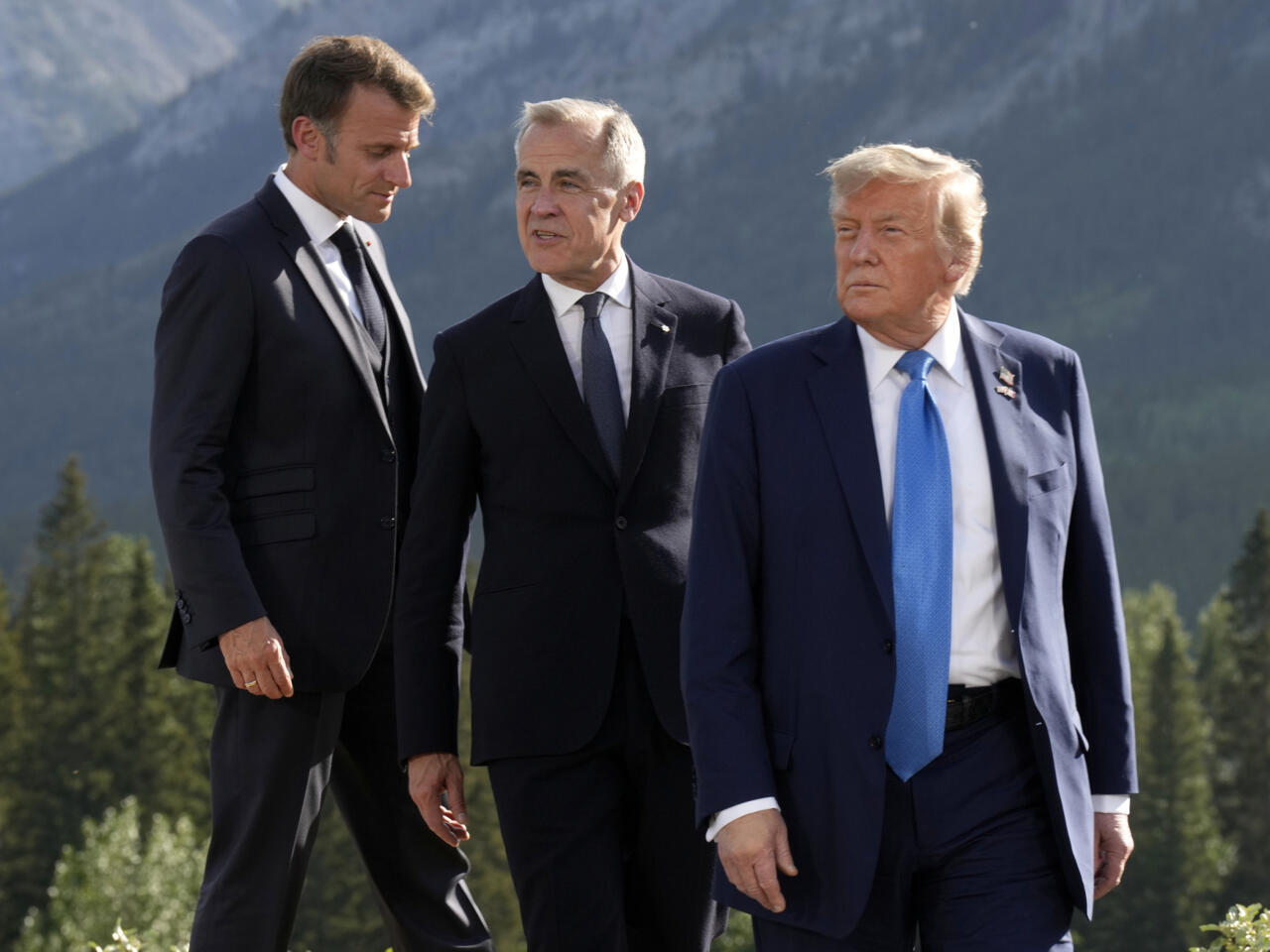
U.S. President Donald Trump is heading to France for a closely watched G7 summit, arriving with a newly announced agreement with Iran that could reshape talks already expected to test relations between Washington and its closest allies.
The three-day meeting opens on Monday in Évian-les-Bains, a lakeside town near France’s border with Switzerland. Leaders from Canada, France, Germany, Italy, Japan, the United Kingdom, and the United States will attend, along with representatives of the European Union.
The summit comes at a sensitive moment for the group, as governments confront the war in Ukraine, rising trade tensions, artificial intelligence, online safety, organised crime, and questions over the future of Western alliances. France has sought to use its G7 presidency to promote multilateral co-operation and address inequality, priorities that may sit uneasily with Trump’s America First agenda.
Trump is expected to leave for France after attending a UFC event on the White House South Lawn on Sunday evening, which coincides with his 80th birthday. His arrival is likely to draw scrutiny from European leaders who have grown wary of his tariff policies, criticism of allies, and repeated pressure on NATO members to increase defence spending.
The summit’s focus shifted sharply after Pakistan Prime Minister Shehbaz Sharif said the United States and Iran had agreed to halt military operations on all fronts, including in Lebanon. The conflict had lasted nearly four months, fuelling fears of a wider regional war and adding pressure to global energy markets.
Trump later confirmed the agreement on Truth Social, writing, “I hereby fully authorize the toll free opening of the Strait of Hormuz, and, simultaneously herewith, authorize the immediate removal of the United States Naval blockade.”
The Strait of Hormuz is a vital route for global oil shipments, making the deal a likely subject of urgent discussion among G7 leaders. While Trump may present the agreement as a foreign policy breakthrough, allies are expected to press for details on how Washington plans to manage Iran, regional security, and energy stability.
Artificial intelligence could also become a point of friction. Victor Cha, president of the Geopolitics and Foreign Policy Department at the Center for Strategic and International Studies, said there could be “real fireworks” over the issue, as Europe pushes for tighter oversight while the U.S. resists heavier regulation.
French President Emmanuel Macron has invited OpenAI chief Sam Altman to attend parts of the summit, with executives from other major technology firms also expected. The gathering is likely to test whether the G7 can still present a united front at a time of widening political and economic strain.