

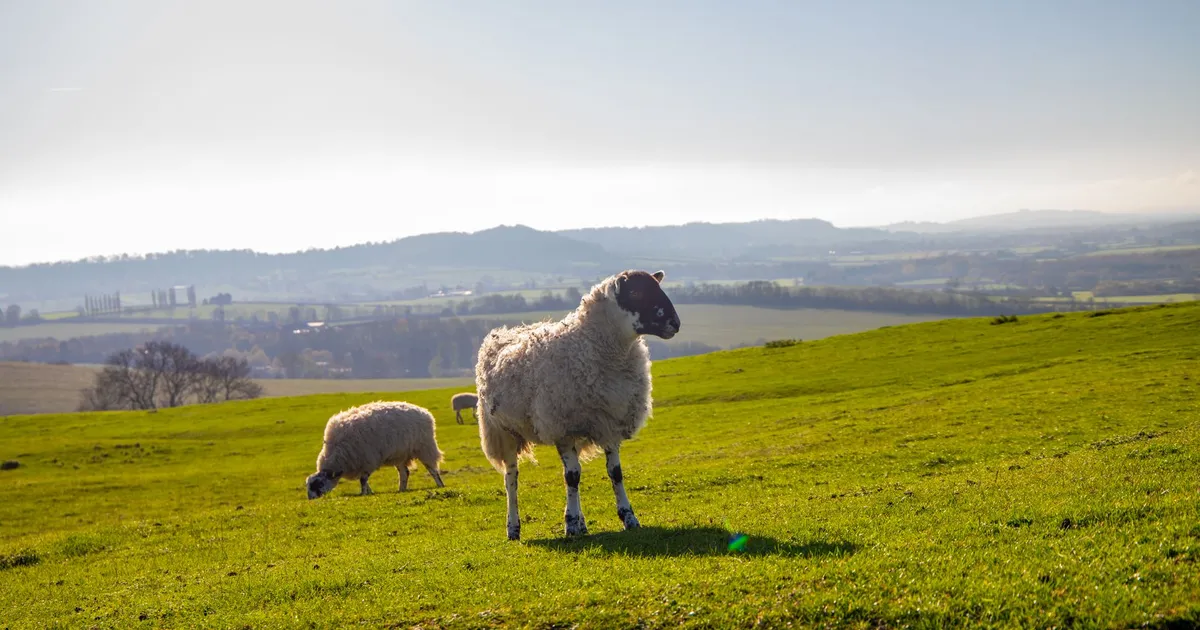
Simon Wood and Grace Bradley do not own the 1120ha farm they took over at Waingaro on 1 June. They don’t need to. The young Taranaki couple have secured a 20-year lease on the steep-to-rolling block, 530ha of it effective, from Māori trust Waipā-Rānui Incorporation. The tender, run by PGG Wrightson, drew 200 inquiries, more than 50 visitors across five open days, 14 formal offers and a shortlist of four who faced the trust board in person.
That is not a rural feel-good story. It is a working answer to one of agriculture’s hardest problems, which is that land has become too expensive to be the entry ticket.
Ownership has become the wrong first step
The economics of buying in are brutal. In 2025, The Guardian reported that farm numbers fell 33%, from 70,336 in 2002 to 47,250 two decades later, as consolidation, rising land values and tighter bank lending squeezed out new entrants.
Taranaki farmer Nick Brown, who leases 800ha with his wife Sophie, puts the logic plainly. Putting a young couple’s savings into land would be “just a drop in the ocean,” he says, so the smarter move is building wealth through livestock and “the engine room of the farm”. He concedes leasing lacks the security of ownership, but calls it one of the few ways to run a farming business without first finding millions of dollars.
That is sound capital allocation. Money tied up in land earns a modest return. Money in stock, pasture and genetics compounds through the operation itself.
Term length is what makes leasing work
The catch has always been tenure. Nobody re-grasses a hill country farm on a three-year deal. Wood and Bradley’s plans include re-grassing, a summer rape crop, re-metalling tracks, culling wild goats, tackling gorse, native planting and shifting to Romney, Angus and Hereford lines bred for facial eczema tolerance and easier calving. “The 20-year lease gives us time to spend money and actually see the results,” Wood told the Herald. Trust negotiator Quinton Moore said the couple won because they had researched soils and stock-carrying capacity, and showed values that aligned with “protecting and caring for our farm for future generations”.
The industry has been asking for exactly this for years. Back in 2017, Wairarapa farmer Willie Falloon predicted leasing would become the sharemilking stepping stone for sheep and beef, citing returns of 10-20% on structured deals. In 2019, Total Ag’s Rob Macnab noted that historic leased-land returns of 2-3% a year looked attractive to owners in a low-rate world. By 2023, Property Brokers’ Conrad Wilkshire was pitching 15 or 20 year leases with renewal rights for horticulture, where land can be worth $1.5 million a hectare.
The problem was finding landlords willing to think in decades. Most private owners want flexibility to sell.
Māori trusts are built for the long game
Māori incorporations and trusts are the obvious counterparty. Their land is rarely for sale, their mandate is intergenerational, and Waipā-Rānui’s stated mission is to protect its taonga tuku iho for future whānau. A landlord that values stewardship over a quick exit is precisely what a long lease needs.
The scale is significant. A 2025 BERL report found whenua Māori in primary production covered more than 1.4 million hectares and generated about $5.3 billion in GDP, supporting around 33,700 jobs. It also found roughly half that land performed below 90% of regional productivity benchmarks, and 196,891 hectares were landlocked. That is untapped capacity, and capable operators on secure tenure are one way to unlock it.
Governance is what makes deals like Waingaro possible. The Māori Land Court’s 2025 update recorded 8,304 land management structures nationally, including 148 incorporations. Structured blocks averaged 108.55ha against 12.88ha for unstructured blocks, the difference between a viable commercial farm and a fragment. Māori agribusiness has been a serious force for some time, with Stats NZ recording Māori authority farming profits of $97 million in 2018, almost double the year before.
A market fix worth copying
What stands out is that nobody legislated this. There was no subsidy, no scheme, no ministry pilot. A landowner with patient capital ran a competitive tender, weighted it toward competence and long-term care rather than the top bid, and got a couple with skin in the game. The tenants get time to invest. The owners get an improving asset.
The 200 inquiries are the demand signal. The underperforming, structured Māori estate is the supply. For banks, rural advisers and other long-horizon landowners such as iwi entities, charitable trusts and retiring farmers managing succession, Waingaro is a template. The next step is simple: more 20-year leases, written with renewal rights and clear improvement terms, and fewer young farmers waiting a lifetime for a deed they may never afford.
Sources
- NZ Herald: Young couple commit to 20-year lease on Māori trust farm in Waingaro (2026-11-14)
- NZ Herald: Taranaki couple leasing their way to farm ownership (2026-08-31)
- The Guardian: Working the land but rarely owning it, life for New Zealand’s young farmers (2025-11-29)
- Farmers Weekly: Giving young farmers a hand up (2017-04-21)
- Farmers Weekly: Pressure opens lease options (2019-09-17)
- Farmers Weekly: Hort, dairy ‘need new finance models’ (2023-11-29)
- BERL: Whenua Māori in primary production (2025-10)
- Māori Land Court: Māori Land Update 2025 (2025-10-28)
- Stats NZ: Profits almost double for Māori farming businesses (2020-06-29)
Join the discussion
Add useful context, ask a good question, or challenge an idea — keep it specific and respectful.