


Sri Lanka is facing a severe natural disaster as floods and landslides have claimed over 330 lives, with more than 200 people missing and 20,000 homes destroyed.
Around 108,000 people have been displaced to government-run shelters. Following Cyclone Ditwah, the government declared a state of emergency with nearly a third of the population without electricity or clean water.
President Anura Kumara Dissanayake labelled it “the most challenging natural disaster” in the country’s history, indicating the immense reconstruction effort required. Evacuations continue as water levels of the Kelani River rise. A resident in central Sri Lanka told the BBC that 15 houses in her area were buried under mud and rocks, with no survivors.
The worst fatalities have been in the Kandy and Badulla districts, where landslides have cut off access.
Villager Saman Kumara said, “We lost two people in our village… others are sheltering in a temple and a house that is still standing. We can’t leave the village, and no one can come in because all roads are blocked by landslides. There is no food, and we are running out of clean water.”
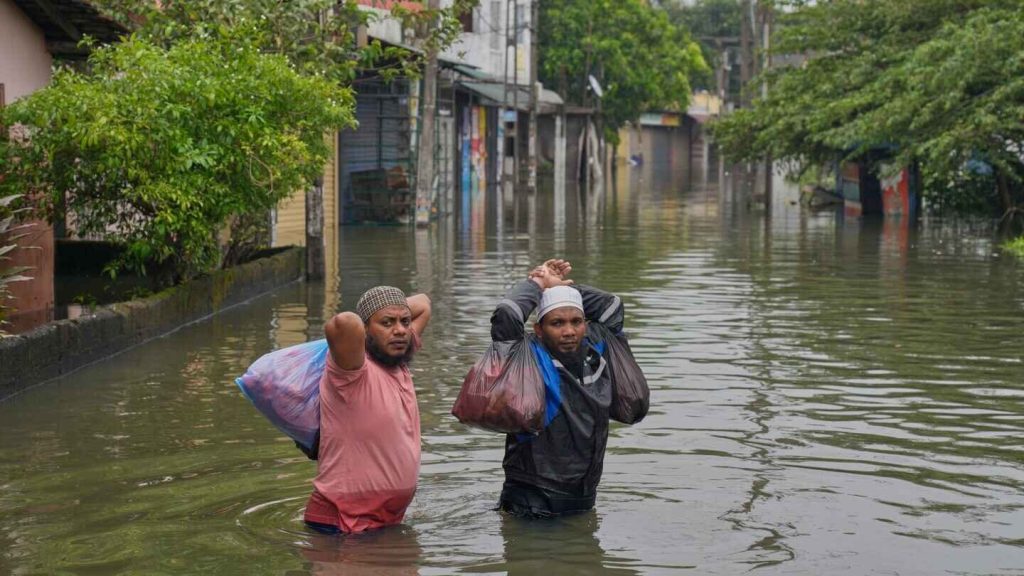
Among the dead are 11 residents of a flooded elderly care home in Kurunegala district. Rescue teams, including the navy, have been instrumental in saving people stranded on rooftops. WM Shantha recounted how rescuers helped three women who fell into floodwaters back onto safety.
International aid appeals are underway, and Sri Lankans abroad are urged to donate. Though Cyclone Ditwah only lightly touched the island’s coast, it exacerbated the impact during monsoon season, when such severe flooding is unusual. The last major flooding event was in 2003 when 254 people died.
This flooding is part of widespread severe weather affecting Southeast Asia, with millions impacted in Indonesia, Malaysia, and Thailand. Experts warn climate change is increasing the frequency of such extreme weather, showing the need for stronger disaster readiness and infrastructure resilience.