

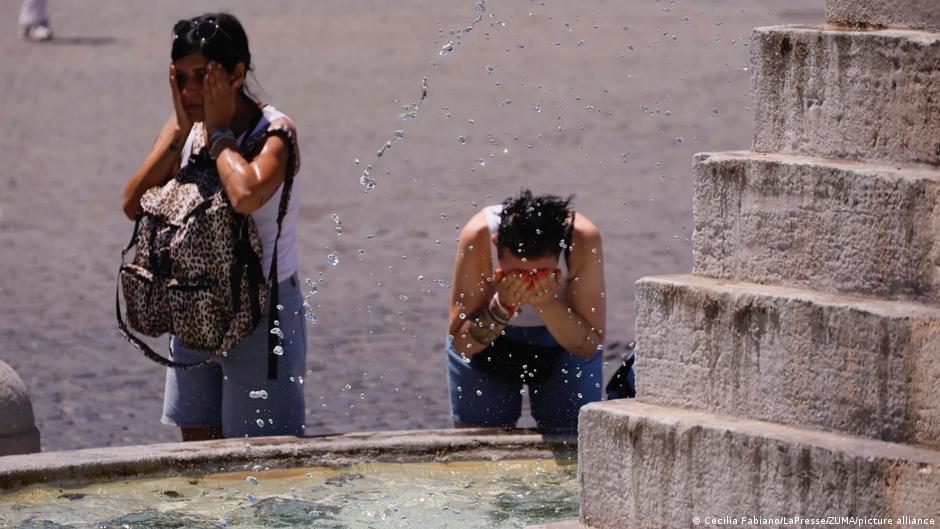
Europe is facing an escalating public health emergency as an intense heatwave drives temperatures above 40C, forcing schools to close, disrupting rail services, and increasing pressure on hospitals and emergency workers.
France has introduced its highest-level heat warning across more than half of the country, with Bordeaux recording temperatures close to 42C and Paris expected to reach around 41C.
Hundreds of schools have shut, while many others have allowed pupils to leave early. More than one million secondary students, however, were still due to complete oral examinations for the baccalaureate.
The heat has also been linked to several deaths. Two brothers, aged two and four, were found unresponsive inside their family’s car in Carpentras, southern France. Emergency crews were unable to revive them. Investigators have yet to confirm the cause, although the local prosecutor said “it is probably linked to the heatwave.”
Three elderly people also died in the Gironde region, where officials said extreme temperatures had contributed to their deaths. The French government has urged the public to avoid unsupervised rivers and lakes after 13 people drowned over the weekend while attempting to escape the heat.
Transport networks have been affected, with some Paris rail services reduced and national operator SNCF advising vulnerable passengers to postpone unnecessary journeys. Prolonged heat can damage tracks, electrical equipment, and other infrastructure.
Conditions are also worsening elsewhere. Spain is preparing for highs of up to 44C, with its weather agency warning that temperatures could remain “between five and 10 degrees above what is typical.” Italy has placed 12 cities, including Rome, Milan, Florence, and Venice, under its most serious alert.
Germany has recorded temperatures near 38C, while five people died in separate swimming accidents. Belgium has cancelled some rush-hour trains, and firefighters in Greece have been tackling a wildfire near Akraifnio following hot, dry, and windy conditions.
Meteorologists say the episode is being driven by Saharan air moving northwards and becoming trapped beneath persistent high pressure. Météo-France described the heat as “widespread, long-lasting, and intense,” with significant relief unlikely before the end of the week.
Scientists warn that human-driven climate change is making such events more frequent and severe. Of the 51 heatwaves recorded in France since 1947, 34 have occurred since 2000.