

Most regional growth pitches start with a forecast and hope the customers turn up. NZSki’s plan to expand The Remarkables works the other way round. The skiers are already there, the mountain is already full on its best days, and the economic case keeps getting bigger each time an economist runs the numbers. The open question is whether the consenting system can move as fast as the queue at the lift.
The latest figure, a roughly $76 million annual boost to the economy, comes from the fast-track economic assessment underpinning NZSki’s application to push the ski area into neighbouring Doolans Basin. That would take the skifield from 449 hectares to 711 hectares, making it the largest single ski area in the country, and lift daily capacity from 3,500 to 6,000 skiers on the back of a $150 million-plus build that includes a 2.7km gondola.
The demand is measured, not modelled
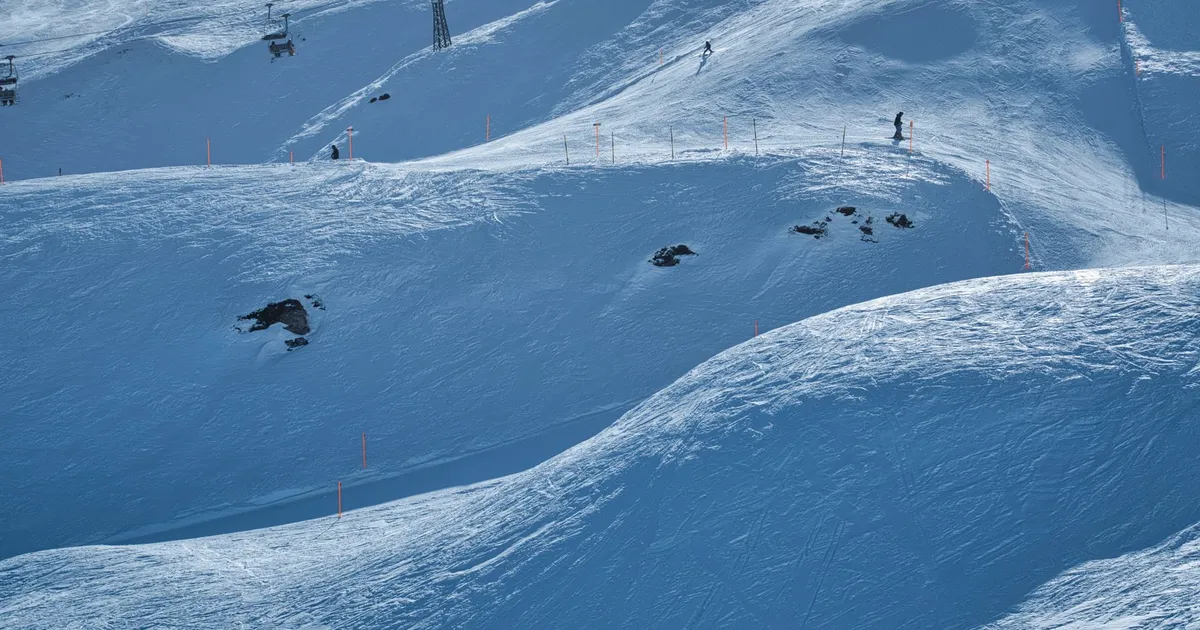
The Remarkables logged 294,735 skier days in the 2025 season, about 30% of the entire Queenstown-Lakes ski market. Comfortable capacity sits at 3,500 skiers a day, yet peak days already top 4,300. That is not a growth projection. It is a field operating beyond its design limit.
None of this is a surprise. Back in 2022, a report by economist Benje Patterson noted internal research showing guest-experience scores dropped on days capacity limits were hit. The same year, an industry figure warned that within five to 10 years ‘we’re going to exhaust the available ski capacity’, even on local demand alone. Four years later, that warning has become the business case.
NZSki chief executive Paul Anderson leans on the local angle too. ‘We estimate that about half of the future demand will come from our growing local community’, he told RNZ in June. That matters, because local skiers are the least fickle customers a resort has. They do not depend on flight prices, exchange rates or a good snow year in Japan.
The case keeps getting stronger
The economics have moved in one direction. NZSki’s original filing in October 2024 put the GDP effect at $61.9 million over five years. The 2026 assessments now project up to $75.5 million a year in Queenstown-Lakes alone. The methodology and scope have shifted between versions, so the comparison is not perfectly like for like, but no reworking has shrunk the numbers.
Across Otago, visitor spending tied to the skifield is forecast to rise from $235 million to between $347 million and $402 million within a decade, with seasonal jobs climbing from 2,388 to as many as 4,443. For accommodation providers, hospitality operators, ski hire firms and transport companies, that is winter revenue in a region that has spent years trying to smooth out its seasonality.
Fast track is not a free pass
This is where the timeline gets harder. In October, the Department of Conservation warned some of the damage could not be undone, pointing to the loss of an alpine tarn for a snowmaking reservoir and risk to a glacial moraine sequence of national scientific significance. NZSki pushes back on scale. ‘We’re touching 16 hectares of land. We’re asking to operate on 262 hectares,’ Anderson told the Press.
Both things can be true. The environmental concerns are specific and deserve a proper answer, and the footprint argument is a fair one. But the process is the point for business. The Fast Track Act was sold as a way to get nationally significant projects moving. If a demand-led tourism project with a strong, repeatedly verified economic case still stalls in agency objections, iwi engagement and coordination across three councils, investors will draw their own conclusions about what fast track really means.
Every lost season is lost revenue
The build itself takes four summer construction seasons with winter operations continuing, so even a smooth consent puts full capacity years away. Each season of delay is a season of capped peak days, degraded guest experience and spending that goes to Cardrona, Coronet Peak or offshore instead.
Then comes the harder constraint. Staffing toward 4,400-plus seasonal roles in a town where worker housing is already the choke point will not happen by itself. Operators planning around the expansion should be thinking about accommodation and recruitment now, not when the gondola opens.
The market has already voted for a bigger Remarkables. What happens next depends on whether the fast-track panel treats a proven, capacity-constrained business as the kind of project the regime was built for, and whether Queenstown can house the people needed to run it.
Sources
- ODT: Skifield expansion potential $76m boost to the economy, economist says (2026-11-09)
- RNZ: The Remarkables one step closer to becoming the country’s largest ski area (2026-06-04)
- The Press: Remarkables reveals $150m fast-track expansion plan, but hurdles remain (2026-06-03)
- The Press: The Remarkables skifield wants to expand. DOC warns some of the damage can’t be undone (2026-10-15)
- Benje Patterson: The contribution of skiing to the Queenstown-Lakes economy and people (2022-06)
- Crux: Remarkables ski tunnel still in the pipeline (2022-07-28)
Join the discussion
Add useful context, ask a good question, or challenge an idea — keep it specific and respectful.