

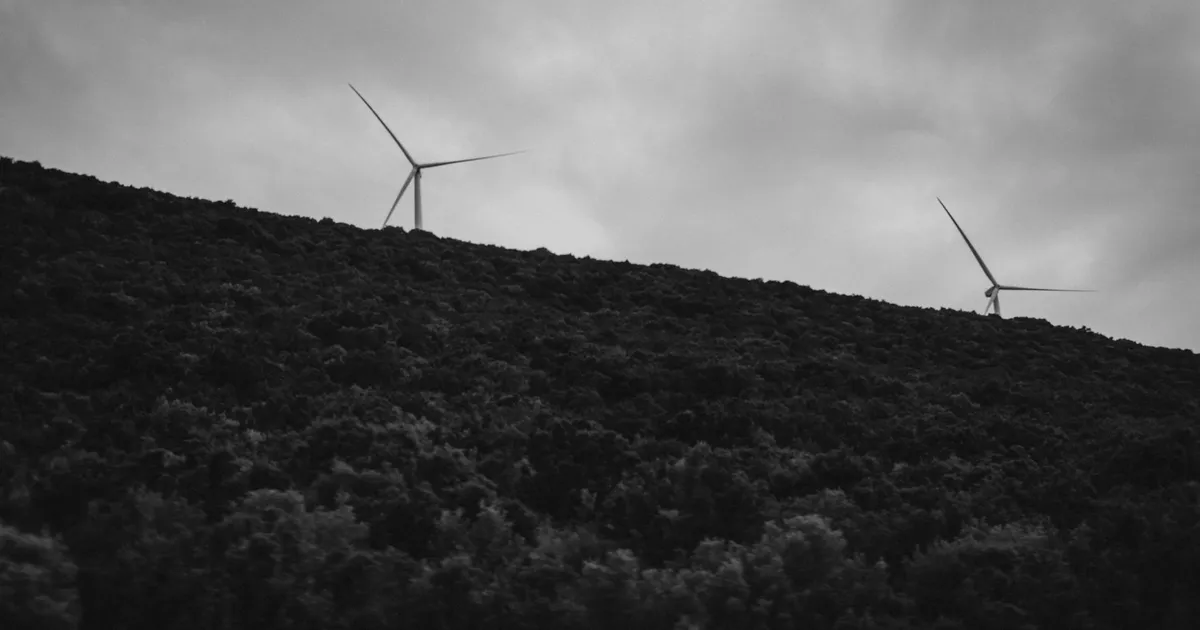
Mercury has broken ground on the $506 million Puke Kapo Hau wind farm, Stage 2 of its Mahinerangi site about 50km west of Dunedin. It is the first wind farm in New Zealand to be built under the Fast-track Approvals Act 2024. Plenty of renewable projects get announced. Far fewer get built on a timetable a business would recognise. This one did.
The Expert Consenting Panel issued its Record of Decision on 3 July 2026. Mercury’s board reached final investment decision in August. Notice to Proceed was issued on 16 October once Transpower grid connection studies were done. Then the diggers arrived. Consent to construction in roughly four months is about the time a conventional RMA process can spend just hearing submissions on a project this size.
What the consent actually unlocked
The detail matters here. The panel did not consent a greenfield site from scratch. It varied a 2014-era land use consent that had allowed up to 100 turbines but was never built out. The new decision caps the site at 56 turbines, lifts permitted blade tip height from 145m to 165m and removes a previous 200MW capacity cap, all set out in the panel’s decision.
That is precisely the kind of fix that should be easy and historically has not been. Turbine technology moved on, the old consent did not, and fast-track bridged the gap. Stage 2 adds 40 Nordex turbines, taking the combined site to 228MW and roughly 648 GWh a year, enough for about 92,000 homes and making Mahinerangi the country’s largest wind farm. At NZ$2.6 million per megawatt, the project also prices in as competitive against other recent builds.
The data centre is the real customer signal
The more interesting commercial thread is why Mercury is building now. Chief executive Stew Hamilton, whose company holds a 140MW power purchase option with Datagrid for its planned Southland data centre and has taken a $53 million, 12.7 percent stake in the business, was explicit: “Data centres can play an important role in New Zealand’s economic growth, but new demand needs to be matched by investment in new electricity generation”.
New Zealand talks about AI-driven power demand mostly in the abstract. This is a generator building supply and taking equity in the demand at the same time. That is how large industrial loads get served without blowing up prices for everyone else, and it is a model other gentailers will be watching.
A balance sheet that can carry it
Mercury can do this because the money is there. Net profit rebounded to $321 million for the June 2026 year, up from $1 million in a 2025 year hammered by dry conditions. The project is “funded on balance sheet within clear financial guardrails”, following a run of Southland wind builds rather than a one-off punt.
That cuts both ways for the fast-track argument. With strong earnings and a data centre customer lined up, Mercury may well have pushed ahead on a similar schedule under almost any consenting regime once the old consent was sorted. The honest claim is narrower: fast-track removed the consenting delay, and Mercury had everything else ready to go. That is still a win. It just shows the Act works best when the capital and the customer already exist.
Prices are already moving
For businesses paying the power bill, the question is whether new supply does anything. Early signs say yes. ASX-traded electricity futures fell from around $190/MWh at the start of 2026 to $130-$140/MWh by August, a drop largely attributed to new generation coming on stream. Futures drive the multi-year contracts manufacturers and processors sign, so that slide is real money.
In 2025, NZIER estimated for the fast-track panel that Stage 2 alone would meet almost 55 percent of one year’s increment of new renewable generation needed to hit Climate Change Commission targets. One project, half a year’s build requirement. That shows how much the country still needs to construct.
NZ Wind Energy Association chief executive Kevin Hart says the decision is “yet another strong signal that wind energy is bankable”, and the Nordex supply deal adds turbine competition to a thin market.
What Otago gets in the meantime
Construction runs two years, with up to 200 people on site at peak and an average of 75 FTE, dropping to 8-10 once operating. Emissions savings are estimated at 303,171 to 600,161 tonnes CO2-e a year depending on whether gas or coal is displaced, per the panel’s record.
First power is due in Mercury’s fourth quarter of FY28, with full output by Q2 FY29. The test for fast-track now is replication. One wind farm moving from decision to diggers in four months is a proof point. A pipeline of them, from developers without Mercury’s balance sheet, is what would actually bring industrial power prices down for good.
Sources
- RNZ: Fast-tracked $506m Otago wind farm Mahinerangi breaks ground (2026-11-10)
- NZ Herald: Mercury to spend $506m on Puke Kapo Hau, New Zealand’s biggest wind farm (2026-08-17)
- renews.biz: Mercury gives green light for 192MW NZ giant (2026-08-19)
- NZWEA: The New Zealand Wind Energy Association welcomes Mercury NZ’s announcement (2026-08-19)
Join the discussion
Add useful context, ask a good question, or challenge an idea — keep it specific and respectful.