

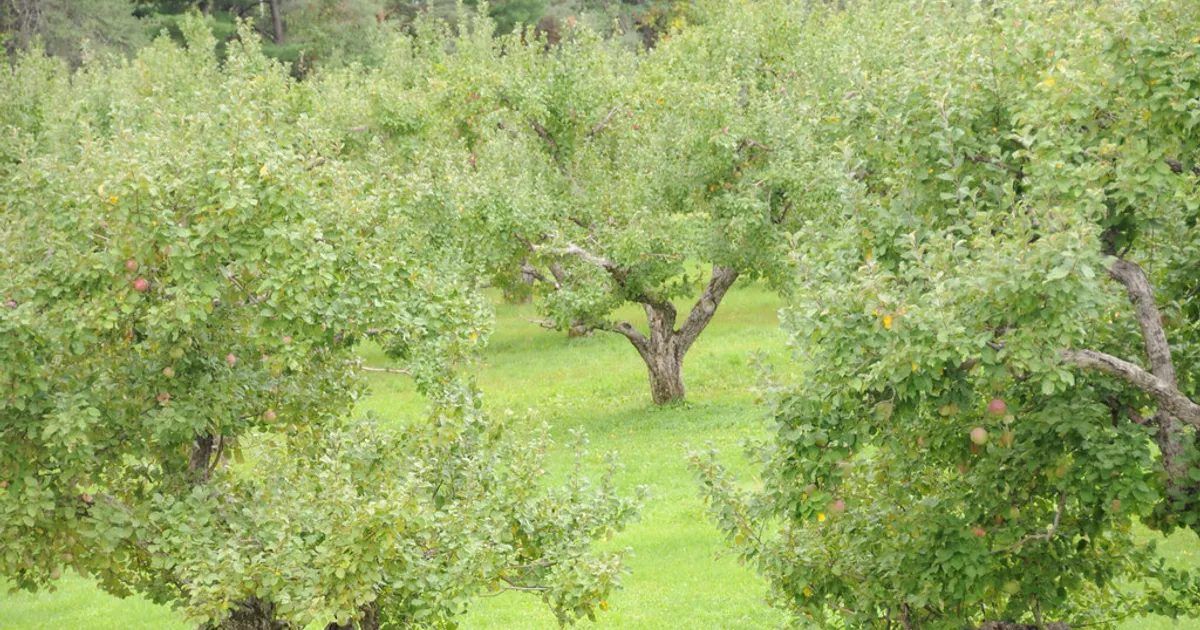
Planting is under way in Hawke’s Bay for around 100 hectares of Tutti over five years, a red apple bred in Spain from New Zealand genetics to cope with hotter, drier summers. It looks like a horticulture story. It is really a business model story, and a good one. Some of the most credible climate adaptation in the primary sector is coming from breeding programmes and licence agreements, built for profit and sold offshore well before the problem arrives at home.
A problem solved two decades early
The Hot Climate Partnership was created in 2002 because daytime temperatures above 40C and warmer nights were wrecking fruit quality for Catalan growers. In 2021, Plant & Food Research breeder Dr Richard Volz recalled that Spanish growers’ apples “never quite coloured up right; they didn’t have the crunch we would normally expect.”
The fix took patience. According to Spanish research institute IRTA’s 2024 documentation, Tutti represents more than 20 years of varietal work and over 100,000 evaluated trees. No election cycle produces that kind of horizon. A commercial pipeline with a long-dated payoff does.
Selling the answer before home needs it
Tutti launched at Fruit Logistica in Berlin in 2023, billed as the world’s first branded apple bred specifically for hot climates. At the time, T&G said a further 13 apple and pear varieties were in final evaluation, with five more due for commercialisation over seven years.
The offshore rollout came first. By late 2025, global plantings had passed 900 hectares, and T&G’s 2025 annual report, published in February 2026, recorded a 300-hectare commitment from Chinese partner Joy Wing Mau and a global target of 1,200 hectares by 2030. New Zealand’s 100 hectares is the smallest slice of the footprint. That is the point. Kiwi science is earning royalties in Spain, Latin America, the UK and China while the domestic market is still a prospect.
The pipeline keeps moving. In October, T&G subsidiary VentureFruit launched ADORE, an umbrella brand for further hot-climate varieties, including one that ripens four to six weeks earlier, with about 120 hectares already licensed in Catalonia. T&G global general manager Morgan Rogers was blunt about the dual purpose: climate resilience “is a grower-based benefit”, but the fruit must also “compete with those super-premium and premium varieties around the world.”
Follow the premium, not the subsidy
The commercial logic is plain. Rogers told RNZ the commodity apple trade is “looking patchy”, but the global premium apple category is expected to grow from US$13 billion in 2025 to about US$19 billion in 2030. That is roughly 46% growth in five years, and climate-resilient premium IP is a way to capture it rather than compete on volume.
There is a regulatory footnote worth noticing. T&G’s 2025 annual report noted that under the government’s changes to climate reporting, the company would no longer be a climate reporting entity once the amending legislation took effect, and it skipped its 2025 climate disclosure report. The adaptation investment carries on regardless. Nobody needed a compliance regime to make a company breed apples for a hotter world. Margin did the job.
In fairness, the taxpayer is not absent. The genetics came from Crown science, now the Bioeconomy Science Institute. In 2025, Emma Brown, then the institute’s plant varieties general manager, called Tutti’s industry award proof “the world is ready for climate-resilient apples”. But that is the right division of labour: public science feeding private commercialisation that earns export revenue, rather than public money propping up growers who stay stuck on commodity varieties.
The risk sits with the grower
This is not a free lunch. Hawke’s Bay grower X-Fruit has taken the exclusive New Zealand licence to grow, pack, market and sell Tutti, committing 100 hectares to a variety with no commercial track record in local conditions. The first crop is about two years out. If New Zealand orchards do not deliver the colour and crunch Tutti achieves in Catalonia, the downside lands on a private balance sheet, not a ministry budget. That is exactly where commercial risk belongs.
What happens next
The next real test comes when Hawke’s Bay fruit hits the market in roughly two years. If it performs, the lesson for horticulture will be hard to ignore. The sector’s strongest climate response may not be another adaptation plan or rescue package. It may be owning the genetics, licensing them globally, and getting paid while the weather changes.
Sources
- RNZ: New apple variety tipped to thrive in hotter, drier climates (2026-11-09)
- RNZ: VentureFruit launches family of apples bred to cope with hotter growing conditions (2026-10-07)
- Farmers Weekly: Climate-resilient apple planted in Hawke’s Bay (2026-11-03)
- T&G Global Limited 2025 Annual Report (2026-02)
- Fruitnet: More climate-resilient fruit varieties will be required in future says Tutti developer VentureFruit (2025-10-08)
- IRTA: Tutti, an alternative for apple cultivation adapted to warm climates (2024-03-13)
- T&G Global: World’s first apple variety bred specifically for a hot climate unveiled at Berlin Fruit Logistica (2023-02-10)
- Fruitnet: VentureFruit unveils Tutti, world’s first ever hot-climate apple (2023-02-09)
- Plant & Food Research: New apples pip the world (2021-03-13)
Join the discussion
Add useful context, ask a good question, or challenge an idea — keep it specific and respectful.