

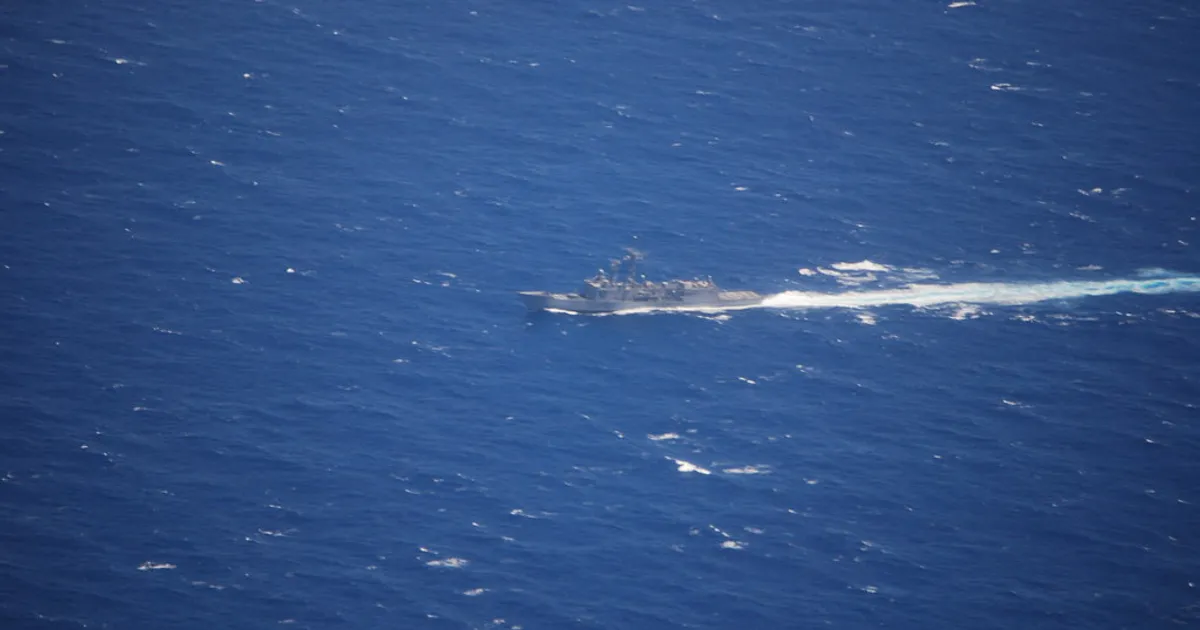
US Central Command has confirmed it disabled a St Kitts-flagged vessel in the Gulf of Oman after the ship ignored repeated warnings and tried to leave the region following a call at an Iranian port. It is the first confirmed US strike on a cargo vessel in nearly a month. Iran’s military says two tankers hit mines near Hormuz and caught fire.
None of this involves New Zealand directly. All of it ends up on New Zealand invoices. Oil markets and shipping insurers do not wait for Wellington to finish forming a government, and the businesses that treat this as someone else’s war are the ones most likely to get caught short.
The strait still sets the price
The Strait of Hormuz carried about 20 million barrels of oil a day in 2024, roughly a fifth of global petroleum consumption, plus around a fifth of global LNG trade. The conflict is now more than eight months old, and Iran has been using shipping attacks tactically to pressure Washington, with escalation following the US midterm elections and limited strikes on Iranian air defences.
We already know what this costs
This is not speculation. MFAT’s analysis of the conflict’s early months shows exports to the Gulf fell 37 percent to $397 million in March-April 2026, with dairy down $138 million and meat down 59 percent. In April, pump prices rose 13 percent and diesel jumped 37 percent, yet fuel spending fell 2 percent. Buyers did not absorb the cost. They stopped buying.
The confidence hit was brutal. Business confidence went from net 39 percent expecting improvement at the end of 2025 to net 1 percent by April 2026, while net 43 percent of firms planned to raise prices, well above the survey average of 31 percent.
Treasury’s worst case never went away
In April 2026, Treasury modelled three paths. The severe one had Hormuz running at roughly 10 percent of capacity, oil at US$180 a barrel and flows taking four to five years to fully recover. Citing Westpac modelling, Treasury said a three-month disruption could lift CPI by 3 percentage points and cut GDP by 0.7 points.
Prices have already climbed in steps. Brent ended at US$82 on 4 March 2026 and had reached US$96 by late July, when Westpac chief economist Kelly Eckhold said the shock was “not over by any stretch of the imagination” and that “you certainly can’t rule out the prospect things go a lot higher yet.”
Doubly exposed at the end of the line
New Zealand imports all its petrol, diesel and jet fuel. Dr Nathan Peres, senior fellow at The New Zealand Initiative, notes about four litres in five come from South Korean and Singaporean refineries that run heavily on Gulf crude. Saudi Arabia’s Red Sea backup pipeline to Yanbu has been hit repeatedly by drones.
Farming faces a second hit. New Zealand imports close to half a million tonnes of urea a year, more than half from Saudi Arabia, and Peres warns a shipment delayed by weeks could cost a season’s growth. His prescription is refreshingly unfashionable: the government should commit not to cap prices or ration supply, keep trade open, and recognise the strategic value of Kapuni’s domestic urea capacity. Price signals move fuel to where it is needed. Caps create queues.
The market’s calm is the real risk
In July, Andrejka Bernatova, CEO of Dynamix Corporation III, said markets were pricing the conflict as resolved, calling it “a true fundamental misalignment”. This month geopolitical expert Hagai M. Segal warned that “Iran can only close the Strait of Hormuz once”, pointing to global inventories approaching 2023-era lows as the clock running down, with a possible shortfall within three to four months.
The IEA’s Sue-Ern Tan told a Business Energy Council event that the calculus has changed for good. Buyers now ask who can “actually deliver it on time and as needed, even at greater cost”, and she argues facility damage means capacity may never fully return even if the strait reopens.
What this means for your next budget
Firms that rely on diesel, air freight or imported fertiliser should stress-test their costs against oil well above US$100, not today’s quotes. That means checking fuel surcharge clauses in customer contracts, locking in fertiliser orders early, and asking suppliers how reliable their own supply chains are, not just how cheap.
Whoever emerges from coalition talks will inherit this exposure. They should take Peres’s advice and resist the temptation to cap prices when the next spike comes. But businesses cannot wait for Wellington. The April 2026 numbers were a preview, and the latest strike says the sequel is still in production.
Sources
- 1News: US military hit vessel in Gulf of Oman after it tried to breach blockade (2026-11-07)
- MFAT: The Iran conflict – New Zealand’s economic and merchandise trade data (2026-06)
- NZ Treasury: Media briefing – Economic Impacts of the Middle East Conflict (2026-04-23)
- NZ Treasury: Middle East markets update – 4 March 2026 (2026-03-04)
- RNZ: Oil price shock for New Zealand far from over – Westpac economist (2026-07-24)
- NZ Herald: How wars in the Middle East affect New Zealand’s economy (2026-10-29)
- BusinessDesk: Iran blockade of the Strait of Hormuz could leave global energy supplies short within months, expert says (2026-11-05)
- BEC: Price no longer dominant in global energy security – IEA analyst (2026-11-03)
Join the discussion
Add useful context, ask a good question, or challenge an idea — keep it specific and respectful.