

Washington has just shown New Zealand what the rest of Trump’s term looks like. Democrats took both chambers of Congress in the midterms. Trump then made Stephen Miller, the architect of the administration’s tariff and ICE enforcement agenda, White House chief of staff in place of Susie Wiles. Anyone hoping a chastened president would moderate now has their answer.
Otago University international relations professor Robert Patman says neither Miller nor Trump believe in a rules-based international order, which has been the central idea of every New Zealand government since 1945. He calls the expectation of a return to that order fantasy. Exporters should plan on that basis. The US is still a market worth having, but it is no longer an anchor.
The tariff bill is already landing
Patman puts the current US tariff on many New Zealand products at 12.5 percent. That is below the mid-2025 peak but well above the near-zero access exporters had before. In 2025, after a 31 July executive order lifted the rate from 10 to 15 percent, MFAT warned the tariff gap between New Zealand and competitors such as Australia, Canada, Mexico and Chile would widen from an average 1.1 percent to 5 percent or more. Those competitors have had US free trade agreements for 20 to 30 years. New Zealand never secured one, so Kiwi beef enters the US carrying a handicap that Australian beef does not.
The damage is not a blip. In March 2026, Reserve Bank modelling found New Zealand goods exports to the US would be 18 percent lower a year after the tariff increases, with total exports to the US still about 6 percent lower by 2040. The bank also cautioned that tariff increases of this size have not been observed in over a century, so history is a weak guide. The bank’s base case was a cost lasting decades.
The market we grew fastest into
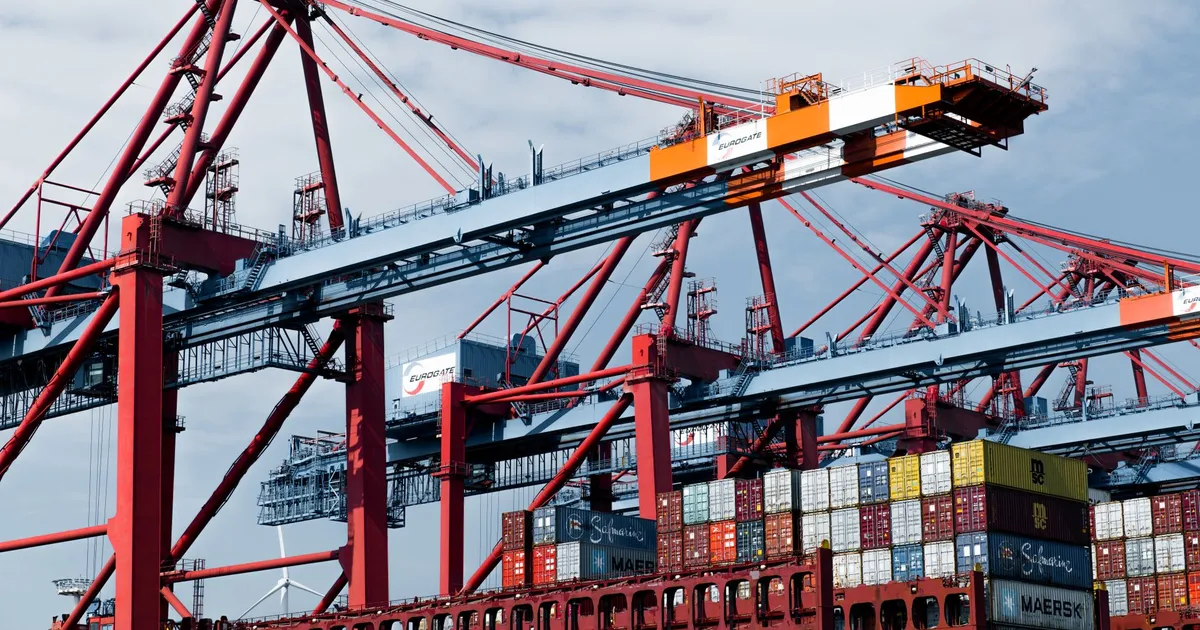
The timing is what hurts. Stats NZ reported in early 2025 that the US had become New Zealand’s second-largest export market in 2024, worth $9.0 billion, or 12 percent of total exports. That was almost double the $4.7 billion of a decade earlier. Meat exports to the US overtook China that year at $2.6 billion, up 17 percent, with beef alone at $1.8 billion. The sectors that had built the most momentum in America are now carrying the most tariff exposure.
The alternatives are already built
This is not a story of helplessness. New Zealand has been quietly building insurance for some time. MFAT’s 2024-25 annual report recorded exports to the UK and EU rising roughly 20 percent in 2024. Total exports passed $100 billion for the first time, and the department delivered an upgraded ASEAN-Australia-NZ FTA, a UAE economic partnership, concluded Gulf Cooperation Council talks and launched India negotiations. Exports kept growing despite the US headwind, reaching $25.0 billion in the September 2025 quarter, up from $22.3 billion a year earlier.
In March 2026, academics Nicholas Ross Smith and Anna Christoforou argued New Zealand needs a networked middle-power order built on shared standards, supply chain resilience and strategic diversification, pointing to the EU’s Indo-Pacific push and partners such as South Korea and Japan. That is the right frame. Free trade did not die when Washington walked away from it. It moved to the countries still willing to sign deals and keep them.
Quiet deference has not bought protection
Patman has argued this consistently. Back in 2024, after Trump’s re-election, he wrote that New Zealand should not remain silent when the administration undermined its interests. In April 2025 he argued that standing firm on free trade could open the door to new trade deals. More recently he has said the country’s hedging over the Iran war is a blind spot that is becoming harder to defend.
That war has its own cost for business. Petrol has hit its highest level since the conflict began, and Patman says the war has cost more than US$180 billion. He wants a two-track approach: cooperate with Washington where interests align and speak up where they do not. His conclusion is that the worst risk of all is not to take any risk.
You do not have to share all of Patman’s foreign policy views to accept the commercial logic. Keeping quiet has not removed the tariffs or lowered fuel bills. For a small trading nation, defending the rules is not idealism. It is self-interest.
What exporters should do now
For boards with meaningful US exposure, treat Washington as volatile for the rest of this term and price tariffs into contracts rather than hoping they disappear. MFAT’s own advice in 2025 was to look hard at CPTPP, ASEAN, EU and UK markets where preferences still apply. Use the agreements already signed, and push the government to ratify the India and GCC deals quickly.
A Democratic Congress will not bring back the old America by 2028, and Miller’s promotion suggests the White House will not try. The exporters who do well will be the ones who stopped waiting for that and spread their bets now.
Sources
- RNZ: ‘Fantasy’ to expect US to go back to playing by the rules – expert (2026-11-08)
- MFAT: United States Tariffs – New Zealand Response and Updated Impact Analysis (2025-10-31)
- Stats NZ: US now New Zealand’s second largest export partner (2025-01-30)
- MFAT: Deliver an intensive, targeted programme of trade and economic diplomacy (2025)
- Stats NZ: International trade September 2025 quarter (2025-12-02)
- The Conversation: In Trump’s precarious world, NZ will need all the middle-sized friends it can get (2026-03-05)
- Newsroom: Robert Patman – NZ shouldn’t be afraid to call Trump out (2024-11-08)
- Otago Daily Times: Global Insight – Time for NZ to capitalise on trade war (2025-04-10)
- Newsroom: NZ’s foreign policy blind spot is becoming harder to defend (2026-05-17)
- 1News: Foreign policy expert calls for NZ ‘reset’ as Iran war hits six-month mark (2026-08-30)
Join the discussion
Add useful context, ask a good question, or challenge an idea — keep it specific and respectful.