

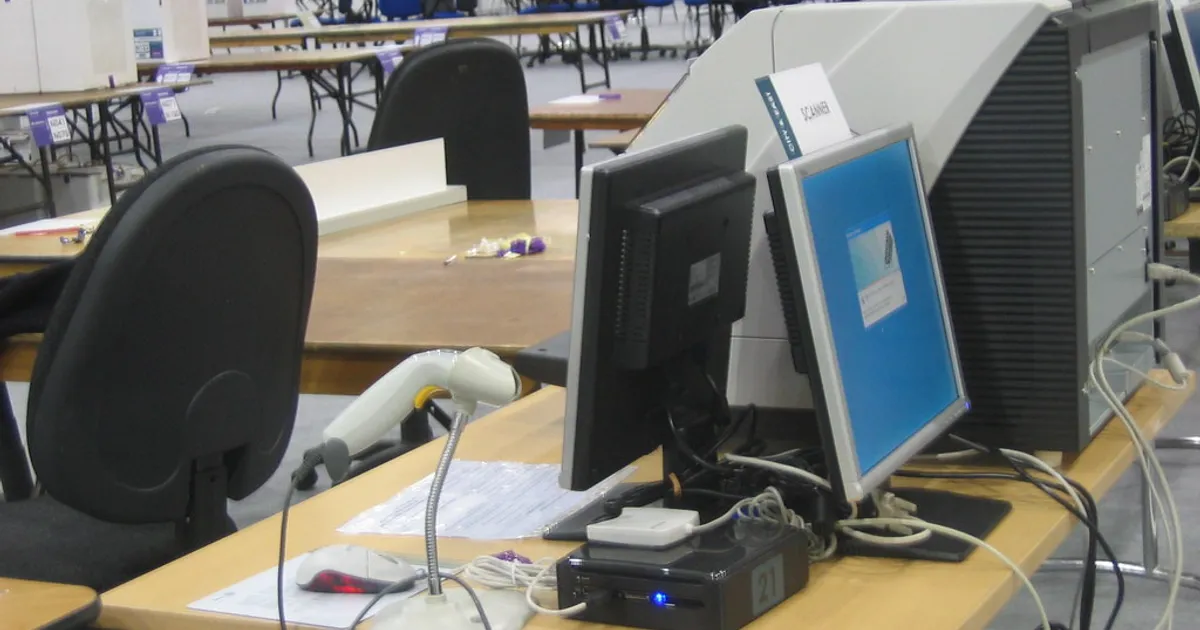
New Zealand voted on Saturday and woke up without a government. With 399,365 special votes still to count and no official result until 27 November, every business sitting on a hiring plan, a capex approval or a major contract is now waiting on a number nobody can reliably forecast.
That is the real cost of this election. Not whether the eventual coalition leans left or right, but how long the country runs without one.
Nobody would claim it, nobody would concede it
National leader Christopher Luxon did not front his party until after 11:30pm, and when he did he would only say the numbers gave National “a path towards forming government” while conceding it was too close to call. The Opportunity Party, which barely registered in most pre-election business conversations, now finds itself in the box seat alongside the overhang.
Then there is the personnel damage. Finance Minister Nicola Willis, Paul Goldsmith, Gerry Brownlee and possibly Chris Bishop look set to lose their seats. Whatever government emerges, the economic policy team business has spent three years learning to deal with will not look the same.
The maths is worse than it looks
This is not simply a slow count. According to RNZ’s analysis, six electorates sit on margins under 1,000 votes. National’s 29.2 percent party vote entitles it to fewer seats than the 42 it holds through electorates, and with Te Pāti Māori also contributing to the overhang, the provisional Parliament has 131 seats and needs 66 for a majority.
The usual shortcut, assuming specials break the way they always have, may not work either. National lost two seats to specials in each of 2017, 2020 and 2023. But a rule change now requires enrolment three weeks before election day, cutting out the late enrollers who historically drove those shifts. RNZ estimates a Labour-Greens-Te Pāti Māori-Opportunity bloc would need to outperform its election night result by about seven points to win a majority. Unlikely, but no longer something anyone can rule out on precedent.
Even after 27 November, a recount can be requested within three days. The return of writ is due by 3 December, and Parliament must meet by 14 January 2027. Add coalition talks and the country could be well into summer before anyone signs a coalition agreement.
The caretaker handbrake is already on
Until then, the caretaker convention applies. Ordinary business continues, but decisions on significant issues, new policy or anything with long-term implications should be deferred wherever possible. Tax settings, infrastructure commitments, immigration tweaks and workplace reform all go into the holding pen.
The uncomfortable part is that the freeze started long before Saturday. As NZ Herald business commentator Nadine Higgins points out, “a decision on the LNG terminal that is supposedly crucial to our energy security was deferred in September until after the election”, while councils rushed to submit reorganisation proposals only to be left “in purgatory”. A pre-election pause was always going to happen. A hung Parliament turns it into an open-ended one.
Why this cycle breaks the usual rule
Bank economists normally reassure clients that election jitters hit sentiment surveys but “rarely translate into reduced investment, spending and hiring activity”. That holds when the result is known by Sunday morning. It is a much weaker comfort now.
Infometrics chief forecaster Gareth Kiernan warned before the vote that, depending on the seat count, “there’s potential for the post-election uncertainty to be more elevated than at any time since 1996”, the first MMP election and its notoriously drawn-out negotiation. In the same piece, Massey University economist Matt Roskruge argued a long negotiation could matter more to the economy than the result itself, because businesses delay hiring and investment while they wait.
The timing could hardly be worse. Treasury’s Pre-election Economic and Fiscal Update banked on the recovery shifting from export-led to domestically driven, carried by consumption, business investment and hiring. Those are precisely the decisions that stall when nobody can say who will set the tax rules next year.
What firms should actually do
The honest advice is not to freeze everything. The realistic coalition outcomes differ in fiscal degree, how much borrowing, how fast the books get repaired, more than in fundamental direction. Projects that stack up under both scenarios should proceed. Those that hinge on a specific policy, an energy decision, a council restructure, a regulatory reform, deserve a pause and a scenario plan, not a guess.
What business needs most from the people now negotiating is speed. Every week of horse-trading after 27 November is a week of deferred decisions across thousands of firms. The parties will spend the next month counting votes. Employers will spend it counting the cost of not knowing.
Sources
- RNZ: Election uncertainty: What happens now? (2026-11-08)
- BusinessDesk: An election too close to call: how it unfolded (2026-11-07)
- NZ Herald: Election 2026 live updates: Overhang and Opportunity in boxseat as results deadlocked on election night (2026-11-07)
- NZ Herald: Election uncertainty and investment: Why New Zealand needs a longer parliamentary term (2026-11-07)
- RNZ: How much does government affect the economy? (2026-11-04)
Join the discussion
Add useful context, ask a good question, or challenge an idea — keep it specific and respectful.