

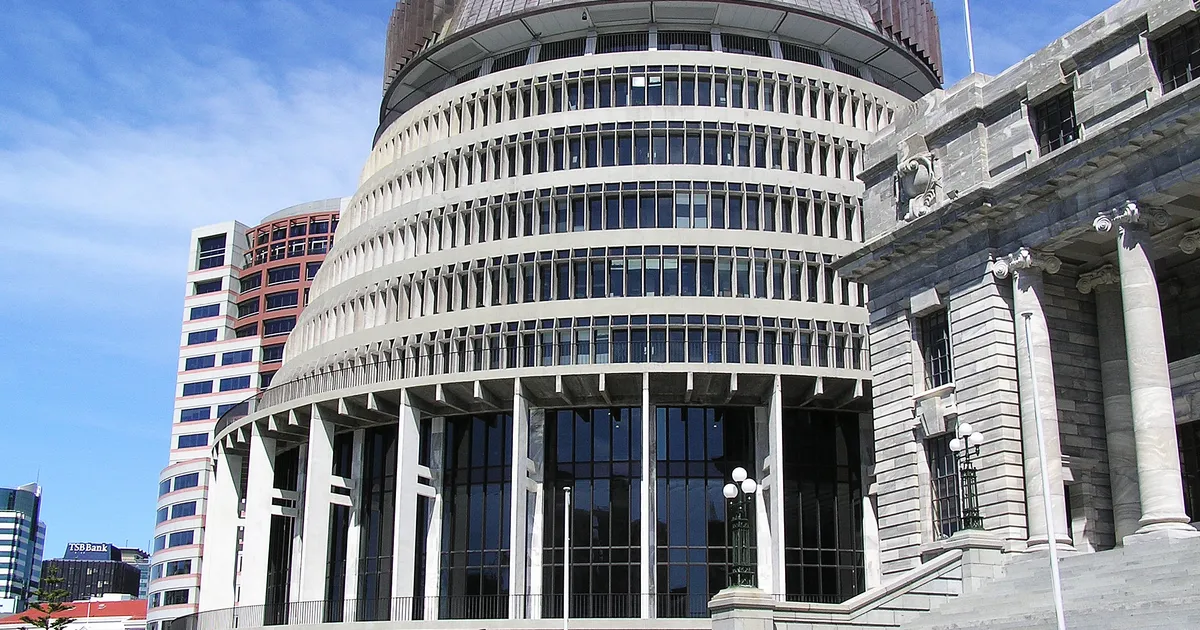
National may yet lead the next government. But on preliminary counts it will do so without the people who ran its delivery agenda. Chris Bishop, who held Transport, Housing, Infrastructure, RMA Reform and Attorney-General, conceded on election night he is unlikely to return to Parliament. Finance Minister Nicola Willis and Justice Minister Paul Goldsmith look set to join him on the outside.
For business, that is the result that matters. The party vote tells you which direction the next government leans. The bench tells you whether anything actually gets delivered.
A seat National held for nine years slipped away
Bishop trailed Labour’s Ginny Andersen in Hutt South, with Andersen 942 votes ahead as counting progressed on the night. He took the seat from Labour in 2017 and spent 12 years across four Parliaments in roles including Associate Finance, Housing, Infrastructure, RMA Reform, Transport and Leader of the House.
That portfolio list is no accident. It covers almost every area where business has spent years pleading for consenting certainty and a pipeline it can plan around. Bishop was the minister infrastructure firms, developers and councils knew how to deal with, and the one who carried the RMA replacement through the House.
Winning seats cost National its front bench
The mechanics are brutal. National won 42 of 64 electorates but only 29.3% of the party vote, down from 38.1% in 2023. Because its electorate haul exceeds what that party vote entitles it to, National is set to return no list MPs at all. That wipes out Willis, who stood list-only, along with Speaker Gerry Brownlee and Nancy Lu, according to Times.
Willis called the night “bittersweet“, because every blue electorate pushed her further out of contention. Goldsmith, meanwhile, was routed in Epsom by ACT leader David Seymour, despite National wheeling out John Key to urge voters to back its own candidate.
RNZ’s tally of the exposed portfolios reads like a Cabinet minute: finance, economic growth, transport, infrastructure, housing, RMA reform, justice, defence, the GCSB and NZSIS, Treaty negotiations and the public service. National backbencher Katie Nimon put it plainly. “These portfolios, we can’t guarantee necessarily those positions around the Cabinet table without more party votes for National,” she told RNZ.
Nobody can say they weren’t warned
In October, Post columnist Luke Malpass named Willis and Bishop as “the most obvious names at risk” and called the outcome a lose-lose. If National stayed in government, he wrote, the clean-out “would massively dent the ministerial front bench and government’s efficacy. Either way, it would be a disaster.”
Andrea Vance’s post-election verdict was sharper still. She described Bishop as “an astute operative” who understood that elections are won among mortgage-belt voters who “care less for ideology and more for competence”, and called the loss of Willis, Bishop and Goldsmith the removal of National’s “liberal, urban, and intellectual core”. Her conclusion: “the human wreckage left in the wake tells the real story.”
This is a strategic failure, not bad luck. National’s campaign fought for seats it was always likely to win while bleeding the party vote that keeps its most capable people in Parliament. Under MMP, that is a self-inflicted wound.
Direction survives, delivery takes the hit
The policy settings business backs, including fast-track consenting, RMA replacement, infrastructure investment and fiscal restraint, are unlikely to reverse under a National-led government. But direction was never the hard part. Delivery depends on ministers who know the officials, the legislation and the stakeholders, and who can hold a programme together across a parliamentary term.
Whoever inherits Bishop’s cluster starts cold, in the middle of the most complex reform agenda in a generation. A new Finance Minister will face a Budget cycle without Willis’s three years of fiscal groundwork. And they will do it inside a tougher coalition, with votes appearing to drift towards NZ First and ACT, both of whom will want more seats at the Cabinet table in exchange.
For firms with projects in the consenting pipeline, Crown contracts under negotiation or investment decisions riding on RMA timing, expect slippage. Relationships will need rebuilding and priorities will be relitigated. Some minister, somewhere, will want to put their own stamp on a reform that business thought was settled.
Specials could still change the cast
None of this is final. Roughly 300,000 special votes remain, with the official result due on 27 November. With the overhang already reshaping the arithmetic, small shifts could bring a list seat back into play. Bishop himself told supporters to “never say never“.
But business should plan for the likely case. That means a National-led government with the same agenda and a far thinner bench to carry it. The question for the next three weeks is no longer just who wins. It is who is left to run the machine, and whether Luxon can find ministers who can pick up the phone and get infrastructure built as quickly as the ones he has just lost.
Sources
- NZ Herald: Election 2026: Chris Bishop concedes he is unlikely to return to Parliament (2026-11-07)
- RNZ: ‘Too close to call’: Wait begins for special votes after cliffhanger Election night (2026-11-08)
- Times: National Party set to lose senior List MPs (2026-11-07)
- The Post: Who is in and who is out in key electorates? (2026-11-07)
- RNZ: Analysis: Five fresh new National Party MPs head to Parliament on Tuesday, but at what cost? (2026-11-08)
- The Post: National faces a clean-out but the upheaval may not end there (2026-10-03)
- The Post: Andrea Vance: National’s Pyrrhic survival – here’s what broke Christopher Luxon’s election campaign (2026-11-07)
- NZ Herald: Election 2026: Overhang and Opportunity in boxseat as results deadlocked on night (2026-11-07)
Join the discussion
Add useful context, ask a good question, or challenge an idea — keep it specific and respectful.