

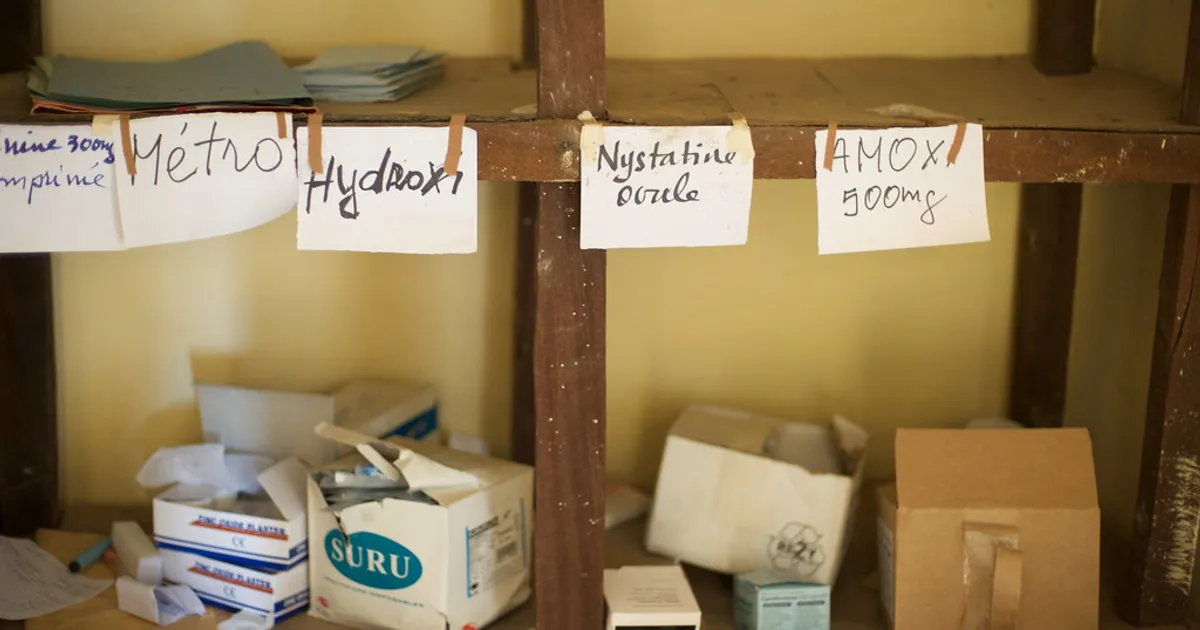
Isosorbide mononitrate is not a niche drug. It is a daily medication for angina patients, and it is now the first pharmaceutical to face shipping delays directly caused by the Iran conflict. For months, Pharmac insisted the war posed theoretical rather than actual supply risk. That position is no longer operative.
A report this week from BMI, a unit of Fitch Ratings, is direct: ongoing US-Iran tensions “will likely disrupt New Zealand’s pharmaceutical imports.” The same analysis flags a widening pharmaceutical trade deficit, meaning the country is growing more dependent on imported medicines, not less. For a nation sitting at the far end of the world’s longest supply chains, the trajectory is the wrong one.
Pharmacists are flying blind
Clive Cannons from the Independent Community Pharmacy Group told RNZ the communication gap is unacceptable: “There hasn’t been any communication, that I’ve seen, coming directly to pharmacy. What I would’ve hoped to have seen from Pharmac is a plan with different scenarios, like the fuel plan the government’s got, so we can assure our patients when they come in.”
That comparison deserves attention. The government published a fuel contingency plan with clear escalation scenarios. There is no public-facing pharmaceutical equivalent. Pharmac says it manages more than 100 medicine supply issues each month and is working with suppliers, Health NZ, and Medsafe. Acting director of pharmaceuticals Claire Pouwels confirmed the Ministry of Health is leading the response. But “we’re managing it” is not a scenario plan, and pharmacists on the front line are the ones fielding patient anxiety with no information to offer.
The structural exposure nobody fixed after Covid
Dr Sarah Marshall, senior lecturer at the University of Auckland Business School and director of the Centre for Supply Chain Management, frames the problem as chronic rather than acute: “The Iran conflict has highlighted vulnerability in our supply chains, but in many ways Covid-19 already did that. Since 2020 there’s been a much stronger awareness in New Zealand of what a supply chain actually is and how exposed we are to global disruptions.”
Awareness, however, has not translated into resilience. Back in March, Dr Bryan Betty, chair of General Practice NZ, made the geography plain: “New Zealand is at the end of a very long supply chain”, making early monitoring critical. At that point Pharmac said a small number of supply issues had been identified but there were no current problems. Two months later, the first shortage has materialised.
Pharmac’s centralised procurement model delivers genuine savings in normal conditions. But centralisation creates concentration risk. When a single supplier or shipping route fails, fallback options are limited and lead times to source alternatives are long. International reports cited by Pharmac itself noted the UK was weeks away from medicine shortages if disruptions continued. New Zealand, further from supply sources and with less purchasing leverage, is not obviously better positioned.
Every cost line is exposed, not just drugs
Pharmaceuticals are the sharpest example, but the exposure runs wider. An MFAT analysis identifies fertiliser imports worth $236-269 million as vulnerable to Strait of Hormuz disruptions. University of Auckland economics professor Robert MacCulloch has warned the conflict could be “an oil shock on the scale of the 1970s”. The 1970s precedent is instructive: energy shocks of that magnitude did not stay at the petrol station. They worked through every cost line in the economy.
Dr Marshall spells out the transmission mechanism: “If fuel prices continue to rise or supply is disrupted, that feeds through into almost every stage of the supply chain. Each stage faces higher costs, and those are eventually passed on to consumers.”
The workforce cost businesses should be watching
For employers, the risk is not abstract. GPs are already reporting that patients are skipping appointments because fuel costs have risen sharply. Rural patients are particularly affected. Luke Bradford from the Royal NZ College of GPs described shortages as “the biggest nuisance,” noting doctors often received little notice a medication was going to be unavailable.
Staff who cannot access regular medications or who defer GP visits are a productivity and health liability. For insurers, the downstream claims implications of deferred care are real. The government has responded to fuel costs with a $50 per week payment to around 150,000 families. There is no equivalent response on the medicine supply side.
The gap is clear. New Zealand has a fuel contingency plan, a fuel subsidy for households, and temporary mileage rate increases for support workers. It does not have a published pharmaceutical scenario plan, a public communication strategy for pharmacists, or any visible mechanism to fast-track alternative supply when a critical drug goes short. The first shortage has arrived. The question is whether the planning catches up before the next one.
Sources
- Calls for transparency on medicine shortages caused by Iran war (2026-06-09)
- Middle East conflict will ‘likely disrupt’ NZ’s supply of medicines (2026-06-09)
- As the Iran war continues, what else might New Zealand face shortages of besides fuel? (2026-06-07)
- Pharmac keeping an eye on supply risks amid Mideast conflict (2026-03-29)
- GPs worry about patients missing appointments, low medicine stocks as fuel prices soar (2026-04-02)
- Conflict in the Middle East: Impact on the supply chain (2026-04-22)
- Trade and Economic Implications of the Iran Conflict (2026)