

The blitz that would have seemed absurd in 2020
On 7 July 2026, Australia and Fiji signed the Ocean of Peace Alliance and the Vuvale Union, committing more than $1 billion in Australian spending over a decade. Hours later, China test-fired a long-range ballistic missile from a submarine into the South Pacific, a move Foreign Minister Winston Peters called “deeply concerning”. The coincidence was almost too neat.
The scale of Australia’s push is what should register with business owners. Stephen Dziedzic, foreign affairs reporter for the ABC, put it plainly: if you’d said back in 2020 that Australia would sponsor a PNG NRL team to the tune of $600 million to keep China out, “I would have told you that you were hallucinating.” The Ocean of Peace Alliance is a mutual defence treaty, Fiji’s first military alliance and Australia’s fourth. The Vuvale Union bundles security, climate, economic integration and better visa arrangements for Fijian workers into one package.
Dziedzic is blunt about the motive: there is “no way Australia would have poured the amount of time, energy, and money” into the region without deep anxiety about China gaining a military foothold.
Why this lands on your balance sheet, not just Canberra’s
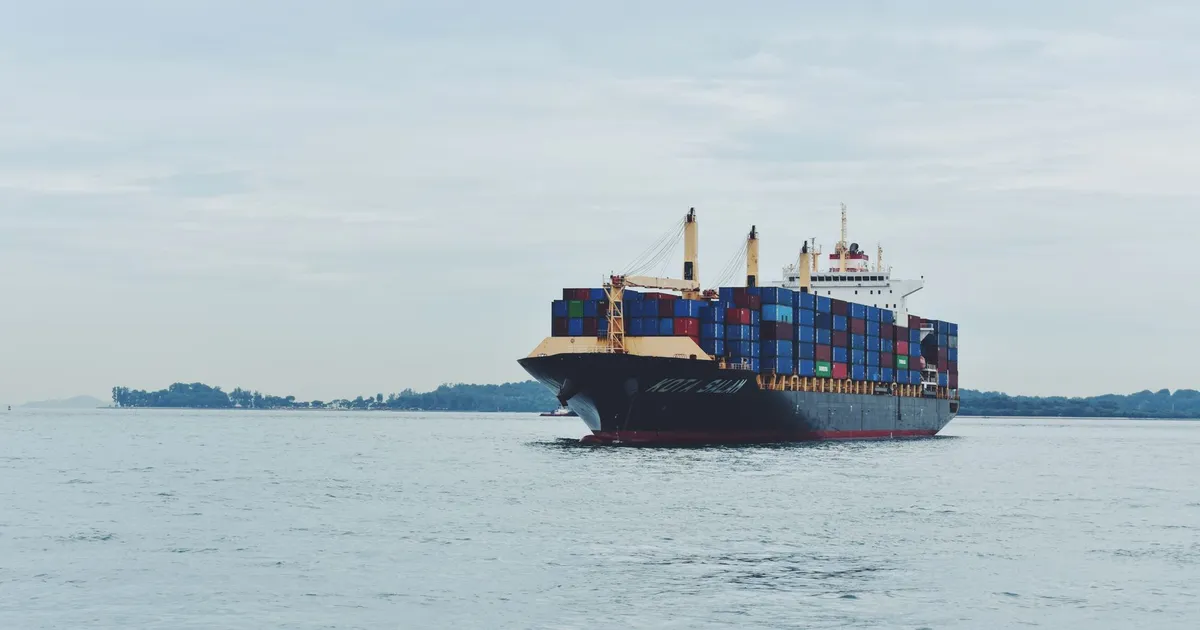
Here is the part exporters skip past. Around 99 percent of New Zealand’s trade by volume travels by sea, and roughly 85 percent of goods exports by value move on ships, as the NZ Herald’s John Howard has noted in framing every trade deal as “a promise about ships”. This is not abstract. New Zealand’s annual goods exports hit $81.0 billion in the year to March 2026, up $7.1 billion year on year, against an annual current account deficit of $16.3 billion, or 3.6 percent of GDP. An economy this trade-dependent cannot absorb disrupted shipping lanes.
Geopolitics does not need a war to reprice your business. As risk firm Dearin Associates argues, missile tests and shifting alliances change assumptions, and assumptions drive insurance pricing, shipping behaviour, investment and procurement. Governments respond by spending on surveillance, port resilience and critical infrastructure, which creates contracts for some sectors and compliance headaches for others.
The Pacific is more than a transit corridor for New Zealand. RSE remittances to Pacific countries exceed NZ$100 million annually, and the scheme is a critical labour input for horticulture and viticulture. Aid procurement matters too, with New Zealand set to spend $1.2 billion on foreign aid in fiscal 2026, up $116 million, much of it flowing through New Zealand-based contractors.
New Zealand is playing harder than it used to
Wellington’s response has been sharper than its usual style. Anna Powles, associate professor at Massey University’s Centre for Defence and Security Studies, told Newsroom about a “distinct sharpening or hardening of New Zealand’s approach,” adding, “we’re not really used to New Zealand playing hardball.” The Cook Islands episode proves it. After discovering the Cook Islands had signed a secret deal with China without consultation, Peters suspended almost $30 million in annual funding, reinstated only after a formal defence and security declaration. Some 69 percent of New Zealand’s development spending now goes to the Pacific.
Prime Minister Christopher Luxon has confirmed New Zealand will explore joining the Ocean of Peace Alliance, noting that early accession gives Wellington a say in who else joins. Papua New Guinea and Tonga are both possible members.
Pacific governments have options and they know it
Don’t mistake this for a simple China-versus-West carve-up. Devpolicy’s July 2026 analysis stresses Pacific states are “not passive actors”, using great-power competition to diversify partnerships and negotiate better deals. The 18-member Pacific Islands Forum carries real collective weight. New Zealand firms cannot treat Pacific relationships as transactions managed from Wellington.
The question for business owners is not whether a Chinese missile changes anything tomorrow. It is whether your supply chains, workforce pipelines, insurance costs and market-access assumptions rest on a Pacific that stays stable, and who is paying to keep it that way. For decades the answer was mostly Australia, while Kiwi firms banked the calm. Joining the Ocean of Peace Alliance would mean New Zealand finally putting resources behind the stability its exporters have long taken for granted. That is a bill worth paying.
Sources
- Australia’s diplomatic blitz across the Pacific – Newsroom (2026-07-24)
- NZ to ‘explore joining’ Fiji-Australia defence alliance – PM – 1News (2026-07-09)
- The stakes in the Pacific are increasing: the solutions need to adapt – Devpolicy Blog (2026-07-15)
- Overseas merchandise trade: March 2026 – Stats NZ (2026-06-03)
- Current account deficit $4.6 billion for the March 2026 quarter – Stats NZ (2026-06-03)
- Australia and Pacific – New Zealand Ministry of Foreign Affairs and Trade
- Budget 2026 boosts Pacific aid and defence spending amid security concerns – RNZ
- China missile test highlights New Zealand’s fragile trade lifeline – NZ Herald
- China’s Missile Test: Shifting Indo-Pacific Business Risk – Dearin Associates