

A greenfield gateway with a curfew-free edge
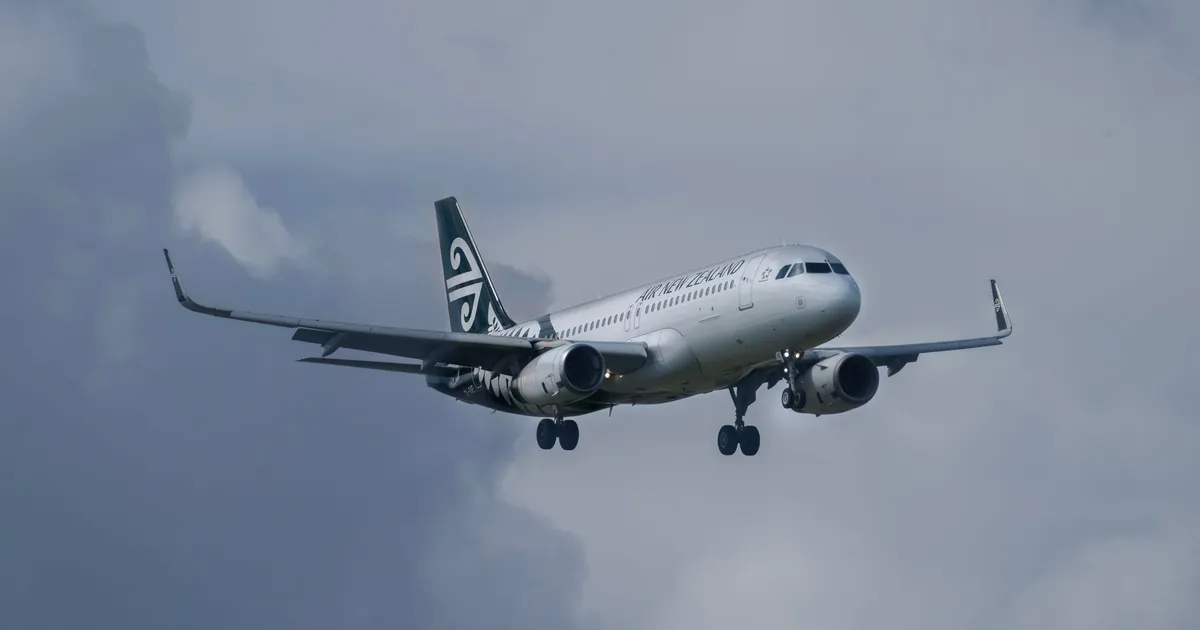
Western Sydney International Airport, officially named Nancy Bird Walton Airport, opens for passenger services on 25-26 October 2026 at Badgerys Creek, 53 to 56km west of Kingsford Smith. And Air New Zealand will be the first international carrier to operate from it, launching three flights a week from Auckland on Mondays, Wednesdays and Fridays.
Two features set the new airport apart from the ageing Kingsford Smith. It runs 24/7 with no curfew, where SYD shuts between 11pm and 6am on noise grounds. And it is the only Sydney airport with CAT III-B runway technology, letting aircraft land in fog that would ground rivals. For business travellers, that means fewer cancellations and more flexibility around early departures and winter flying.
Small route, big strategic logic
Don’t mistake the flight count for the intent. The Auckland service departs at 6am, arriving 7.45am Sydney time, with one-way seat-only fares starting from $319, flown on internationally configured narrowbody A320 and A321 aircraft.
Air NZ chief financial officer Richard Thomson set out the reasoning at a 30 June analyst briefing. He said the airline saw Western Sydney as “a useful foil for us in the Sydney market. It’s a growing region and there’s not a huge amount of infrastructure, so there isn’t much duplication.” He also flagged the structural squeeze at the incumbent, calling Kingsford Smith “now quite a constrained airport, and that’s only going to become more challenging over time”.
That is the real play. WSI is a hedge against rising slot costs and congestion at SYD, and a negotiating lever for an airline that already runs 48 weekly flights to Sydney across four NZ departure points. Those services stay put.
The catchment does the heavy lifting
The demand case rests on geography. Greater Western Sydney holds about three million people, covering Penrith, Liverpool, Campbelltown, Fairfield and Parramatta, and represents more than 50% of Sydney’s population and its third-largest economy. It also carries one of Australia’s largest Asian and Pacific Island diaspora communities, a demographic with strong visiting-friends-and-relatives travel patterns to New Zealand. For those residents, a direct flight home just replaced a slog across the city.
Why the sceptics have a point
Forsyth Barr head of research Andy Bowley offered the sober read. On 24 July 2026 he told the Mike Hosking Breakfast the market would not be “completely shaken up.” Air NZ’s new flights amount to only around 2% of its total capacity, and most operators and passengers will keep routing through Kingsford Smith.
He is right to be cautious. Three flights a week into an unproven airport is a probe, not a transformation. Whether WSI pulls genuinely new travellers or just redistributes existing Sydney demand won’t be clear for months. And at 58km from the CBD with still-developing transport links, the airport is a friction point for anyone based in inner Sydney.
A sensible bet from a constrained fleet
The timing matters because Air NZ is managing a tough patch. It reported a $40 million net loss after tax for the first half of 2026 on operating revenue of $3.4 billion, up 1.2%, with international long-haul capacity down 3.6% as global engine maintenance grounded aircraft.
The short-haul story is healthier. International short-haul capacity grew 8.4% on the back of two new A321neo aircraft, the same fleet type going onto the WSI route, and Tasman and Pacific guidance points to 9 to 10% growth in the second half. Load factors sat at 85.8% in April 2026, so the constraint is metal, not demand.
For NZ exporters, importers and professional services firms with Western Sydney ties, a direct link that didn’t exist before is straightforwardly useful, and the belly-freight capacity into a region that opened for cargo in July 2026 adds a logistics option. Even if year-one volumes stay modest, Air NZ has locked in first-mover status at what will become a major hub, with lower costs and a new catchment to show for it. That is smart risk management, not a gamble.
Sources
- Andy Bowley: Forsyth Barr Head of Research on the new Western Sydney Airport’s impact on the Trans-Tasman aviation market (2026-07-24)
- Air New Zealand boss bullish on Western Sydney flights (2026-07-01)
- Five reasons to try Sydney’s new 24/7 airport and three reasons not
- Air New Zealand confident new Auckland-Western Sydney service will succeed
- Air NZ’s Western Sydney expansion: new airport, same passengers?
- Air New Zealand 2026 Interim Results Report (2026-06)
- Air New Zealand 2026 Interim Results Presentation (2026-06)
- Air NZ Investor Operational Statistics – April 2026 (2026-04)