

From launch pad to factory floor
New Zealand’s space story so far has been a logistics story. Rocket Lab turned Mahia into one of the busiest private launch sites on the planet by being the world’s most reliable, cost-effective way to get small payloads into orbit. That is a valuable business, but it is fundamentally a delivery service for other people’s products.
Outlier Space wants to change the equation. The Auckland start-up has raised NZ$10.5 million (US$7.35 million) in pre-seed funding, which it describes as one of the largest pre-seed rounds in New Zealand history. The round was led by NZ venture firm GD1 with Australian VCs Airtree, Side Stage Ventures and Investible along for the ride. Founder Jamie France, who spent nearly a decade at Rocket Lab as a global director, frames the pitch bluntly: “What if space was not simply a place to launch satellites, but a factory floor for making things that cannot be produced on Earth?”
What actually gets made up there
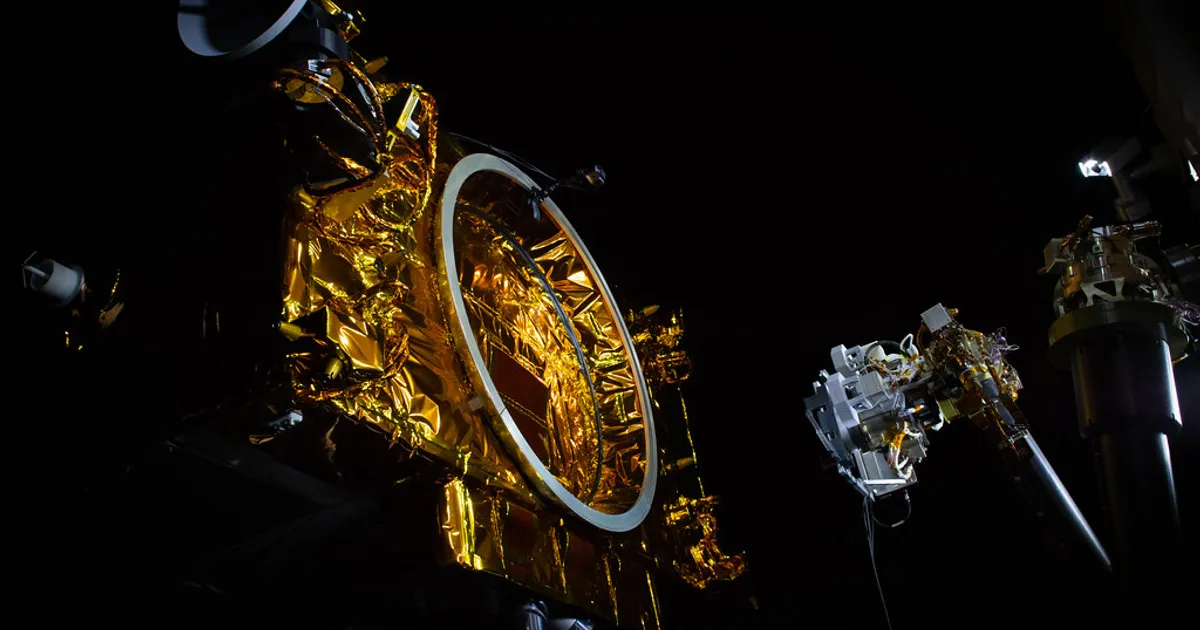
The product is a reusable spacecraft that provides a microgravity environment, which France calls an “anti-gravity chamber”. Outlier handles launch, orbit and re-entry. Customers bring their own experiments and equipment. One analysis described the model as being a “landlord for a very special factory”.
The science is settled. In September 2025, Associate Professor Sarah Kessans at the University of Canterbury explained that in orbit “you don’t have sedimentation forces, you don’t have flotation forces, and critically you don’t have what’s called convection currents”. Molecules that separate by weight on Earth stay evenly distributed. That enables drug compounds and crystal structures that are physically impossible to make under gravity.
The commercial proof point is real money, not a lab curiosity. Merck used microgravity crystallisation work to reformulate its cancer drug Keytruda from a four-hour intravenous hospital infusion into a version that can be injected at home. That changes how patients access treatment and strips cost out of the healthcare system. Outlier’s target customers span pharmaceutical, biotech, advanced materials and semiconductor firms.
Why the window is open now
Two structural forces are converging. Launch costs have collapsed – down 400 times since 1981, from $85,200 per kilogram to $1,500 per kilogram in 2024, according to MBIE’s April 2025 sector study. Getting to orbit is no longer the hard part; the bottleneck is coming back down.
At the same time the International Space Station, which has been the de facto microgravity proving ground for 30 years, is being decommissioned. As France put it, “the cost to orbit is at an all-time low. The International Space Station, which has proved the science over the last three decades, is being decommissioned soon.” GD1’s Vignesh Kumar was direct on the timing: “With the ISS nearing end-of-life and the launch landscape evolving, the conditions for a commercial microgravity platform have never been stronger.”
Outlier’s closest comparable is California’s Varda Space Industries, but Varda is vertically integrated and manufactures for itself. Outlier is a multi-customer platform serving a range of sectors, which BusinessDesk noted makes it a broader, more capital-efficient bet.
A sector already worth $2.68 billion
This is not a solo punt. The University of Canterbury announced in May 2026 that Kessans is leading a team preparing a shoebox-sized crystallisation lab for world-first spaceplane testing with Dawn Aerospace, backed by a $10 million MBIE Endeavour Fund programme. Kessans says that in microgravity “you get much bigger, much higher quality, more perfect protein crystals” that let researchers design better drugs.
The macro numbers back the ambition. NZ’s space sector revenue hit $2.68 billion in FY2024, up 53% since 2019, outpacing global growth of 40.6%. Crucially, the space manufacturing sub-sector – the value-add end – grew from $247 million to $402 million over that period, the fastest-growing segment. Government space spending climbed from $10 million to $105 million, and the 2024-2030 strategy targets doubling the sector by 2030 with lighter-touch regulation.
Regulatory speed is itself a competitive asset. After Rocket Lab signalled its intent to launch in late 2014, Cabinet developed the Outer Space and High-altitude Activities Act within a year, enacted it in 2017, and the first Mahia launch followed the same year, MBIE’s Going for Growth report noted. That track record matters for a company doing something genuinely novel.
The bet that actually matters
This is not a story about novelty. It is a story about whether New Zealand can move up its own value chain, from launching other people’s payloads to owning the higher-margin end of the market and selling to global pharma and semiconductor buyers. The engineering talent, launch access and regulatory environment are already here. The window created by ISS retirement and cheap launch is real and time-limited. Outlier’s raise, and the capital behind it, is a wager that a country that talks endlessly about a high-value, science-led economy can, for once, actually build one.
Sources
- Kiwi start betting gravity-free drugs made in space could save us billions (2026-09-01)
- Business of Tech: Outlier Space’s Jamie France on the anti-gravity business (2026-08-27)
- Outlier Space raises US$7.35m to build commercial microgravity return platform (2026-07-29)
- Outlier Space raises $10.5M to revolutionize microgravity manufacturing for pharma and chips (2026)
- UC-led biotech platform prepares for world-first spaceplane testing (2026-05-15)
- Sarah Kessans and University of Canterbury team prepare shoebox-sized space lab for Dawn Aerospace test flights (2026-05-20)
- New Zealand and the low Earth orbit economy (2025-09-16)