

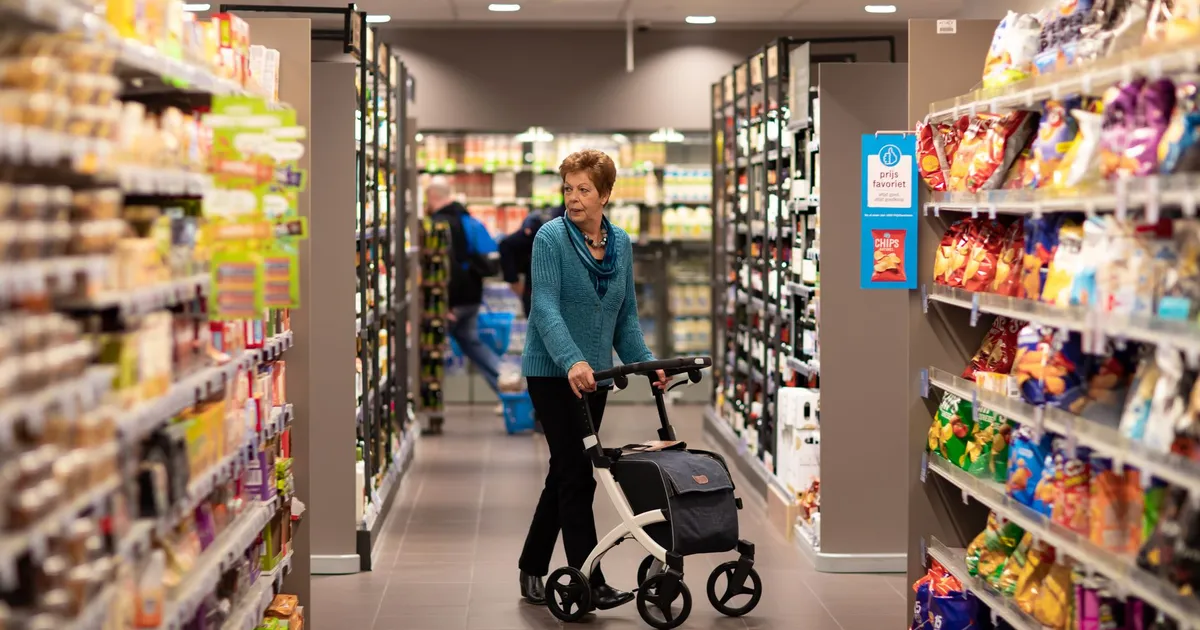
Roughly 400,000 New Zealanders now live alone, and the financial system has barely noticed. That is not a lifestyle footnote. It is a structural shift in who is buying houses, insurance, groceries, power and retirement products, and most of those products are still designed around a couple splitting the bills.
The 2023 Census counted 389,352 one-person households, or 22.8% of the total, according to Stats NZ figures released in 2025. The same data showed solo living rising sharply with age, from 2.5% of 15-29 year olds to 25.3% of those aged 65 and over, and ranging from 6.2% in Auckland to 15.2% on the West Coast. This is not a story about young professionals in inner-city studios. It is a story about ageing provincial New Zealand.
The driver is age, not fashion
Stats NZ flagged the mechanism a decade ago. Its 2015 projections found almost 90% of growth in one-person households would come from people aged 60 and over. The specific numbers in that forecast are now dated, but the logic holds: longer lives, widowhood and later-life separation are pushing more people into single occupancy, and that cohort will keep growing as baby boomers age.
New Zealand is hardly an outlier. Back in 2025, Inside Retail reported Euromonitor data showing single-person households made up one-fifth of all households worldwide in 2023, with 48% growth forecast to 2040.
Fixed costs do not divide by one
The economics are brutal and simple. Rent, rates, insurance and the daily power charge attach to the dwelling, not the number of people in it. In 2025, RNZ reported economist Shamubeel Eaqub’s analysis of Stats NZ spending data, which found singles aged 25-49 spent 14% more overall than coupled peers, including 53% more on housing, 40% more on health and 41% more on communication. One-person households spent $807.90 a week in 2023, about half the $1,611.30 spent by couples, despite having half the people to share it.
Inflation has made it worse. RNZ reported in January 2026 that single people aged over 75 faced five-year inflation of 27.2%, the highest of any household type, against 25.3% across the board. Eaqub said at the time that recent price rises had been concentrated in food, rates and insurance, essentials that eat a bigger share of a single budget. The same piece cited Retirement Commission research showing older women are nearly twice as likely as men to live alone, and almost 40% of single women aged 65-74 lacked confidence about a comfortable retirement.
As financial planner Liz Koh told The Spinoff in 2021, the mortgage or rent is charged regardless of occupancy, and electricity carries a baseline charge regardless of use. Nothing has changed since except the size of the bills.
Where the money is being left behind
For lenders, the single-income borrower is a growing segment carrying proportionally heavier housing costs. Serviceability tests and products built for dual incomes will either exclude these buyers or misprice their risk.
For developers, the fastest-growing household type wants smaller, lower-maintenance, single-occupancy homes in the regions where solo living is most common. A housing stock dominated by three- and four-bedroom family homes is a mismatch, and a fast-track pipeline that ignores it is building for the 1990s.
For insurers and wealth managers, the gap is stark. In 2025, RNZ reported Motu research showing single retirees had discretionary spending of just $8,523 a year against $24,461 for couples, and Retirement Commission work found singles less likely to hold savings, investments or insurance. That is an underserved market for retirement income products, downsizing support and cover priced for one.
For supermarkets, bulk discounts and family-sized packs assume shared consumption. A shopper who cannot use a two-kilo bag before it spoils is paying a hidden premium, and the retailer who fixes that wins loyalty.
Employers should take note too. Benefits packages built around dependants offer little to a growing single-income workforce facing the steepest real cost increases.
Not every solo household is struggling
The picture is not uniformly bleak. Stats NZ’s 2016 analysis of 2013 Census data found 62% of people living alone owned or partly owned their home, and they were less likely than others to be on very low incomes. A slice of this market is asset-rich and cash-flow constrained, exactly the customer equity-release, retirement village and premium convenience businesses should be chasing.
The customer has already changed
The 400,000 figure will only grow as the population ages. Businesses that keep designing for the median couple will find their addressable market shrinking while competitors who price, package and lend for one pick up the slack. The solo household is no longer the exception. It is the default customer for a fifth of the country, and rising.
Sources
- Stuff: 400,000 Kiwis are quietly choosing a new way to live, and our finances aren’t ready for it (2026-10-18)
- Stats NZ: Families and households in Aotearoa New Zealand (2025-06-26)
- Stats NZ: Growth of one-person and two-person households driven by ageing population (2015-10-29)
- Inside Retail: How the solo economy is reshaping the retail industry (2025-02-21)
- RNZ: How much more expensive is it to be single? (2025-03-21)
- RNZ: Why single people are feeling the financial crunch (2026-01-28)
- The Spinoff: The price of independence – Why does it cost so much to live alone? (2021-12-10)
- Stats NZ: Two’s a crowd – Living alone in New Zealand (2016-05)
Join the discussion
Add useful context, ask a good question, or challenge an idea — keep it specific and respectful.