

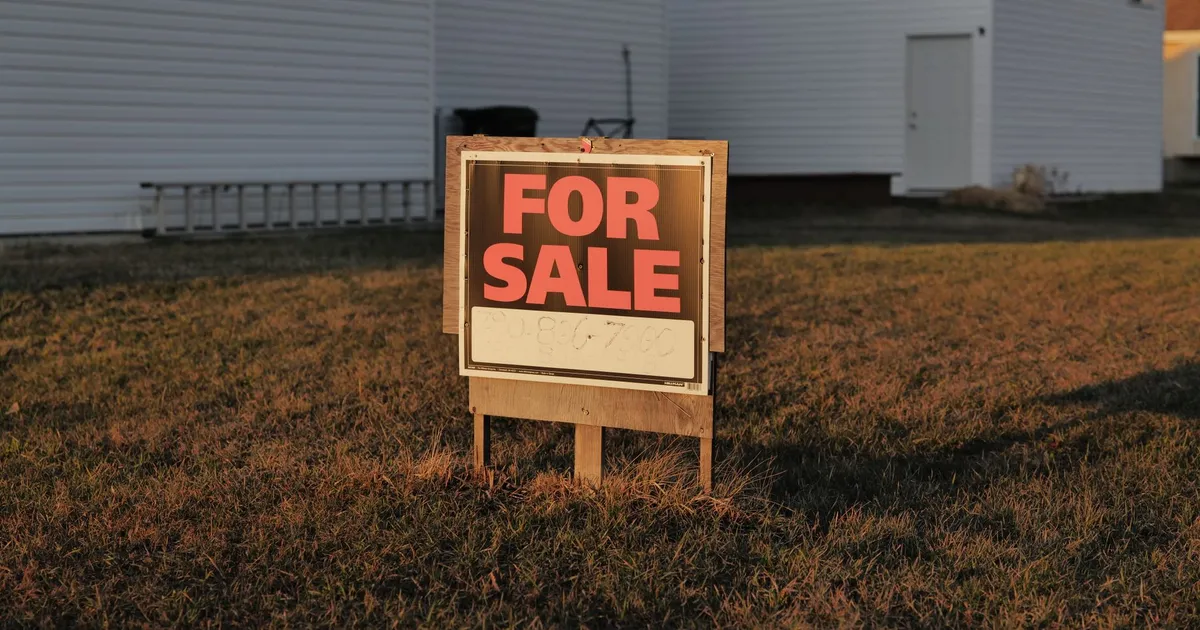
Labour’s capital gains tax is a 28% flat tax on gains from selling residential and commercial property. It only covers gains made after a 1 July 2027 valuation day, and the family home, lifestyle blocks and farms are exempt. The usual election debate asks whether voters will punish Labour for it. For anyone holding property, a more useful question is how the tax’s mechanics are already changing what they do with their assets.
The evidence says those mechanics matter more than the headline rate.
The median rule pays you to wait
The detail getting the least attention covers properties now worth less than their purchase price. Officials would take the median of the purchase price, valuation-day price and sale price, then subtract it from the sale price to get the taxable gain.
Here is a worked example. An investor buys at the peak for $900,000. The property is valued at $800,000 on valuation day and sells for $850,000. The median of the three figures is $850,000, so the taxable gain is nil. If the same property later sells for $950,000, the median becomes $900,000 and the investor is taxed on $50,000. The original purchase price still sets the baseline, which gives peak buyers a reason to hold until prices recover.
Cotality’s head of research Nick Goodall estimates that roughly three-quarters of investors who bought during the peak would be caught by the rule. He forecasts about 18,000 residential sales in the tax’s first year, against 30,000 to 35,000 in a normal year. That is a 40-50% fall in turnover. Agents, mortgage brokers, conveyancers and tradies who depend on property changing hands would feel it first.
Commercial owners have the same instinct
Commercial landlords usually hold for the long term, but they are thinking the same way. In 2025, Bayleys’ Chris Farhi said “the odds are that people will simply hold off selling their properties until the rules are changed again”. He pointed to a widespread belief that a future government would repeal the tax.
The design does soften the impact in places. In Labour’s 2025 policy document, a building bought for $400,000 that is valued at $600,000 on valuation day and sold for $700,000 produces a taxable gain of only $100,000. Small businesses that sell their premises to buy bigger ones can also get rollover relief.
The tax still lands on a sector that already carries a structural handicap. In 2025, Property Council chief executive Leonie Freeman asked whether commercial depreciation would be reinstated, and noted that New Zealand is the only OECD country without it. The policy does not fix that gap. It adds a new tax on top of it.
Capital will find the untaxed door
Shares, business assets and KiwiSaver are all outside the tax. In 2025, BusinessDesk’s Dileepa Fonseka argued that this selective scope distorts where capital goes, because investors are pushed towards assets that stay untaxed.
For founders, the boundary is awkward. A business sale escapes the tax, but the building it trades from, if held in a separate property vehicle, does not. Many owner-operators who have structured their affairs that way will need to review those structures.
In 2025, Victoria University tax professor Lisa Marriott expected “downward pressure on the property market”. She also warned of a lock-in effect, with investors holding on until any reversal.
The revenue depends on rising prices
The policy also has an internal contradiction. In 2025, University of Auckland economist Ryan Greenaway-McGrevy said “if house prices don’t go up, then we won’t have any capital gains taxes at all” to fund the promised GP visits. A tax meant partly to cool speculation only raises money if prices keep climbing.
Even Labour’s own document conceded the returns would be “small relative to GDP and total tax revenue”. Earlier Treasury modelling of a transition-style regime, released in early 2025, put five-year revenue at $1.9 billion. That is a modest return for a large shift in investor behaviour.
The rulebook arrives after the vote
Much of the detail that would set an owner’s tax bill is still unknown. As of late 2025, Labour had not said which valuation methods would count, who would pay for valuations, or whether owners could challenge them. Finance spokesperson Barbara Edmonds said those settings would follow Tax Working Group advice after the election.
The definition of a main home also needs checking. It requires the owner to be living in the house “most of the time”. Someone who owns one house but rents elsewhere could be taxed when they sell it.
Asset owners do not need to wait for election night to prepare. Sensible steps now:
- Keep records of purchase prices and current valuations.
- Review whether premises sit in separate property vehicles.
- Model what selling now, holding, or holding until a possible repeal would mean for each asset.
The market is already pricing in the tax, even though nobody yet knows exactly how it would work.
Sources
- 1News: Labour’s capital gains tax explained, what is it and who will pay? (2026-10-17)
- NZ Herald: Explainer, what Labour’s capital gains tax means for properties worth less than they were bought for (2026-09-20)
- The Post: Here’s what a capital gains tax means for commercial property (2025-11-03)
- Labour: Targeted tax changes to grow the economy and invest in health (2025-10-01)
- BusinessDesk: The politics of whose capital gains get taxed (2025-11-03)
- RNZ: What doctors, landlords and economists make of Labour’s tax plan (2025-10-29)
- Treasury: Official Information Act Response 20240917, increase in taxation of capital gains (2025-01-30)
- RNZ: Labour’s capital gains tax ‘valuation day’ details not to be revealed until after election (2025-11-03)
- RNZ: Labour’s capital gains gamble, from leak to launch (2025-10-28)
Join the discussion
Add useful context, ask a good question, or challenge an idea — keep it specific and respectful.