

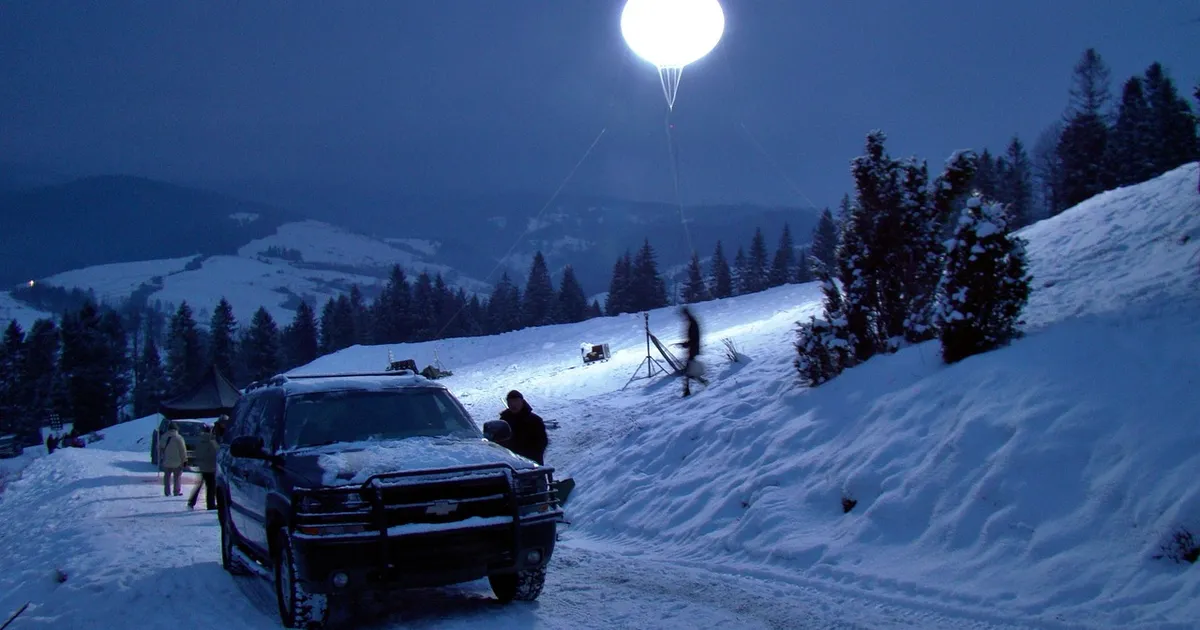
Queenstown’s film sets, festivals and high-end weddings have run on diesel generators for as long as anyone can remember. That default is now under commercial pressure, and not from a single green pioneer. A second local business has started hiring out portable battery power, which turns a curiosity into something more useful: a small, competitive market.
The new entrant brings film credentials
Generation Battery, or Gen B, launched about two months ago, founded by film industry veteran Brett Mills and Tim Derig, who has spent four years in Queenstown’s solar industry. Operating from Mills’ film yard on Margaret Place, it pitches itself as a silent, emission-free alternative to diesel for screen productions, sports events, weddings, festivals and markets.
The kit is serious. Gen B runs two Australian-made J80 Jungle units, each an 80kWh battery on a trailer, plus two Riddara RD6 electric utes with 80kWh batteries and vehicle-to-load capability, so the ute itself becomes the power source. One J80 was working before the business formally launched, powering lighting on the second season of A Remarkable Place to Die and Netflix’s Queenstown.
“We’ve found these units are good for industrial-sized power,” Derig told the ODT. Gen B has already supplied all the power for a multi-day music event.
NRG got there first, and made the cost case
Gen B is walking into a market that already has an incumbent. NRG Event Batteries, founded by Hamish Roberge of TomTom Productions, bills itself as New Zealand’s first event-specific battery power solution, built in Central Otago by industrial electricians and event technicians. It targets the same customers, from weddings and conferences to screen productions and luxury events, with multi-unit setups for bigger jobs.
Roberge built his 76kWh system after the 2025 Electrify Queenstown conference, when he couldn’t find a suitable product off the shelf, and funded it with a bank loan. His pitch in May was refreshingly unsentimental. “The more you dive into it, it’s better for events. And the fact that it has environmental benefits is just an added bonus on the end,” he said.
He argued the system was already roughly cost-comparable with running diesel, with fuel prices “pretty spicy” and unlikely to ease quickly, while recharge costs, especially from cheap solar, could keep falling. That is the argument that matters to a production manager or event organiser. Green credentials help win the brief. Price wins the invoice.
In July, NRG powered parts of Electrify Queenstown 2026 so quietly that attendees may not have noticed, which Roberge framed as the point. Diesel generators, he wrote, have spent decades being noisy, polluting and “built for construction sites rather than event stages”.
Why Queenstown suits the model
The advantages stack up neatly in this town. Wedding venues and film locations trade on silence and scenery, and a rumbling generator undermines both. The South Island grid is overwhelmingly hydro-based, so a battery charged from the wall carries a cleaner footprint here than in fossil-heavy markets overseas.
The screen industry has also been asking for this for years. Back in 2023, Canary Media reported that generators accounted for about 15% of film sets’ carbon emissions, which is why Netflix and Disney backed the Clean Mobile Power Initiative. The same report put the global temporary power market at $4 billion to $6 billion a year, and quoted Moxion Power’s then-CEO Paul Huelskamp arguing that incumbent generator makers were slow to move because battery R&D would “cannibalize revenue from their existing business lines”. That is precisely the kind of gap small, nimble local operators can exploit.
Honest about the limits
Neither founder is overselling. Derig says battery technology has yet to reach the tipping point where diesel becomes obsolete, because big, remote jobs may still need a generator to recharge the batteries. This is incremental displacement, job by job, not a revolution. For hirers, the practical takeaway is to ask the question at quoting stage rather than defaulting to diesel out of habit.
There is a regulatory thread worth watching too. Local councils and Rewiring Aotearoa have backed a push for an energy innovation sandbox in Queenstown-Lakes that would let new technologies be trialled under relaxed electricity rules, and the Electricity Authority has referenced the idea. There is no confirmed timeline, but regulators getting out of the way of small-scale innovation would be welcome.
Competition is the real signal
One battery start-up is a local feel-good story. Two, chasing the same film crews and wedding planners within about a year of each other, is evidence of a market that pays. Competition should sharpen pricing, widen fleets and push the technology into bigger jobs. If diesel stays expensive and battery capacity keeps climbing, Queenstown could prove the model for every resort town and outdoor event in the country. The generator hire firms should be paying attention.
Sources
- Otago Daily Times: Queenstown pair plug into battery power (2026-11-14)
- Queenstown NZ: Silence is golden, Queenstown’s NRG Event Batteries power a cleaner events future
- Film Otago Southland: NRG Event Batteries
- LinkedIn (Rewiring Aotearoa): Diesel generators, you’re cooked! (2026-05-18)
- LinkedIn (Hamish Roberge): From concept to execution, NRG Event Batteries at Electrify Queenstown 2026 (2026-07-20)
- Canary Media: Can mobile batteries make dirty diesel generators obsolete? (2023-07-12)
- Queenstown Energy Advocates: Energy innovation sandbox
- Electricity Authority
Join the discussion
Add useful context, ask a good question, or challenge an idea — keep it specific and respectful.