

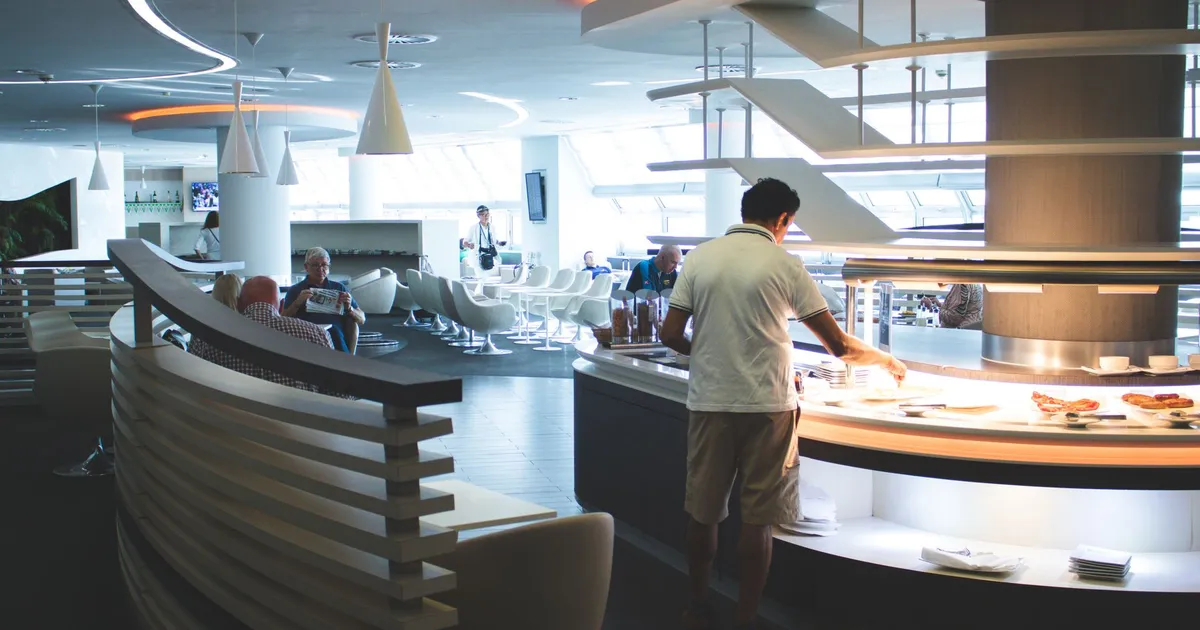
Every airport lounge has the same problem as an airline seat. If nobody uses it before the flight leaves, the value is gone. LoungePair, a 10-person New Zealand travel-tech firm, has built a business out of selling that perishable capacity to travellers who have no status card and no intention of buying one. Its newest deal, with the frequent flyer programme of China’s HNA Aviation Group, shows the idea travels.
A side door into China
LoungePair has partnered with Fortune Wings Club, the loyalty programme for HNA Aviation Group, parent of Hainan Airlines and Hong Kong Airlines. The tie-up gives Hainan passengers access to lounges including Auckland’s Strata Lounge. Chief executive Daniel Kinnoch called it “a great opportunity for us in the Chinese market”, saying it lets the company enter a market that has “traditionally had quite a stronghold from domestic operators”.
That is the smart part. A small Kiwi firm was never going to out-build Chinese incumbents on the ground. Plugging into a major airline group’s existing customer base skips the expensive bit entirely. The deal follows signings with Vietnam Airlines, Etihad Airways and Entertainment Publications of Australia over the past year.
Sixty seconds on bad Wi-Fi
The product is deliberately simple. “For your average Kiwi, it’s a simple QR code that you use to walk up to a lounge. They scan it and you’ve got access to up to 1400 lounges worldwide,” Kinnoch told RNZ. Purchase takes about a minute, “even on really average plane Wi-Fi”, and it is fully pay-as-you-go, with an optional membership for frequent users.
The target customer is the traveller who saved money flying economy but wants something nice now and then. As Kinnoch put it on RNZ’s Checkpoint, the pitch is about trying what people assumed required status or a seat up the front. The catalogue now stretches beyond lounges to spas, sleep pods and sit-down meal experiences, depending on the airport.
This is classic marketplace economics. Lounge operators get revenue from seats that would otherwise sit empty. Travellers get a premium experience without a premium fare. LoungePair takes a cut for matching the two.
The numbers behind the pitch
This is not a pitch deck in search of customers. Kinnoch says LoungePair has achieved 10% month-on-month revenue growth and describes the company as “the world’s largest marketplace for single-use access to airport lounges”. In a September industry piece he said LoungePair recorded a 59% increase in lounge pass purchases in the second half of 2025, with even faster growth through 2026.
The network itself has been broadly stable. In 2025, deals with travel insurance app Freely and Australian Frequent Flyer had already taken it to more than 1400 lounges. Growth since has come from distribution, more airline and partner channels selling into the same inventory, rather than piling on venues. That is a capital-light way to scale, and it is exactly how a 10-person firm takes on DragonPass, Priority Pass and LoungeKey.
Selling a room that can fill up
The obvious risk is that lounges are finite. Sell too much access and the quiet room becomes a departure gate with better coffee. Kinnoch does not dodge this. “When everyone wants in and can get in, the lounge fills and travellers are left fighting for a comfortable spot where they paid to avoid the crowd,” he wrote in LiftVector, adding that a crowded lounge “is a reason to think twice before buying the next pass”.
He has been thinking about it for years. Back in 2023 he argued many airline-branded lounges are loss-makers run as marketing, while independent lounges depend on access fees and aggregator payments, and he pushed for time-slot booking to manage peaks.
The current fix is operational. When a lounge is full, partners usually redirect the customer to another option or a 24/7 support team finds an alternative. The company is also building tools to help flyers pick better lounges and dodge crowds. Turning “lounge full” into “here’s a restaurant table instead” is what makes the pass worth buying twice.
What the next leg looks like
The tailwind is real. Kiwi airports are busy again, with Auckland by far the country’s dominant international gateway, and airlines are adding Asian capacity. A Hainan partnership lands just as more Chinese travellers come through.
The lesson for other Kiwi tech founders is worth stating plainly. LoungePair did not try to build airports or lounges. It found idle capacity inside a huge global industry, made it easy to buy, and then let big airlines do the distribution. If it keeps solving the crowding problem as hard as it chases partners, the 10-person team has a defensible niche that the incumbents, built on memberships and credit card perks, are poorly shaped to copy.
Sources
- The Post: Kiwi travel-tech firm LoungePair expands into China with major airline deal (2026-11-10)
- RNZ: The Kiwi tech firm trying to make waiting for flights ‘time well spent’ (2026-11-14)
- RNZ Checkpoint: Travel tech firm making it easier to get into airport lounges (2026-11-14)
- LiftVector: The innovation that lounges really need (2026-09-29)
- NZ Herald: Kiwi firm LoungePair says new deals will boost access to airport lounges (2025-11-12)
- NZ Herald: Airport lounge access firm LoungePair working on ways to help flyers pick better options, dodge crowds (2026-07-15)
- Commerce Commission: Regulated airports performance and data
Join the discussion
Add useful context, ask a good question, or challenge an idea — keep it specific and respectful.