

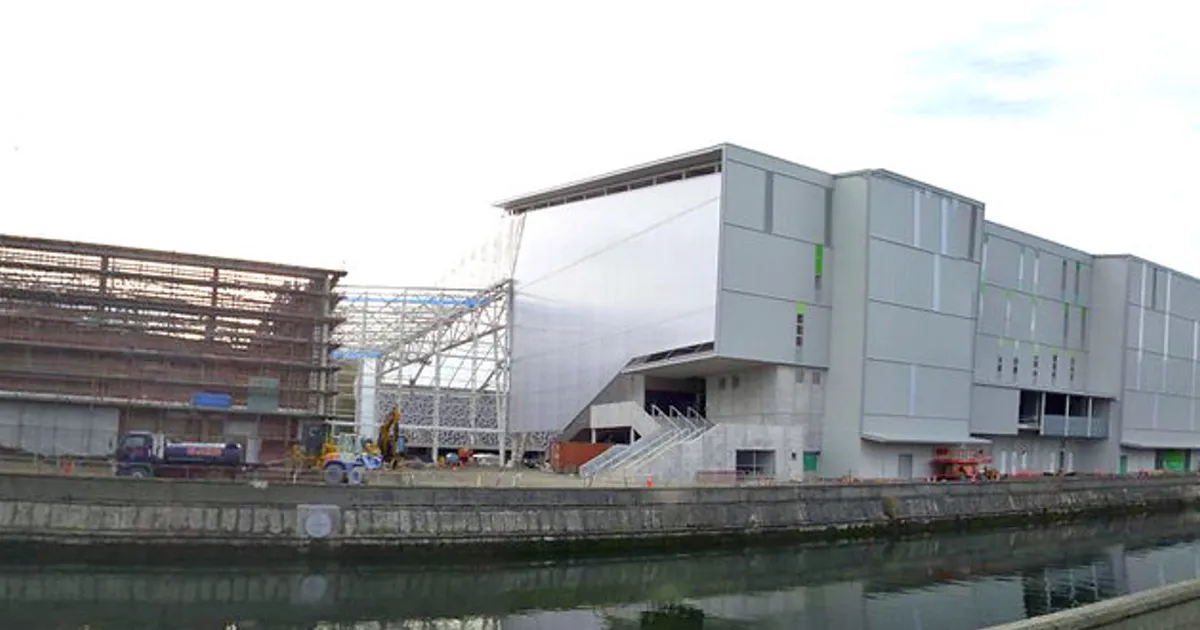
Dunedin’s Forsyth Barr Stadium posted total revenue of $6.3 million in the first half of FY2025, down from $11.1 million in the same period a year earlier. Cash flow from operations fell from $4.2 million to $873,000. Total assets shrank from $20.6 million to $12.2 million. And this is before Christchurch’s $683 million Te Kaha stadium opens in March 2026, permanently reshaping the competitive landscape for live events in the South Island.
Building a covered stadium was the easy part. The hard part, as Dunedin is learning in real time, is filling it.
A good year produced $82,000 in profit
The full-year 2023 result is the benchmark Dunedin points to. That year featured Red Hot Chili Peppers, Rod Stewart, Six60, and an All Blacks test against Ireland, drawing 47,500 visitors and generating a claimed $32.5 million in direct additional spend. It was the kind of year that makes the ratepayer investment look defensible.
But the venue itself? It produced a net profit after tax of just $82,000. That was the good year. The first half of FY2025, with its 43% revenue decline, shows what the lean years look like. And the lean years are the norm. RNZ reported that Pink was the only major live act confirmed for an 18-month stretch following the 2023 bonanza.
Former CEO Terry Davies, who stepped down after a decade running the venue, offered a frank assessment of the booking drought: “There’s no one thing that you could say why a band or artist does want to tour or doesn’t want to, and there’s lots of factors.” Dunedin Mayor Jules Radich was blunter: “I don’t have the answers that you’re looking for, or the answers that I’m looking for.”
The $350 million figure deserves more scrutiny
Defenders of the stadium regularly cite more than $350 million in economic impact over 10 years. That sounds impressive against a $224.4 million construction cost. But a 2013 MBIE meta-analysis of 18 major events found that organisers and consultants had overstated economic impact by 350%, claiming $143.8 million when independent analysis found $32.1 million.
Apply that same methodological scepticism to the $350 million headline and the ratepayer equation looks considerably less flattering. Business South CEO Mike Collins captured the dependency well: “When we do get that utilisation of the stadium, that’s got a positive knock-on effect, so it’s in everyone’s interest to make sure we do get more concerts down here.” The problem is that utilisation is exactly what is disappearing.
Debt heading for $200 million without intervention
The revenue problem feeds into a far bigger balance sheet problem. Dunedin councillors have been warned that doing nothing could see stadium debt grow from $85 million to nearly $200 million by 2060. The least-cost fix requires the council to increase annual support to $5.4 million, which would reduce debt to $37 million by 2060. That is $5.4 million a year of ratepayer money going into a venue that generated $82,000 profit in its best recent year.
Councillor Sophie Barker acknowledged the reckoning: “We need to have a good look at how we run them.” The DVML interim report confirms an “operating and financial model review has commenced but remains incomplete.”
Te Kaha changes the maths permanently
New CEO Paul Doorn is pursuing a retractable curtain system to create scalable environments from 3,000 to 38,000 capacity, addressing what he calls the “Goldilocks problem” of missing mid-sized events. It is a sensible operational improvement. It does not change the structural competitive position.
As the Otago Daily Times editorial put it, Te Kaha has “several major advantages”: it will be 15 years newer, Christchurch has a population roughly three times Dunedin’s, and it has a major international airport with direct flights from Australia, Southeast Asia, and North America. “Those are selling points which any promoter and artist will find hard to look past.”
Meanwhile, the government’s Major Events Fund has less than $5 million available for 2026-27, enough for one large event or three smaller ones nationally. That is the exact window when Te Kaha will be ramping up and competing for the same pool of events and co-investment.
Dunedin built a world-class roof. What it never built was a commercially viable model for what happens underneath it. The retractable curtains might help at the margins. But the honest question, one the council’s incomplete review will eventually have to answer, is whether a city of 130,000 can sustain a stadium-scale events business when a city three times its size, three hours up the road, has a newer, bigger, better-connected alternative. The evidence so far suggests the answer is no.
Sources
- ODT: Plan to invest in Forsyth Barr Stadium as Christchurch’s new covered arena opens (2025)
- NZCity: Warning Dunedin’s Forsyth Barr Stadium is in a financially unsustainable position (2025)
- RNZ: P!nk the only live music heading to Dunedin stadium for next 18 months (2024)
- NZ Herald: Dunedin’s Forsyth Barr Stadium has only one major live act booked in 18 months (2024)
- ODT: Stadium boss steps down after decade in role (2024)
- The Spinoff: The many dodgy claims behind the government’s major events fund (2026)
- ODT Editorial: A stadium half-full or half-empty? (2025)