

The dip that isn’t a recovery
Q1 2026 produced 772 insolvencies, down 17% from Q4 2025’s 936. That is the number being used to argue the worst is over. But the same quarter was 13.9% higher than Q1 2025. The year to March 2026 delivered 3,023 company liquidations, the worst March in 11 years. March alone recorded 286 liquidations and 308 insolvencies.
A quarterly dip off a record peak is not a turning point. It is a pause.
BWA Insolvency principal Bryan Williams initially suggested in May that business stress may have peaked late last year. By this month he was more cautious, warning that the easing should not be mistaken for a full recovery, citing elevated input costs, supply-side risk and falling consumer confidence.
Hospitality is restructuring at nearly triple the rate
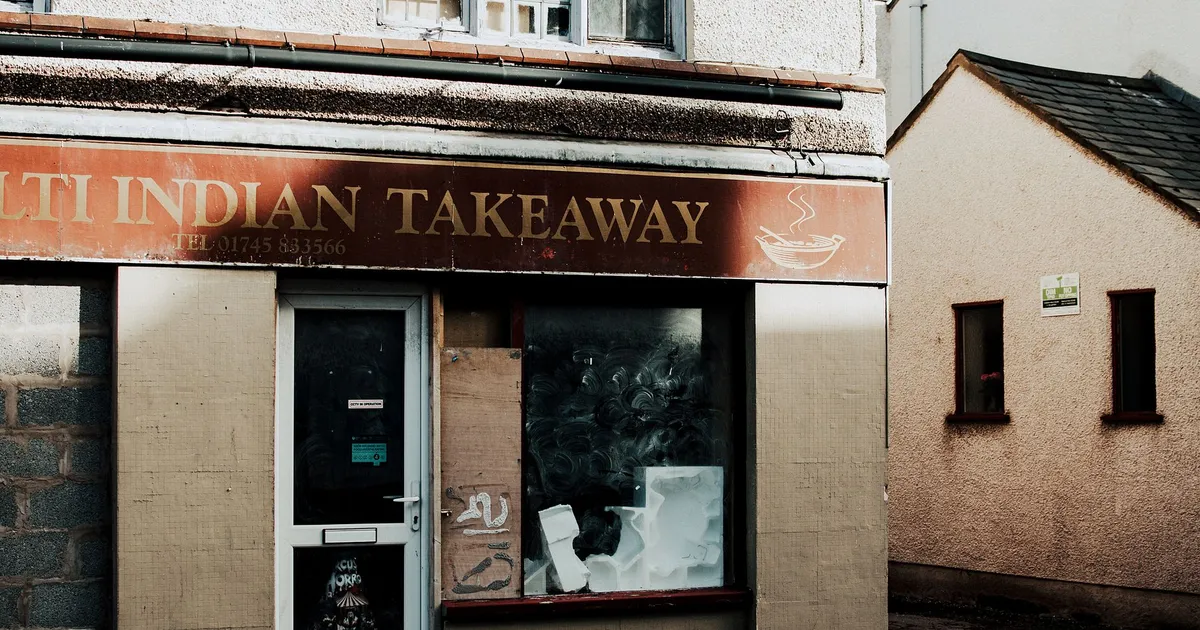
Hospitality’s failure rate is the highest of any sector tracked by Centrix. The year to March saw 399 liquidations, up 49% year-on-year, representing 1.3% of all hospitality businesses. BWA’s quarterly data shows food and beverage insolvencies at 94 in Q1 2026, down 36% from Q4 2025’s 145 but still 31% above Q1 2025.
Hospitality spend was up 3.5% in May, and new openings continue. But consumers are trading down, not spending more. The weakest operators in a sector with structurally thin margins are being eliminated while the survivors absorb what is left. That is consolidation, not recovery.
Construction climbs while everything else dips
Construction is the one major sector where insolvencies actually rose quarter-on-quarter, hitting 215 in Q1 2026, up from 201 in Q4 2025. Over the year to March, the sector accounted for 768 liquidations, roughly 30% of all appointments.
Automotive repair and maintenance nearly tripled, from 27 to 74 liquidations. Transport operators recorded a 27% year-on-year rise. Agriculture, buoyed by firm dairy and meat prices, was the lone exception with liquidations down 1%.
IRD is accelerating the clock
Inland Revenue filed 893 winding-up applications in 2025, up from 702 in 2024, backed by $64 million in government funding since July 2025 to pursue deferred tax debt. Many of these businesses were already marginal. The enforcement campaign is compressing years of deferred failure into months.
McDonald Vague insolvency practitioner Keaton Pronk described the March quarter as the busiest in 10 to 15 years for winding-up applications and corporate insolvency appointments.
Aggregate data is papering over the split
Stats NZ’s March quarter data shows total sales of $200 billion, up 5.3%, and operating profit of $29 billion, up 11%. New company registrations in Q1 hit 16,082, up 7.4%. The economy looks fine in the headline numbers.
It does not look fine if you own a cafe, a panel-beating shop, or a small building firm. The economy is bifurcating. Larger firms and exporters are capturing revenue growth. SMEs in service sectors are being squeezed out. Both things are true at once, and the aggregate data is not a counterargument to the insolvency figures.
Businesses are closing, not restructuring
BWA’s Q4 2025 report noted that voluntary administration numbers had fallen dramatically. Fewer formal rescue attempts, more outright failures. Newsroom argued in May that New Zealand’s insolvency framework is too oriented toward late-stage failure, with voluntary administration too costly and formal for smaller firms. By the time the process starts, the business is typically beyond saving.
The quarterly dip in raw insolvency numbers is real. But the year-on-year trajectory is still worsening, the sectors under pressure are the ones that employ the most New Zealanders, and the system designed to rescue struggling businesses is not being used. For SME owners watching the headlines about profit growth and new registrations, the gap between the aggregate story and their own trading reality has never been wider.
Sources
- Worst March month for liquidations in 11 years (2026-06-15)
- Data shows business stress has peaked, but risks remain amid global uncertainty (2026-06-22)
- The industries behind NZ’s 11-year liquidation high (2026-06-15)
- New Zealand hospitality closures: the latest numbers and what they mean (2026-06-15)
- Business Financial Data: March 2026 Quarter (2026-06)
- Latest company statistics (2026-04)
- Quarterly Market Report – Q4 2025 (2026-02)
- NZ needs to learn blunt lessons of business failure (2026-05-07)
- Worst March month for liquidations in 11 years (personal finance) (2026-03)