

The Insurance Council’s message this week is reassuring: premiums nationally are running below inflation. Tell that to the Dunedin policyholders facing individual rises of close to 20 percent.
Nobody is lying here. The industry average and the bill on your doormat have simply stopped describing the same thing. For business owners and property investors, that matters more than the headline number, because budgeting off a national average is now a reliable way to get your insurance line wrong.
The average is real, it just isn’t yours
The national moderation is genuine. Treasury-monitored Finity data reported in February 2026 showed the national average cheapest home premium fell from $1,999 to $1,886 in the year to October 2025, helped by softer reinsurance markets and a quiet run of natural catastrophes.
But it is moderation off a much higher base. In late 2025, Stats NZ figures showed insurance prices up just 4 percent for the year yet still 28.8 percent higher than three years earlier. Kris Faafoi, the Insurance Council’s chief executive at the time, said then that the steep hikes “now appear to be over” but New Zealanders were “still paying far more for insurance than they were three years ago”.
Plateauing at a peak is not the same as getting cheaper.
Insurers now price the street, not the country
The reason Dunedin diverges is structural. Back in 2024, the Reserve Bank identified a clear trend towards risk-based pricing, with premiums increasingly tailored to the specific hazards a property faces. Insurers are no longer spreading risk across a single national pool. They are pricing the address.
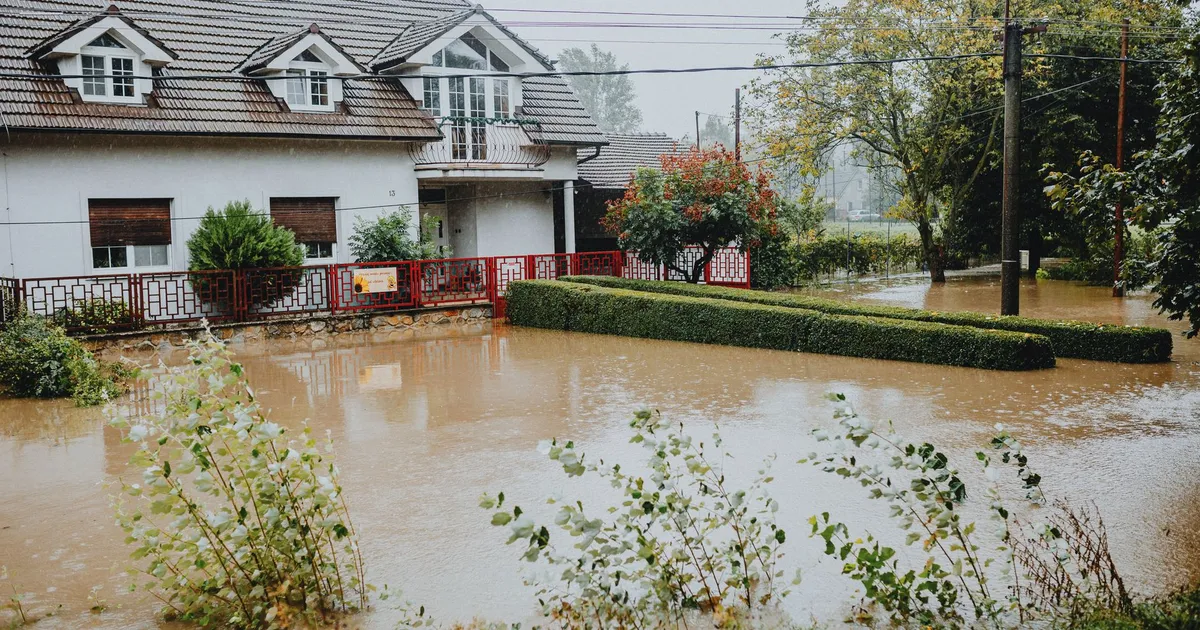
For Dunedin, that is bad arithmetic. A 2025 BusinessDesk investigation found half of all buildings in Dunedin South are already at risk of rainfall flooding, a share projected to approach 70 percent by the end of the century. Even as national premiums fell, the year to October 2025 saw high flood-risk properties attract extra flood premiums averaging over $1,000 a year, topping out at $9,250, with quote-rejection rates roughly double those of no-risk locations.
That surcharge has escalated fast. In 2024, a quarter of high flood-risk properties were being quoted extra premiums of at least $250, up to $4,500 in extreme cases. The ceiling has since doubled.
Dunedin was warned eight years ago
None of this should surprise the city. In 2018, AMI and State lifted premiums for higher-risk Dunedin customers by an average of $91 a year while Southland and Central Otago saw cuts, citing a flood record that included the July 2017 deluge and its estimated $55 million damage bill. Then-mayor Dave Cull called the rises “perfectly predictable” and warned insurers could eventually withdraw from high-risk areas altogether.
The same pattern has since played out elsewhere. Finity data for the year to October 2024 showed Gisborne’s cheapest premiums jumping 42.1 percent, with Wellington Central and the Hutt Valley up 32.5 percent. Regional averages hide street-level extremes; national averages hide even more.
The levy lands on everyone anyway
On top of risk pricing sits a cost no insurer controls. Treasury advice released in February 2026 stated residential premiums have risen three times faster than CPI since 2011. Taxes and levies already made up roughly 40 percent of a typical premium in 2025.
The January 2026 Cabinet paper on insurance affordability then recommended lifting the Natural Hazards Commission levy from 16 to 24 cents per $100 of cover, raising the maximum annual levy from $554 to $828 per dwelling. That is a flat Crown cost stacked on top of whatever your insurer decides your postcode deserves. It is fair to ask how a government serious about cost of living justifies a 50 percent levy rise while blaming the market for affordability.
Budget for the address, not the headline
Households are already voting with their wallets. Consumer NZ research reported in 2025 found 17 percent of policyholders had dropped house insurance on cost grounds, up from 7 percent in 2022. For commercial landlords and owner-operators, going uninsured is not an option, so the job is to manage it properly:
- Find out your property’s actual flood and seismic rating, not your region’s.
- Get quotes from multiple insurers every year rather than auto-renewing.
- Treat the levy component as a rising fixed cost regardless of location.
- Factor insurance risk into lease, purchase and site decisions now, not at renewal.
The Insurance Council’s below-inflation figure is accurate and largely irrelevant to anyone in a flood plain. As risk modelling sharpens, the spread between the safest and riskiest addresses will keep widening even if the average flatlines. Dunedin is simply showing the rest of the country what a renewal looks like when the insurer has done its homework on your street.
Sources
- Otago Daily Times: Insurance on the rise for some but premiums running below inflation, Insurance Council says (2026-11-07)
- RNZ: Home insurance premiums fall despite ongoing weather risks (2026-02-04)
- NZ Herald: Cost-of-living cooldown – Insurance price hikes are over but higher prices are the new normal (2025-11-23)
- BusinessDesk: Insurers seek more clout in planning decisions (2025-11-03)
- RNZ: Treasury data shows insurers honing in on flood-risk properties (2024-07-24)
- Otago Daily Times: Premium hikes hit Dunedin (2018-07-24)
- Treasury: Insurance Data Collection – Finity Consulting – November 2024 (2025-02)
- Treasury: Official Information Act Response 20250830 – Insurance affordability work plan options (2026-02)
- NZ Herald: Insurance price hikes – Why premiums keep rising so fast (2025-08-28)
- Treasury: Cabinet Paper ECO-26-SUB-0003 – Insurance Affordability and the review of Natural Hazards Insurance Act (2026-01-28)
Join the discussion
Add useful context, ask a good question, or challenge an idea — keep it specific and respectful.