

New Zealanders do not need a brokerage account to be exposed to an AI crash. They already have one, called KiwiSaver. Through default settings, passive index tracking and a steady drift into growth funds, the country’s retirement system has built a large and growing bet on a handful of US mega-cap tech stocks. This week showed what that bet looks like when it wobbles.
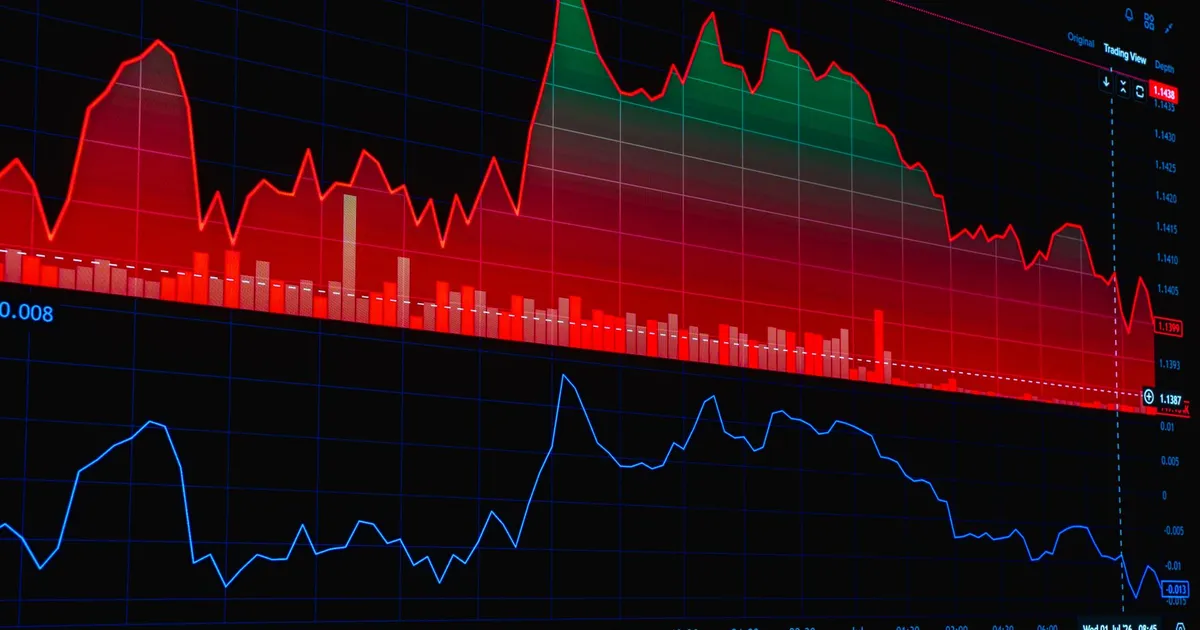
The Nasdaq fell 6.3% after anti-AI candidates won in the US midterms, wiping more than US$2 trillion off market value in one session. The S&P 500 then dropped 3.6% on Thursday, its worst day since the April 2025 Liberation Day tariffs.
The spending that spooked the market
The trigger is not that AI is failing. It is that the bill keeps rising. Amazon, Microsoft, Alphabet and Meta plan to spend US$725 billion on AI infrastructure in 2026, up 77% on an already record year, increasingly funded by debt at a time when global rates are climbing. Investors want to know when the payoff arrives. Earlier this month Intel’s share price dropped about 30% and Alphabet slid on a disappointing result.
Most of the money is already offshore
KiwiSaver held $155.1 billion at June 2026, up 18% in a year. Of that, $95.1 billion sits offshore, including $69 billion in overseas equities and trust units, up 19.8% year-on-year. NZ equities account for just $26.6 billion. Put simply, about 44 cents of every KiwiSaver dollar is in foreign shares, more than two and a half times the amount backing local companies.
The risk dial has also turned. Growth funds are now the largest category at 49% of funds under management, or $68 billion, up from 47.5% a year earlier, while balanced and conservative funds both lost share. In 2025 the FMA published research showing the share of assets in high-volatility risk category 5 funds had quadrupled from about 10% in 2021 to more than 40% in 2024, from $6.8 billion to $51.5 billion. The regulator said the 2021 shift of default funds from conservative to balanced explained some of that, but the move was larger and more enduring than the policy change alone would predict.
That is a reasonable outcome for young savers with decades to ride out volatility. It is also a concentration few members consciously chose.
Passive funds bought tech by default
RNZ’s review of top-10 holdings found Milford’s aggressive fund held 26% in tech names including Nvidia, Microsoft, Apple and Broadcom, with Generate at 22.5%, Quay Street High Growth 21.6%, Kernel 20.16% and Simplicity High Growth 19.4%. Passive funds have picked up larger tech weightings simply because the indices they track have become tech-heavy. Some active managers, Milford included, have deliberately capped exposure.
In September, Milford estimated that as much as $4 of every $10 of new contributions could be flowing into AI stocks, depending on fund choice. Morningstar data showed exposure to the top 10 AI-linked companies ranged from $2.65 to $19 per $100 across major funds. Milford portfolio manager Andrew Curtayne was not bearish, saying “AI models are getting vastly better every month” and revenues are rising in unprecedented ways.
Why the fund managers are not panicking
The reassurance case is credible. Simplicity founder Sam Stubbs argues portfolios are well diversified with meaningful NZ allocations, and that big tech has strong cash flows. Koura founder Rupert Carlyon notes markets have been on edge so long that bad news gets magnified, and that the core businesses at Google and Amazon are still growing 10-20% a year. A correction in profitable companies is not a dotcom wipeout.
But diversified is relative. With KiwiSaver covering about 3.4 million members, roughly 63% of the population, even a moderate drawdown hits a lot of balance statements at once.
What this means for employers
Three things follow. First, your staff’s retirement savings are now tied to Nvidia’s earnings calls more than to the NZX, and that will surface in wellbeing, hardship and retention conversations if balances fall sharply. Second, the wealth effect is real. Households that feel poorer spend less, and business confidence tends to follow consumer mood with little lag. Third, there is a genuine upside. Tech is only about 1% of the NZX, which is concentrated in healthcare, utilities, infrastructure and property. On 23 October, as the Nasdaq fell 2.6%, the old-economy Dow edged up. A rotation toward duller, steadier assets could favour local equities and bonds, and the companies that issue them.
The boring NZX, long dismissed as a weakness, may prove its worth. The question for the next few quarters is whether AI revenue catches up with AI spending before members open statements they do not like. Employers who understand that exposure now will be better placed to handle the conversations if it does not.
Sources
- Stuff: Here’s what will happen to your investments if the AI bubble crashes (2026-11-08)
- RNZ: How exposed is your KiwiSaver to market wobbles? (2026-11-06)
- RNZ: ‘Markets so on edge for so long’ – what KiwiSaver managers want you to know about AI fears (2026-11-02)
- The Post: KiwiSaver funds seen as highly exposed as AI ‘bubble’ worries intensify (2026-09-09)
- FMA: KiwiSaver Annual Report 2026 (2026)
- FMA: Increased risk profile of KiwiSaver funds 2021-2024 (2025-07-16)
Join the discussion
Add useful context, ask a good question, or challenge an idea — keep it specific and respectful.