

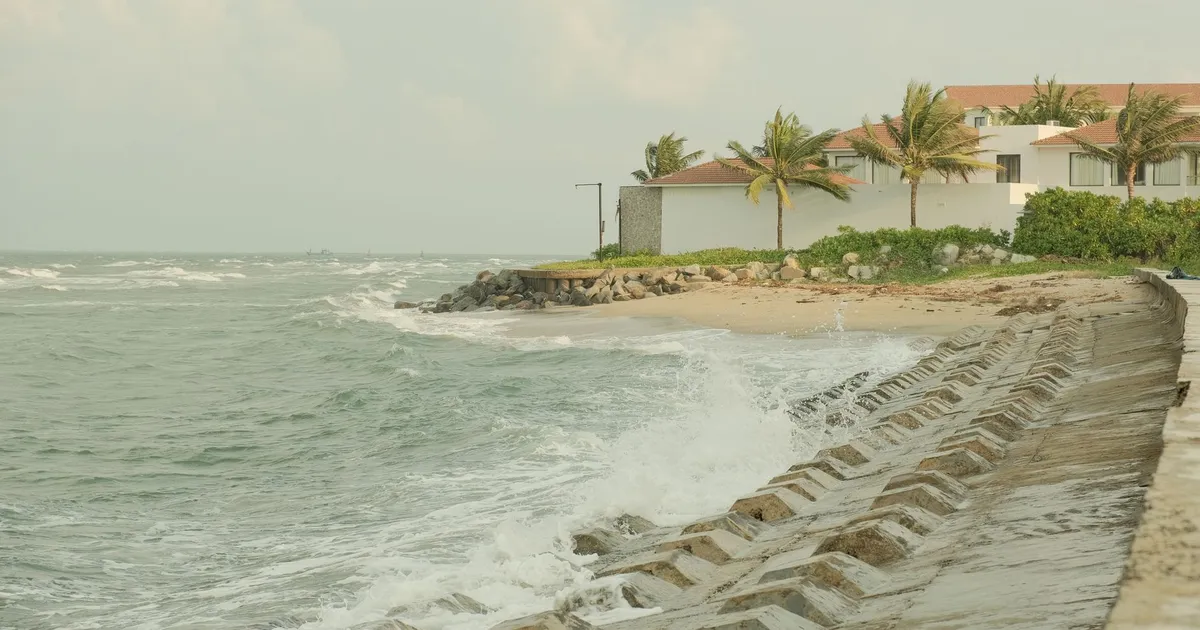
A seawall built by locals says it all
At Sunset Beach in Port Waikato, residents facing severe coastal erosion and a council recommendation to leave did not wait for anyone to sort out the funding. They raised $400,000 and built their own seawall. It is a neat picture of where New Zealand’s climate adaptation policy actually sits: the risk is real, the planning obligation has arrived, and the money is somebody else’s problem.
The Climate Change Response Amendment Bill, introduced in July 2026, requires territorial authorities to prepare adaptation plans covering at least 30 years, with staged actions, cost estimates and triggers for when work begins. What it does not do is say who pays. The government has explicitly deferred cost-sharing to the next term of government, calling those the most complex and politically charged questions in climate policy. Translation: not now, not us.
The scale is not abstract
The numbers are large enough to make the deferral look reckless. The Ministry for the Environment counts roughly 750,000 New Zealanders and 500,000 buildings worth more than $145 billion near rivers and coasts already exposed to extreme flooding. The January 2025 Climate SIGMA report put residential property in coastal inundation and inland flood zones at $179.3 billion across 218,600 properties, with Canterbury alone holding 62,100 properties worth $46.3 billion.
The same report estimated that between 2026 and 2060, 2,200 to 14,500 residential properties will suffer at least one extreme event. Average annual flood damage to infrastructure already runs at $471 million and could rise 43 to 53 percent by 2075.
The 3 percent that should embarrass a fiscally conservative government
The Climate Change Commission’s August 2026 progress report contains a figure any government watching the books should find indefensible: 97 percent of central government spending on natural hazards goes on responding and recovering after events, and just 3 percent on reducing the risk beforehand. Prevention is cheaper than cure, and the ratio is almost the inverse of common sense. The bill is meant to shift that balance. Without a funding commitment, it shifts the obligation and leaves the money where it was.
The bill hands councils the bill
A regulatory impact statement estimated that simply developing a plan could cost up to $5.1 million per council before a single physical measure is built. Local Government New Zealand president Rehette Stoltz has called for durable co-funding from central government, warning some councils simply cannot afford to adapt. One mayor of a flood-prone town was blunter, telling RNZ in July 2026 that Crown help was “really wishful thinking” and that anything needing doing, his town would have to fund itself.
MartinJenkins’ July 2026 analysis spells out the mechanics. The bill requires plans to state how costs will be met before an event, forcing councils to carry adaptation costs explicitly in long-term plans rather than parking them as unquantified risk. If the Crown will not underwrite retreat or protection as of right, the options narrow to rates, targeted rates, user charges, or reduced levels of service. Elected members, the firm warns, need to understand pre-committed future budgets before they vote, not after the first trigger event.
Insurance reprices before a wall is built
Bell Gully partner Natasha Garvan, co-author of the firm’s Big Picture climate report, told Newsroom the question of “broader assistance from central government… that’s still very much unanswered at this point.” She notes insurers are a key stakeholder because the hazard data the plans generate helps them price risk. That cuts both ways. Better data enables sharper premiums, but it also accelerates the withdrawal of cover from areas the data flags as uninsurable at viable prices. The Insurance Council pleaded for urgency on funding in April 2026, warning severe weather will not wait. For businesses in a designated priority location, the designation itself may reprice insurance before any physical work begins.
The habit of paying up after the fact
New Zealand has a long habit of the Crown stepping in after disaster with no framework requiring it. The Canterbury earthquakes cost roughly $20 billion in public money and the 2023 North Island weather events triggered $4.7 billion in support. That pattern created an implicit expectation of a bailout that no law actually requires. The 2023 Expert Working Group on Managed Retreat found roles and funding responsibilities were not clearly articulated, a gap the 2026 bill has left untouched.
Deferring the who-pays question to the next term does not make it smaller. The Commission has flagged the funding gap is widening, not narrowing. When the decisions finally land, through rates, levies, targeted charges or some Crown contribution, they will reach every business that owns property in a hazard zone, holds a council contract, or insures either. The planning starts now. The cheque, for now, is still someone else’s problem.
Sources
- Newsroom: ‘Big unanswered question’ in climate change adaptation planning (2026-09-03)
- RNZ: Government to require councils to make climate adaptation plans (2026-07-15)
- RNZ: Govt help for climate adaptation ‘wishful thinking’ says mayor (2026-07-16)
- RNZ: ‘Urgency’ needed over climate adaptation funding, Insurance Council says (2026-04-20)
- Newswire: Climate Commission says just 3 percent of hazard spending goes on preventing damage (2026-08-12)
- Climate SIGMA Final Report (2025-01-16)
- MartinJenkins: Who pays when the waters rise? (2026-07-20)
- Newsroom: Long-awaited climate adaptation plan leaves ‘who pays’ unanswered (2025-10-16)
- Ministry for the Environment: Managed retreat (2024-05-09)
- Report of the Expert Working Group on Managed Retreat (2023-08-25)