

A fight about the law, not the money
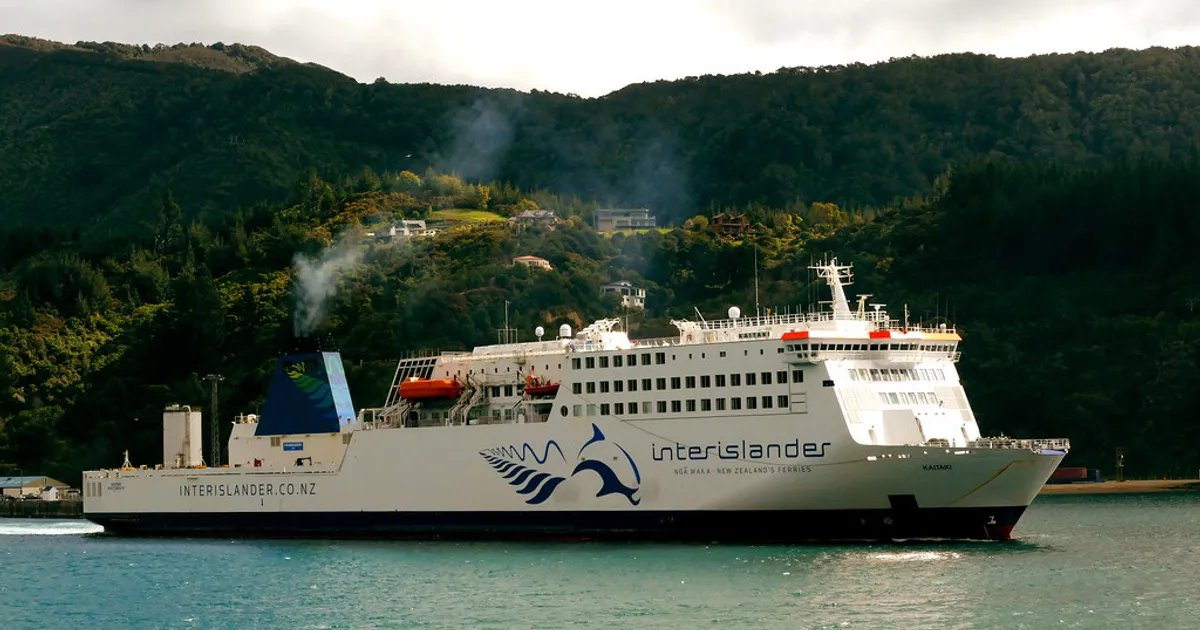
On 3 September, union members on the Interislander ferries gave notice of partial industrial action against KiwiRail for 18 September. It is a modest opening shot. There is no ferry stoppage. Affected members will simply refuse to load KiwiRail cargo units and decline callbacks and overtime for the day.
But the substance of the dispute is anything but modest. This is not a claim about wages or rosters. The NZ Merchant Service Guild is demanding KiwiRail agree to a contractual ‘opt back in’ to personal grievance protections that the Employment Relations Amendment Act 2026 stripped away. In other words, unions are trying to bargain back through a collective agreement the very reform the Government legislated in.
That makes the Cook Strait a test case. It is the first organised attempt to neutralise one of National’s centrepiece workplace changes at the bargaining table, and how it lands will tell every employer with high earners what the next few years look like.
What the law actually did
The amendment, introduced to Parliament by Workplace Relations and Safety Minister Brooke van Velden in June 2025 and in force from 21 February 2026, was the most significant shake-up of employment law since 2000.
Two changes matter here. Employees earning $200,000 or more a year under new agreements can no longer raise a personal grievance for unjustified dismissal. The threshold hits new agreements now and existing employees from February 2027. Crucially, the law lets employers and employees agree in writing to retain those protections – the exact opt-in the unions are chasing.
The second change tightened remedies for everyone. Under new sections 123B and 123C, no remedies are available where conduct amounts to serious misconduct, and remedies can now be cut by up to 100% where an employee contributed to their own dismissal. That directly overrides the Employment Court’s 2016 Xtreme Dining ruling, which had set a far higher bar before remedies could be denied.
The threshold is a number, not a job title
Here is the detail business owners keep missing. The Government framed the $200,000 cut-off as targeting executives and senior managers with high bargaining power. In practice the threshold is a dollar figure, not a job-type filter.
The unions make the point bluntly. The reform, they argue, “was aimed at quicker removal of non-performing middle and upper management, including CEOs, but has captured many other employees, such as airline pilots, medical specialists, ships’ masters and senior officers, maritime pilots” – and, with overtime, senior train drivers.
That is not a frivolous argument. Any skilled operational worker whose base pay plus overtime crosses $200,000 loses dismissal protection under a new agreement, whether they run a company or a ship. For employers in aviation, maritime, healthcare and infrastructure, that is a management complexity many did not anticipate.
The precedent, not the picket
The unions cannot challenge the law itself. So they are using the mechanism the law gave them, collective bargaining, to demand KiwiRail contractually restore protections for its people.
If KiwiRail concedes, it becomes a template. Any employer with organised labour above the threshold can expect the identical claim, and one of the Government’s signature reforms quietly becomes negotiable away wherever unions have leverage. If KiwiRail holds firm, unions must prove they have the industrial muscle to force the concession, and a one-day cargo-loading refusal is a light punch.
KiwiRail is not bargaining from a position of weakness. Its half-year report to 31 December 2025 shows an operating surplus of $73.4 million, up from $25.8 million a year earlier, with Interislander revenue of $84.1 million. But the ferries are running on two ships after the Aratere’s retirement, and rail freight lifted 3.2% year-on-year to an average 1.5 million tonnes a month, underlining how much the Cook Strait link carries.
What employers should watch
The lawyers expect turbulence regardless of the ferries. In February 2026, Simpson Grierson’s Rebecca Rendle told Newsroom the biggest impact would be behavioural, with employees less inclined to use reinstatement as a lever, given only 5 of 781 ERA determinations in 2024 ordered permanent reinstatement. From the employer side, Alan McDonald of the Employers and Manufacturers Association argued the reforms restore balance so workers who contribute to their own dismissal cannot collect full remedies, while van Velden countered that “employers will still be expected to follow fair and reasonable processes”.
The 18 September action will barely register on the freight network. The bargaining round behind it might. Every employer with staff above $200,000, or staff who reach it on overtime, faces the same question before the threshold hits existing agreements in February 2027. It is no longer just whether you can dismiss high earners more easily. It is whether your workforce will let you write the loophole back out.
Sources
- Interislander union members plan industrial action against KiwiRail over new personal grievance law (2026-09-03)
- Employment Relations Act changes take effect today (2026-02-21)
- The Personal Grievance Remedy Regime Has Changed (2026-02-21)
- Employment bill enables Kmart-style ‘fire-at-will’ without remedy – unions (2026-02-17)
- The Employment Relations Amendment Bill has landed (2025-06-17)
- KiwiRail Half-Year Report 2026 (2026-02-24)
- Transport Network Performance Report – January 2026 (2026-01)