

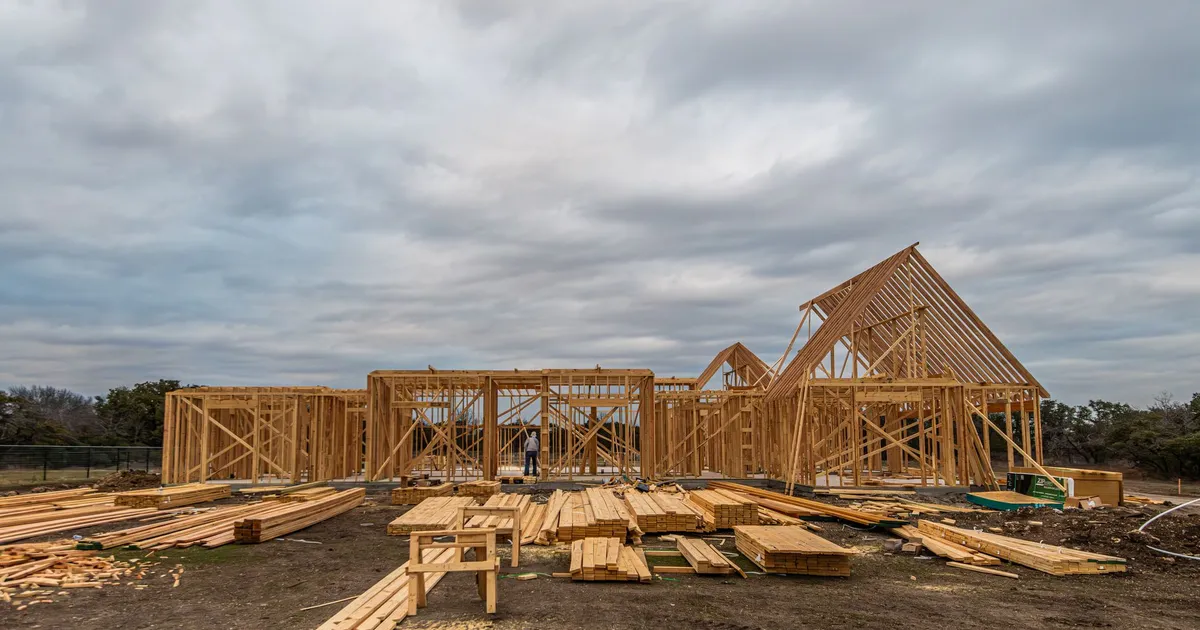
A floor is forming
The construction sector is not booming. But after two years of firms cutting costs and waiting out uncertainty, the bleeding in the forward pipeline appears to have stopped. Master Builders’ 2026 State of the Sector survey, released on 3 September, found 68% of member firms now describe their forward work pipeline as strong or steady, up from 64% in 2025.
That four-point gain is modest on its own. The trajectory is what matters. In 2024, only 51% of firms had strong or steady books and 15% faced critical drop-offs. By 2025 that had improved to 64%, and the 2026 survey of 640 residential builders extends the line. Sentiment has now improved for two consecutive years, through an economic downturn and a geopolitical shock.
Firms learned to survive the downturn
Master Builders chief executive Ankit Sharma told RNZ the downturn had been “slower and deeper than expected” but that firms had adapted. “What we are seeing across the sector both residential and commercial, businesses are more resilient, they are managing their cashflow a lot better, based on the data than what we saw four or five years back,” he said.
Builders are also working harder for the work that exists. “They are also spending more time to engage with their customers to try to convert their pipeline into committed work,” Sharma said. In a market where 87% of firms list weak consumer demand as a top concern, the sector is competing hard for every job. For anyone holding a stalled development, that means available capacity and sharp pricing – for now.
The official data still looks grim
The backward-looking numbers have not caught up with the mood. Stats NZ recorded total building volume falling 3.5% in the March 2026 quarter against the prior quarter, with total building value at $7.2 billion, down 5.9% on a year earlier. And the sector is still shedding firms: HUD’s Housing Market Update recorded 769 construction firm liquidations in the year to early 2026, the highest level on record.
But a survey of forward pipeline is a leading indicator, not a rear-view mirror. MBIE’s 2024 National Construction Pipeline Report projected activity would trough at $55.1 billion in 2025 before recovering to $57.2 billion in 2026. The survey data is consistent with that trough having been reached and a floor forming underneath it.
Green shoots in the consent data
The demand signal is showing up elsewhere too. HUD reported 37,534 new dwellings consented in the year to February 2026, up 11.7% year-on-year, and residential development lending up 18% over the same period. Some developers are already moving off the sidelines.
That matters because the cost picture is turning against those who wait. Construction costs were growing at 3.0% annually in the March 2026 quarter, the fastest pace in two years. And the Reserve Bank hiked the OCR to 2.75% on 2 September, the day before the survey landed, pushing up the cost of construction finance. The question for developers has shifted from “will it get cheaper?” to “how long before capacity tightens and pricing power flips back to the builders?”
Consenting is still the lever nobody has pulled
The one constraint firms can point to, and the one government could actually fix, is consenting. 68% of builders named the consent process as their main cause of delays. Sharma was blunt about the cost. “Once you get a four, five, or six week delay in consenting that just adds more in terms of managing the costs of delay,” he said. “The biggest change we could have is more consistency across consenting authorities.”
The structural picture is well established. The 2025 survey found 70% of builders work with more than one Building Consent Authority and 72% had experienced “stop the clock” requests beyond the 20-day statutory timeline. Fragmentation across authorities is a self-inflicted tax on every project.
Stabilisation is not recovery, and a sector still losing firms at record rates is not out of the woods. But for developers reading the tea leaves, the signal is clear enough. The pipeline has stopped falling, costs are climbing, and rates just went up. The cheap-and-available phase of this cycle has a shelf life.
Join the discussion
Add useful context, ask a good question, or challenge an idea — keep it specific and respectful.