

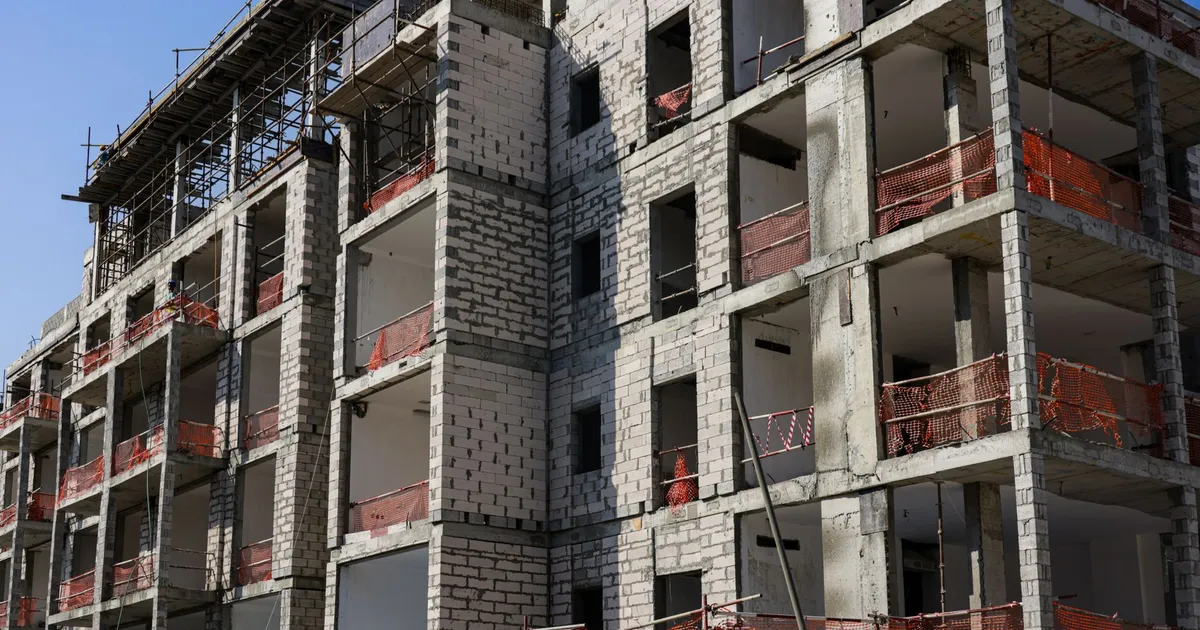
The human cost of an opaque project
A migrant investor says he lost $111,000 in a failed Christchurch redevelopment and now fears loan sharks, telling Stuff his life has been ruined. It is a blunt phrase, and it captures a risk that rarely gets attention when property schemes are pitched at newcomers. For a New Zealand-born investor, a bad deal is money lost. For a migrant who has borrowed heavily, often from within their own community, the downside compounds into debt, recovery difficulty, and sometimes immigration risk all at once.
That triple exposure is what makes these stories different, and it is why the Grand Central collapse deserves more than a passing mention in the property pages.
This is a pattern, not a one-off
The Christchurch case slots neatly into a widening trail of migrant investors burned by New Zealand property. In July 2026, BusinessDesk reported that two Filipino families said they lost their KiwiSaver first-home deposits in dealings with St Johns Property Group, with one couple losing a $63,000 KiwiSaver deposit trying to buy a Randwick property. The families had complained to the Law Society.
A separate BusinessDesk investigation documented first-home buyers paying $1.25 million each for Papakura properties valued at $950,000, with one family directed to withdraw KiwiSaver under false pretences. And the collapse of Du Val Group into statutory management left a couple who paid an $83,000 deposit on a Mt Wellington apartment facing potential losses of $300,000 to $400,000 after a non-bank financier pulled their loan.
Different projects, same architecture. Prices above valuation, financing controlled by the developer rather than a registered bank, and a route into the deal that ran through community networks rather than licensed advice.
A worsening backdrop
These failures are not happening in a benign environment. Companies Office data published in August 2026 shows liquidator appointments hit 889 in the fourth quarter of 2025, up 34.7% on the same quarter a year earlier. The first quarter of 2026 recorded 710 appointments, up 12.9% on 2024.
Construction and property development sit squarely in the danger zone, and Christchurch’s post-earthquake rebuild has produced a complex, sometimes opaque development pipeline that is exactly the kind of terrain where a newcomer struggles to tell a solid project from a shell. When the wider insolvency wave is rising, the projects most likely to fall over are the thinly capitalised, developer-financed ones that migrant money too often flows into.
Why migrants carry more of the risk
The financial loss is only the first layer. Where a visa is tied to an investment, a project failure can put residency itself in play. And recovery is harder when language barriers, unfamiliarity with New Zealand’s legal system, and reliance on community intermediaries stand between the investor and a remedy.
The money at stake is frequently the riskiest kind. RBNZ figures show April 2026 new residential mortgage lending of $7.99 billion, with high-LVR lending above 80% totalling $1.17 billion and first home buyers making up $847 million of that high-risk pool. Newly arrived buyers are disproportionately represented there, stretching to get in with little margin for a deal to go wrong.
And while net migration has cooled to 10,700 for the year to November 2025, down from 29,000 a year earlier, a large cohort of recent arrivals is still on the ground, making investment decisions in an unfamiliar market precisely as project failures accelerate.
The red flags that should end a conversation
Every case above shares warning signs that a well-informed buyer would treat as disqualifying. A purchase price well above CV with no independent valuation. A loan agreement with the developer or promoter rather than a bank or licensed lender. A Facebook group or community referral as the primary source of information. Pressure to raid KiwiSaver for a deposit. A structure where the developer controls both the sale and the financing, so there is no independent party protecting the buyer.
None of this is exotic financial engineering. It is the same handful of red flags recurring across Christchurch, Auckland and Wellington, and each time the person left holding the loss is someone who trusted the wrong intermediary.
The policy question is whether New Zealand is doing enough to protect the newcomers it courts as investors and residents. The practical one is simpler. Until developer-financed, above-valuation deals sold through community networks are treated as the hazard they demonstrably are, the next $111,000 loss is already being arranged.
Sources
- My life has been ruined: migrant says he fears loan sharks after losing $111,000 in failed NZ business (2026-09-02)
- Filipino families say they lost KiwiSaver in deals with property group (2026-07-28)
- First-home buyers claim losses at the hands of property flippers
- Du Val Group: Financier withdraws loan on Mt Wellington apartment, couple fear big losses
- Latest company statistics | Companies Office (2026-08-10)
- International migration: November 2025 (2026-01-22)
Join the discussion
Add useful context, ask a good question, or challenge an idea — keep it specific and respectful.