

A bidding war over the pump price
New Zealand’s two major parties have found a rare point of agreement, and the road freight industry thinks both are wrong. On 27 August 2026, Finance Minister Nicola Willis confirmed the Coalition Government will not proceed with the fuel excise increase planned for January 2027. The same day, Labour leader Chris Hipkins went further, pledging no fuel excise increases for an entire three-year term if elected.
Fuel excise duty currently sits at 70.024 cents per litre and has not risen since 2020. The 2024 Government Policy Statement on land transport had scheduled a return to increases from January 2027: 12 cents per litre next year, 6 cents in 2028, then 4 cents annually. That is the roughly 22 cents a litre Hipkins says drivers cannot afford. Both parties are now on the same populist ground.
The number the freight lobby keeps quoting
Ia Ara Aotearoa Transporting New Zealand chief executive Dom Kalasih used a word you rarely hear from a lobby group: “flabbergasted”. His reasoning is arithmetic, not ideology. Treasury advice is that each six-month deferral costs around $300 million in lost National Land Transport Fund revenue. Labour’s three-year freeze on the 12 cent increase alone could cost around $1.8 billion, before the 2028 and 2029 increases it would also abandon. Labour additionally wants to redirect $65 million a year from the NLTF to fund a public transport fare cap.
The fund was already stretched. In real terms, fuel excise duty has fallen 21% since 2020 while construction costs have climbed. “We’ll be digging ourselves a deeper hole,” Kalasih said, warning of “increasing risk of transport problems” with “an adverse effect on our economic prosperity.”
What that money actually buys
This is not a fight about new motorways. The 2024-27 National Land Transport Programme totals $23.6 billion, with fuel excise contributing about $5.7 billion, roughly 24% of the pot. Of that programme, $5.5 billion is earmarked for pothole prevention and $4.6 billion for maintenance and operations. These are baseline costs of keeping existing roads usable, not discretionary extras.
Willis was blunt about the trade-off, noting the implications are “not just new roads, it’s existing road maintenance funding and public transport”. She challenged Hipkins to be straight with communities about “how many jobs will be lost” if council road funding falls. Hipkins’ answer was that the policy statement “will have to scale to within the budget that’s available” but he would not name which projects get cut.
Why this lands on every business, not just truckers
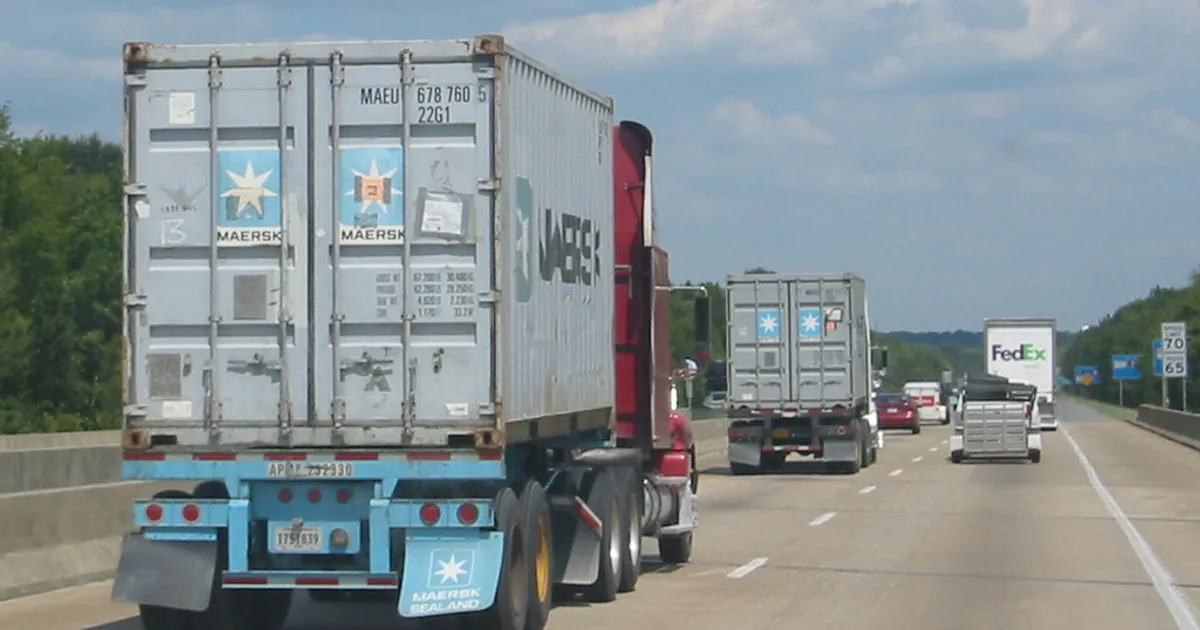
New Zealand has no realistic alternative to road freight. NZTA data from December 2025 shows road accounts for 87.79% of the combined road and rail freight task, up from 86.15% in 2017/18, while rail freight has shrunk. Road freight moved 24,257 million tonne-km in 2024/25. Every supermarket delivery and industrial input travels overwhelmingly by road, so when road quality degrades the cost does not vanish. It redistributes to every business in the supply chain through slower deliveries and higher logistics bills.
The freight sector is also the mode already pulling its weight. In June 2026, Kalasih noted that urban public transport recovers only 28% of its costs from users while heavy trucks recover 76%. Trucking is being asked to absorb a funding gap it did not create.
The warning was in the file months ago
This outcome was flagged. In May 2026, internal Ministry of Transport documents warned that delaying the increase would drain $80 million to $311 million from the NLTF and force NZTA to renegotiate contracts and scale back highway maintenance. Treasury did not support the delay, warning relief would be “limited and poorly targeted” and “challenging to reverse.” Transport Minister Chris Bishop put the maths plainly at the time: “You can’t have it both ways. If you want to have your roads, you’ve got to pay for them.” Three months on, his government has committed to not collecting the tax anyway.
Only NZ First’s Shane Jones said the quiet part out loud, arguing Kiwis “have to contribute from time to time” to maintain infrastructure. The government’s longer plan is to shift the light fleet onto road user charges, with enabling legislation now in Parliament but no changeover date.
The 12 cents a litre saving is real short-term relief for anyone running a fleet. But deferred maintenance becomes emergency repairs, and delayed upgrades become freight bottlenecks. The bill does not disappear. It compounds quietly, then arrives as slower supply chains and rougher roads that every business absorbs whether or not it owns a single truck. Kalasih’s exasperation is not theatre. It is what an industry sounds like when it has done the sums and watched politicians decide not to.
Sources
- RNZ: ‘Flabbergasted’: Road freight lobby criticises fuel excise deferral (2026-08-28)
- 1News: Labour promises not to increase fuel tax for three years (2026-08-27)
- Interest.co.nz: Upcoming fuel excise increase off the table, Labour rules out increase for three years (2026-08-27)
- Stuff: Nicola Willis confirms no fuel tax increase in January, Labour promises none for three years (2026-08-27)
- Autotalk: Labour pledges fuel excise freeze, setting up election fight over 22-cent rise (2026-08-27)
- 1News: Fuel price surge hits transport fund, project delays feared (2026-05-14)
- Transporting New Zealand: Transport policy in the spotlight (2026-06-12)
- NZTA: Road and rail freight statistics 2017-18 to 2024-25 (2025-12-12)
- NZTA: 2024-27 National Land Transport Programme (2024)
- Ministry of Transport: Government Policy Statement on land transport 2024/25-2033/34 (2024-07-01)
Join the discussion
Add useful context, ask a good question, or challenge an idea — keep it specific and respectful.