

The deferral that says more than any data release
When a fringe developer walks away from a project, it’s a project problem. When one of the country’s largest listed commercial landlords pauses a tower it just spent months getting consented, it’s a market signal.
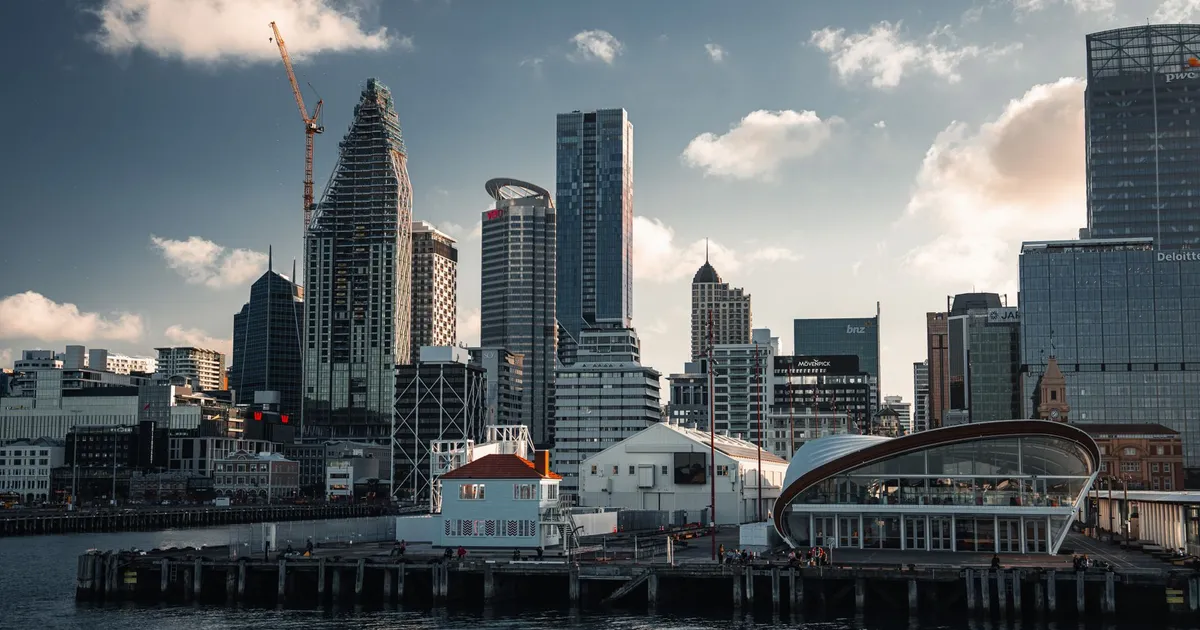
On 27 August 2026 Precinct Properties announced it was indefinitely deferring the second tower of its Downtown Carpark redevelopment in Auckland’s CBD. The deferred building, a 45-level tower planned to hold a 200-room hotel and 145 apartments, was valued at roughly $500 million within a $1.5 billion total project.
This is not a minor operator. Precinct manages $5.2 billion in assets. If it can’t make the residential numbers work on a premium waterfront site, that tells you something the consent statistics don’t.
Pritchard was blunt about why
CEO Scott Pritchard didn’t dress it up. “The residential market continues to be quite sluggish, so we have been questioning that over the last three to six months,” he said. The investor presentation framed it as a “staged approach” that pushes the residential tower out.
To his credit, Pritchard presented it as discipline rather than distress: “For us, it’s about ensuring we have the confidence and conviction that the market conditions are right.” The podium will be built with capacity to add the tower later. That’s sensible optionality. It’s also a company preserving the right not to build apartments it can’t currently sell.
The first tower, a 55-level commercial office building with 94,000sq m of consented floor area, proceeds, with several new commercial tenants lined up. Offices go ahead. Apartments wait. The market has spoken and Precinct listened.
Three weeks after the ministers took a bow
The timing is awkward for the government. Precinct received fast-track approval for the full twin-tower project on 5 August 2026, with Infrastructure Minister Chris Bishop and Regional Development Minister Shane Jones holding it up as proof the fast-track scheme delivers. Consent inside five months.
But consent speed was never the binding constraint. NBR reported that Precinct had already signalled it would decide on the full project no earlier than 2027. The fast-track machinery ran ahead of the developer’s own commercial clock. You can clear the planning path in record time and still not have a market that justifies building. That’s the lesson buried under the ribbon-cutting.
The downturn nobody wants to name
Cotality NZ chief property economist Kelvin Davidson has called this residential cycle “the longest and deepest recorded in at least 30 or 40 years.” On Auckland specifically he’s pointed: the city “seems to be lacking a bit of economic confidence right now,” with a large supply pipeline dampening values.
As of late August 2026, listings remain elevated and buyers hold the balance of power on pricing. Davidson also flagged that the Reserve Bank has begun moving the OCR toward neutral, while mortgage rates could rise again in the short term. Auckland’s median residential sales price sat at $1,040,000 in March 2026, with prices flat year-on-year across most of the North Island.
The consent numbers are real but they don’t fix presales
Here’s the paradox. Consents are recovering. Stats NZ recorded 39,087 new homes consented in the year to April 2026, up 16%, with Auckland up 21% and apartment consents spiking 524% in April alone. Genuine green shoots.
But a consent is permission, not a commitment. The same supply that’s recovering is feeding the demand problem. Elevated unsold stock suppresses prices and breaks the presales model big residential towers depend on. Developers can’t lock in enough buyers at prices that cover today’s build costs, so the numbers don’t close. Precinct’s own result told that story too, with revenue up 4.5% to $278.1m but an after-tax loss of $8.2m.
What it costs, and who feels it
For contractors, this is real work vanishing from the near-term pipeline. Demolition of the carpark has slipped four months to April 2027, and a $500 million tower is off the board for now. For financiers, the message is stark: if even a premium CBD site can’t generate viable presales, residential construction at scale is on ice. For the CBD, the hotel beds and activated laneway are on an indefinite timeline.
Precinct will update investors on the tower decision early next year. That lines up with Davidson’s view that a meaningful recovery may not land until 2027. Until presales stack up, permission to build won’t matter. The consent boom is a supply story. Precinct just reminded everyone the demand story hasn’t caught up.
Sources
- Precinct Properties delays second tower at Auckland Downtown Carpark site on sluggish residential property market (2026-08-27)
- Auckland Downtown Car Park redevelopment granted fast-track approval (2026-08-05)
- Property market remains subdued as prices edge lower (2026-08-24)
- Property market’s ‘longest and deepest downturn’ in 30 or 40 years (2026-08-01)
- Multi-unit homes lead rise in home consents in April 2026 (2026-06-03)
- Housing Market Update for the March quarter 2026 (2026-03)
- Auckland monthly housing update April 2026 (2026-04)
Join the discussion
Add useful context, ask a good question, or challenge an idea — keep it specific and respectful.