

A loss driven by things Wellington cannot control
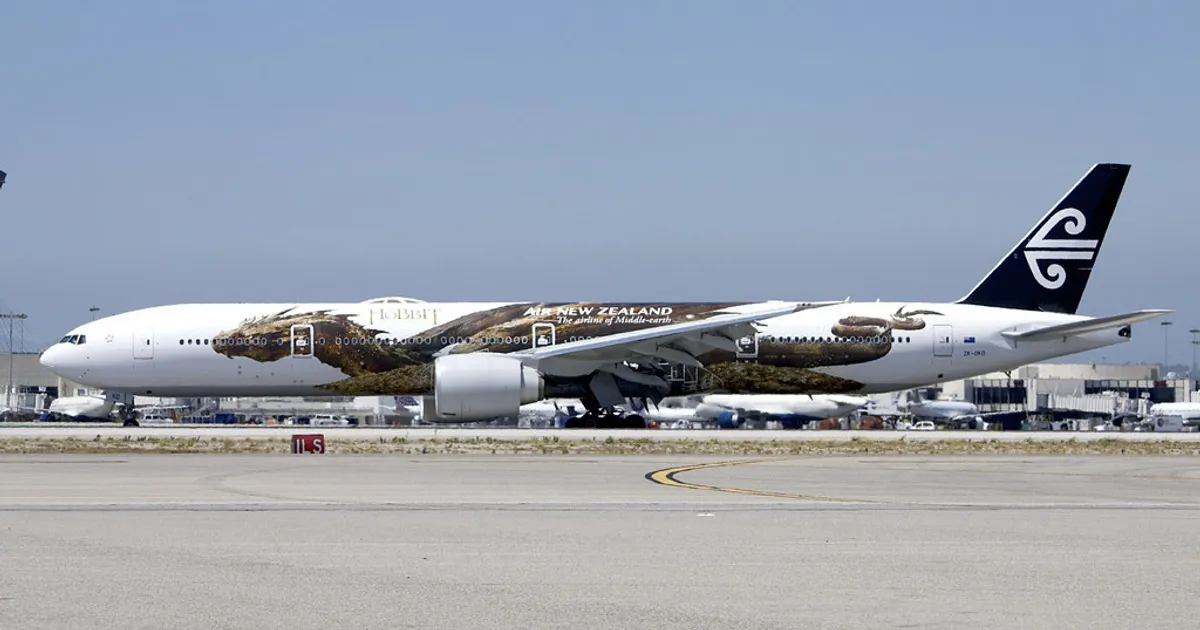
Air New Zealand reported a pre-tax loss of $336 million for the year to 30 June 2026, with an after-tax loss of $242 million on revenue of $7.0 billion, up 3.9%. It beat the consensus forecast of a $364.4 million loss, but it is still the worst result the airline has posted outside the Covid period.
The contrast stings. A day before Air NZ’s result, Qantas posted more than $1.5 billion in after-tax profit over the same period. The difference is not that Kiwis stopped flying. Demand held up: the April 2026 operational statistics showed passenger numbers up 2.2% and a year-to-date load factor of 84.1%. The problem is cost and capacity, and both are largely out of the airline’s hands.
The fuel shock nobody could hedge away
The Middle East conflict pushed jet fuel from around US$85-90 a barrel to a range of US$160-230 over a brutal ten-week stretch. The airline’s second-half fuel bill blew out to roughly $980 million, up $240 million on the earlier forecast. The conflict alone added about $328 million versus expectations.
Even with the airline 85% hedged for the second half, fuel still came in $205 million higher than anticipated. After fare rises and service cuts, jet fuel still took a $135 million bite out of the result. In May 2026, CEO Nikhil Ravishankar said roughly two-thirds of the deterioration reflected fuel and one-third underlying performance.
Grounded engines, grounded capacity
The second culprit is quieter but structural. Ongoing Rolls-Royce Trent 1000 and Pratt & Whitney PW1100 engine issues hit the result by about $190 million through lost capacity, additional lease costs and maintenance. In the first half alone, the airline estimated $90 million of earnings could have been captured had the fleet flown as intended, even after receiving $55 million in compensation from engine makers.
The net effect on capacity was near-standstill. Available seat kilometres rose just 1.3% across the network as some aircraft returned to service, only for fuel-driven cuts to cancel the gain. In May 2026, the airline pulled 3-5% of network capacity and warned of more. For exporters relying on widebody belly freight and firms moving people between centres, that is the number that matters. When capacity is flat and costs rise, fares go up and seats get scarcer.
The regional routes on the edge
The squeeze is sharpest at the margins, on thin regional routes. Back in July 2025, the Aviation Industry Association’s Simon Wallace warned that regional routes were being crippled by soaring costs, pointing to an Airways New Zealand charge increase averaging 17.7% over three years. He warned that once operators can no longer pass costs to passengers, “there comes a point where that’s not feasible”, and that “once gone, these are very difficult to bring back”.
That is the connectivity warning buried in the result. A dropped provincial route is not just an airline decision. It reshapes what a regional business can promise a customer.
The Crown wears every hat
The government’s position is awkward. As majority shareholder it just missed out on $41.2 million with no dividend declared. Yet the Crown’s own agencies, through Airways charges, CAA fees and airport costs, are part of the cost inflation squeezing margins. Shareholder, cost-setter and connectivity policymaker are all the same entity, pulling in different directions.
What happens next
Three variables decide the recovery, and two are offshore. Fuel depends on whether the Middle East conflict settles; the airline is only 55% hedged for the first half of FY2027. Engine availability depends on Rolls-Royce and Pratt & Whitney backlogs, though the first two of ten new GE-powered 787s should support widebody growth of 20-25% over two years if delivery holds. The only lever fully in management’s hands is up to $100 million in annualised cost savings, including redundancies, and that is a one-time fix, not a structural one.
For businesses that depend on flying, the message is blunt. Demand is not the constraint, supply is, and supply is hostage to engine makers and a war. Expect elevated fares and schedule uncertainty well into 2027.
Sources
- NZ Herald: Air New Zealand reports $336 million pre-tax loss (2026-08-27)
- Newswire: Air New Zealand forecasts up to $390 million loss as Middle East fuel shock blows out costs (2026-05-17)
- Air New Zealand Interim Financial Report 1H 2026 (2026-02-27)
- Air New Zealand Investor Operational Statistics – April 2026 (2026-06-02)
- Aviation Industry Association: Government must step up to save vital regional air routes (2025-07-31)
Join the discussion
Add useful context, ask a good question, or challenge an idea — keep it specific and respectful.