

A wishlist that is really a complaint
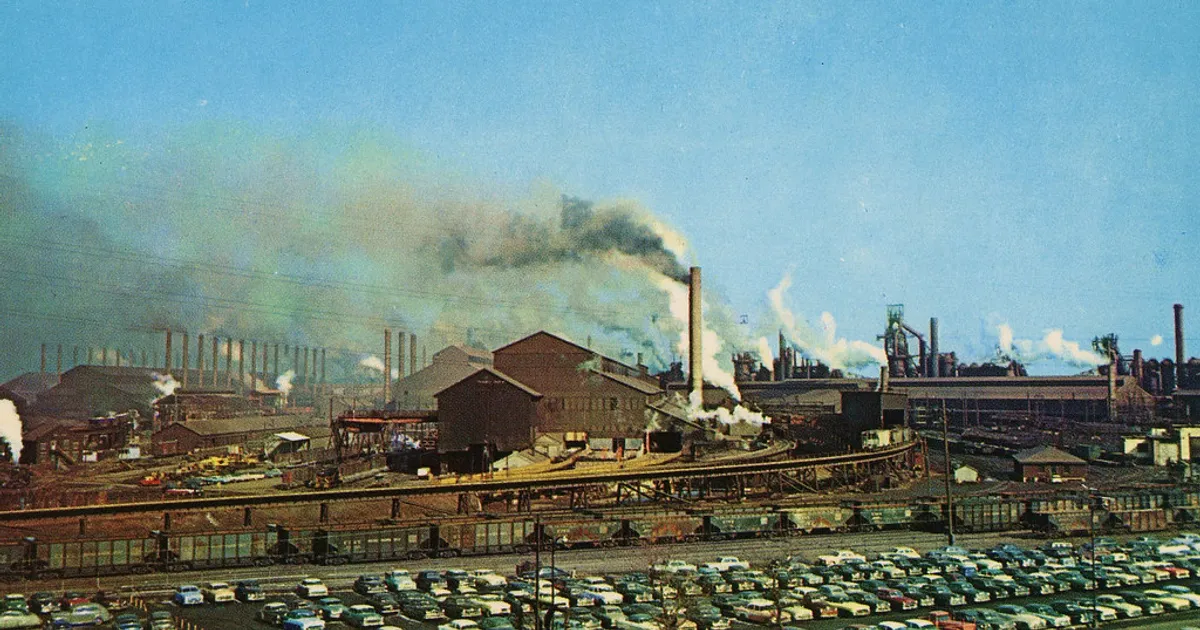
The Employers and Manufacturers Association has fired an opening shot at every political party ahead of November’s election. Its policy directives document, released on 13 July 2026, asks future governments to halt what it calls the “gradually increasing process” of deindustrialisation across sectors New Zealand once took for granted.
EMA head of advocacy Alan McDonald framed it as a resilience question: “what do we want to keep here? Do we want to keep cement, do we want to keep fertiliser, do we want to keep steel, those sorts of things, so that if things go wrong in the world, which increasingly they seem to be doing, we have got our own sectors here that can get us through the gap?”
The specific asks are targeted, not Soviet. The EMA wants a strategic framework modelled on Australia’s to identify critical industries, conditional incentives for those sectors, government-backed loans to help manufacturers switch off gas, and resilience planning for essential imported inputs like steel, chemicals and medical supplies. McDonald was careful to draw the line: “it’s not giving away money, it’s more judicious use of that money to encourage and keep those critical businesses here.”
But read past the shopping list and the real complaint is about certainty. Manufacturers can manage competitors, wages and technology. What they cannot manage is a country that rewrites its energy, tax and regulatory settings every time the government changes.
The numbers say small firms are already going
The BNZ-BusinessNZ Performance of Manufacturing Index technically held expansion in April 2026 at 50.5, but the trajectory is grim. The index has slid from 56.1 in December 2025 to 54.6 in February, 52.8 in March and now barely above the 50.0 contraction line. Forward indicators are already underwater, with New Orders at 48.2 and Deliveries of Raw Materials at 46.5.
The averages hide the damage. Micro-firms of one to ten staff recorded a sub-index of just 39.2, deep in contraction, while medium-large firms sat at 56.8. Small manufacturers are being hollowed out faster than the headline suggests, and 63.6% of respondents flagged negative influences on their business in April. High-profile closures like the Heinz Wattie’s restructure make the trend visible; the PMI shows it is broad.
An energy shock on top of a structural one
The backdrop is a compounding energy crisis. In May 2026, BusinessNZ director of advocacy Catherine Beard described New Zealand’s gas supply as “falling off a cliff”, while McDonald warned some manufacturers were “literally weeks away from running out of gas with no new supply”.
Then geopolitics piled on. The Treasury’s Budget Economic and Fiscal Update recorded that the closure of the Strait of Hormuz in late February 2026 pushed Brent crude to US$138 a barrel by early April, roughly double pre-conflict levels, adding around 1 percentage point to headline inflation that Treasury forecast to peak at 4.0% in the June quarter.
The government’s response was the gas transition loan scheme, guaranteeing 80% of eligible bank loans and unlocking an estimated $1.2 billion in lending off a $48 million Budget provision. Sensible enough. But even Labour’s Chris Hipkins called it “long overdue”, which is the point. Everyone agrees after the crisis lands. Nobody commits before it.
The certainty trap the minister named herself
The most honest description of the problem came from the government’s own side. At the NZ Economics Forum in February 2026, Finance Minister Nicola Willis said “firms do not invest in long-lived capital such as plants, machinery, buildings, if they think the tax rules may change at the change of an election”. She then challenged Labour to commit to keeping the Investment Boost, the Budget 2025 measure letting businesses deduct an extra 20% of a new asset’s value in year one.
That challenge exposes the trap. A tax break that could be reversed at the next election gives limited comfort to a manufacturer weighing a decade-long capital programme. As one NBR report in March 2026 put it, “uncertainty is a dirty word”, and with Treasury forecasting only 1.2% GDP growth for 2025/26, firms entering an election year fear a messy campaign could kill a fragile recovery.
That is why deindustrialisation here is gradual rather than sudden. Each cycle shaves a little more off, as foreign head offices quietly decide the New Zealand plant is not worth the reinvestment when the rules keep moving. The EMA’s Australian-style framework is an attempt to build something that outlives a term.
The question the November election should force is simple. Which parties will commit, in writing and across the aisle, to settings a manufacturer can bank on for ten years? Until one does, the smartest capital will keep going somewhere the rules stay put.
Sources
- Employers want future government to step in to stop hollowing out of manufacturing businesses (2026-07-13)
- Businesses welcome government loan scheme as gas supply runs ever lower (2026-05-26)
- Budget Economic and Fiscal Update 2026 (2026-05-28)
- Holding on to expansion – BusinessNZ Performance of Manufacturing Index (April 2026) (2026-05-15)
- Frustrating: Economic leaders’ impatience at policy inertia (2026-02-13)