

A distant war landing on local invoices
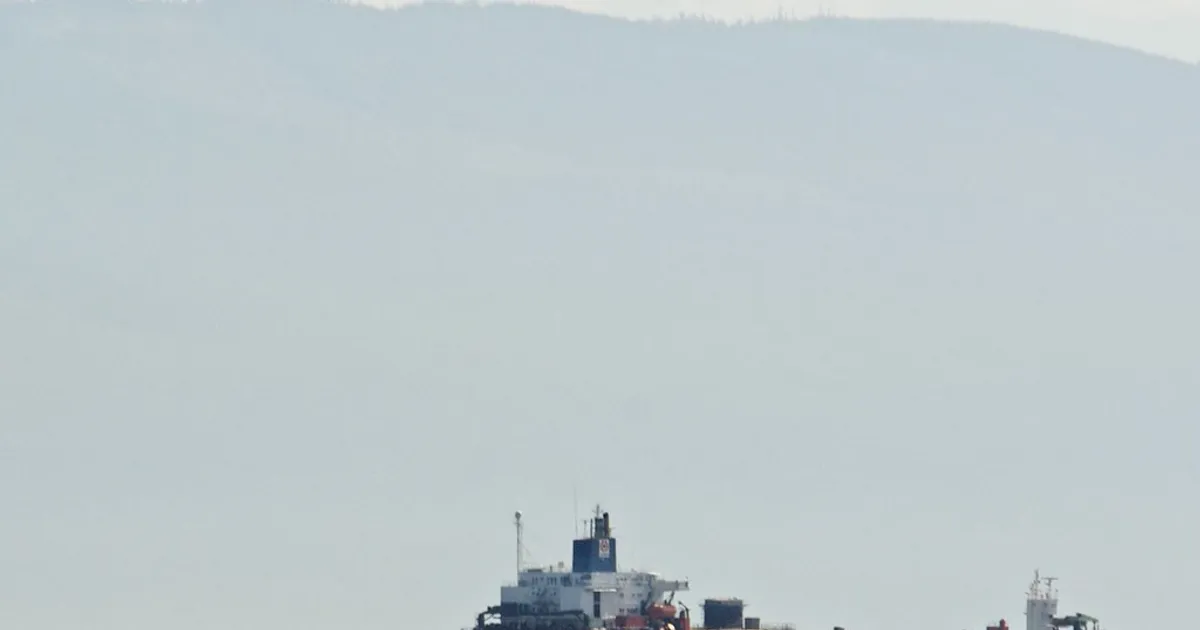
On 12-13 July, the United States launched fresh airstrikes on Iran after an Iranian strike set a container ship ablaze in the Strait of Hormuz, leaving a crew member missing. The US struck more than 140 targets in a single day, Iran retaliated with missile strikes on five Gulf states, and Tehran declared the strait closed. President Donald Trump told NBC, “We bombed the hell out of them last night.”
For New Zealand business owners, this is not foreign news. It is a repricing event for anyone who imports fuel, freight, fertiliser, machinery or consumer goods, which is nearly everyone. The 60-day interim deal meant to end the conflict is at its halfway point and, according to negotiators, in danger of collapse.
The transmission runs through Asia, not the Gulf
New Zealand imports no crude directly from the Gulf, which is exactly why the exposure is underestimated. Over 90 percent of petroleum imports come from Asian refiners in South Korea, Singapore, Malaysia and Japan, and those refineries source roughly three-quarters of their crude from Persian Gulf nations. When Hormuz tightens, Asian refiners feel it and New Zealand pump prices follow.
The structural weakness is self-inflicted. As University of Auckland Business School senior lecturer Dr Dulani Jayasuriya noted in March 2026, both Australia and New Zealand dismantled domestic refining through the 2010s and early 2020s because imported product was cheaper. “The answer is that efficiency does not equal resilience,” she said, adding that the just-in-time supply chain “is a marvel of optimisation right up until the moment a Supreme Leader is killed and an insurance underwriter in London stops answering the phone.”
The damage was already done before this week
This escalation lands on an economy already bruised. By the time the Commerce Commission published its fuel monitoring report on 7 May 2026, Brent crude had risen 41 percent to US$103 a barrel, regular 91 petrol was up 28 percent, and diesel had nearly doubled from 188 to 380 cents a litre. Treasury’s March 2026 briefing estimated that with oil near US$100, petrol could sit 40 cents a litre higher than otherwise, adding half a percentage point to an already-elevated 3.1 percent inflation rate.
Freight compounded it. In March 2026, Rocket Freight director Lisa Coleman warned that shipping lines had introduced war risk surcharges of up to 50 percent, vessels rerouting around southern Africa added up to 40 days to transit, road carriers lifted fuel charges more than 30 percent, and some lines invoked force majeure. “It’s everywhere, it’s affecting everyone,” she said. A burning ship is precisely the event that sends underwriters back to reprice those surcharges again.
Not a fuel bill, a supply chain repricing
The most useful framing comes from ASB senior economist Kim Mundy, whose May 2026 analysis found that fuel is “only one piece of the puzzle.” The broader shock, she said, spreads through “fertiliser and petrochemicals” into “the cost of manufactured goods, packaging, freight and farm inputs.” Her headline finding: roughly a quarter of the New Zealand economy has high or very high exposure to at least two disruptions from the closure, with agriculture, manufacturing, construction and transport most in the firing line.
Fertiliser is a specific pressure point, and Finance Minister Nicola Willis flagged supply as a critical monitoring priority in her March 2026 comments, warning of a worst-case scenario in which fuel is rationed to emergency services and freight. She put New Zealand’s fuel supply at around 50 days.
What business owners should actually do
The practical implications are immediate. War risk surcharges will be reviewed upward. Iran’s contested closure declaration creates operational uncertainty regardless of whether the US Navy keeps passage open. The interim deal timeline that some businesses were banking on for relief now looks fragile, so any planning assumption of a resolution within weeks needs revisiting.
That leaves two decisions on the table. Carry more buffer inventory and eat the capital cost, or accept supply risk against 40-day rerouting penalties. And review your own contracts for force majeure exposure before a supplier invokes it on you. This is no longer a spreadsheet assumption about geopolitical tail risk. The ship is on fire, the strikes are live, and the cost is already moving through the system.
Sources
- US strikes Iran again as it tries to limit attacks on ships on the Strait of Hormuz (2026-07-13)
- ‘Cost shock’: Strait of Hormuz closure hits more than fuel prices – ASB (2026-05-25)
- Fuel Price Monitoring – 07 May 2026 (2026-05-07)
- Willis outlines ‘worst-case scenario’ for NZ if Middle East war drags on (2026-03-15)
- Iran conflict sparks freight chaos: New Zealand faces soaring costs and months-long delays (2026-03-09)
- Briefing Note: Middle East developments Economic Briefing – 14 March 2026 – The Treasury (2026-03-14)
- Global oil chokepoint shows up fragile fuel security (2026-03-07)