

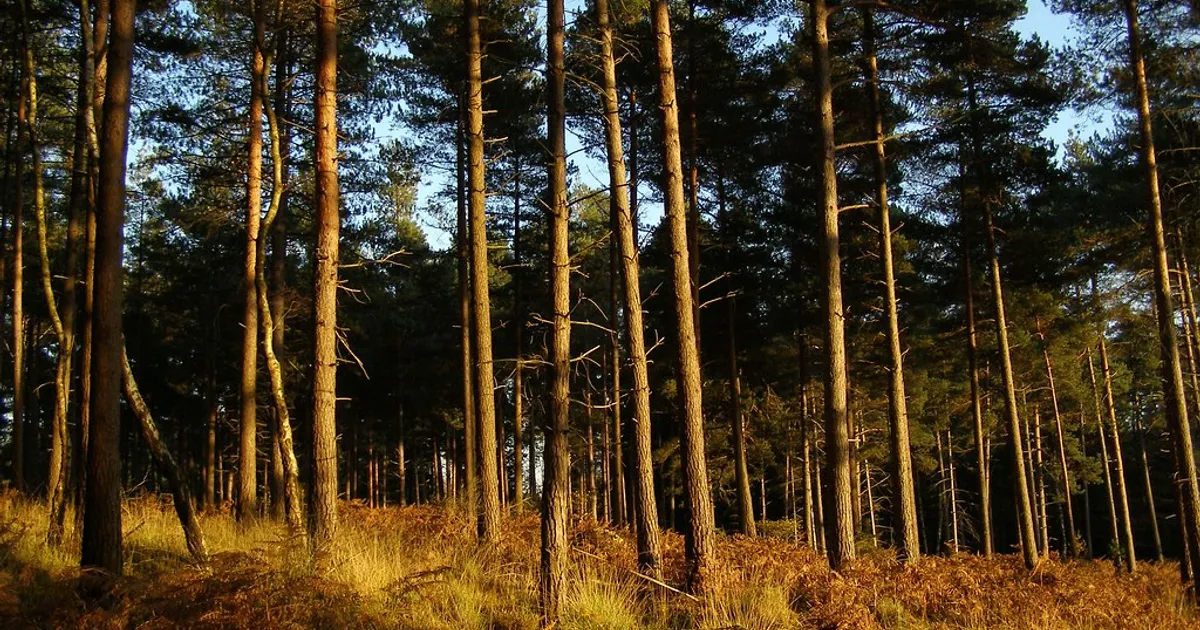
The company that sells you flat-pack bookshelves is also one of the largest forestry landowners in New Zealand. As of July 2026, Ingka Investments, the investment arm of Ikea’s parent Ingka Group, owns 43,000 hectares of forestland across the country, part of a 500,000-hectare global portfolio. In Central Hawke’s Bay alone it has converted six farms since 2021 and reckons it is now the district’s largest forestry owner.
This is not a green vanity play. New Zealand is one of the most valuable countries in Ingka’s worldwide forestry business, and the model is straightforward institutional investment: buy the land, grow the trees, watch the asset appreciate.
A buying programme built on the special forestry test
Ingka started buying here in August 2021 and has since pushed more than 20 separate transactions through the Overseas Investment Office’s special forestry test. In December 2025, LINZ consented roughly 12,790 hectares in Northland and 81 hectares in Gisborne in a $134.15 million deal, with harvesting slated for 2028. In April 2026 it added a 521-hectare block at Weber in the Tararua District.
Of the 42,705 hectares purchased, 23,838 hectares was converted from farmland and 17,175 hectares was existing forestry. Operations manager Dylan Foster told RNZ the focus is now shifting toward buying standing forests to mix up the age class rather than converting more pasture.
Timber, not carbon, but the ETS keeps showing up
Credit where it is due: this is a genuine timber operation, not a carbon farm. Sixty percent of Ingka’s logs go to export markets in China, India and Korea, with 40% domestic, all FSC certified. The February 2025 LINZ assessment report confirms the business case rests on timber sales, not offsetting.
But the carbon line is blurrier than the public messaging suggests. A 2024 RNZ report noted around 8,000 hectares of the estate had been registered in the Emissions Trading Scheme, and the July 2026 coverage records Ikea saying none of its trees were planted for credits, though it may look at “some form of offsetting in the future”. A company that distances itself from carbon farming while quietly registering a chunk of its estate in the ETS is not doing anything sinister. It is doing exactly what the incentive structure invites. That is the point.
The land-use pressure is real
Beef and Lamb NZ is not anti-forestry, but it is worried about scale and speed. Spokesperson Julian Ashby told RNZ the concern is “whole farm conversions really change the face of New Zealand at a dramatic pace”, taking with them stock numbers, jobs, processing throughput and rural services. Its own tracking, filling a gap where no nationwide database shows who owns what land or how its use has changed, counts at least 300,000 hectares of sheep and beef farmland sold to forestry since 2017. More than 1.8 million hectares of New Zealand is now in pine.
Ingka is a good corporate citizen by most measures. It employs 250 permanent staff, rising to about 800 during planting, subdivides off farmhouses and best land to keep families local, and says it exceeds regulatory riparian setbacks by at least five times. That is not the issue. The issue is that a single overseas investor can accumulate 43,000 hectares across multiple districts through repeated OIO consents, and no one in government has a real-time picture of the cumulative effect on rate bases, infrastructure or fire risk. Ingka does not carry fire insurance, finding it too expensive, which leaves rural communities and councils carrying part of that exposure.
What this means for business
For rural lenders and farmers weighing an exit, the message is clear. Well-capitalised institutional buyers now treat marginal farmland as an appreciating asset class, and the subdivision model is a real exit route. For competing forestry exporters, Ingka is a serious rival in the same Asian log markets. And for councils and regional planners, one investor’s footprint across several districts is a preview of a coordination problem that policy has not caught up with. The land-use rules were written for a country where farms stayed farms. Global capital has moved faster than the rulebook, and the special forestry test keeps saying yes.