

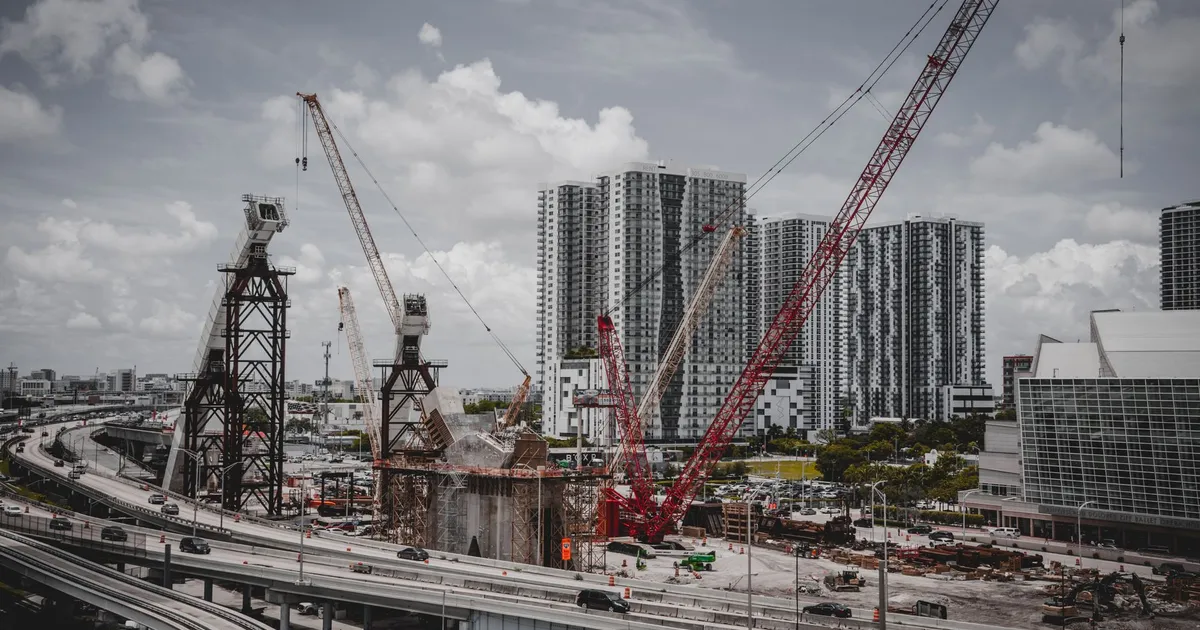
The gap that won’t be wished away
New Zealand’s infrastructure problem is not a tone problem or a planning problem. It is an arithmetic problem. The Infrastructure Commission, Te Waihanga, put the current deficit at $104 billion, with a further deficit accumulating to take the 30-year total past $209 billion at present investment rates. Address the full challenge properly and the bill exceeds $1 trillion in today’s prices.
The national pipeline now sits at $274.4 billion as of March 2026, up $6.7 billion in a quarter. But only $91 billion of that is fully funded, and even the broader figure of committed or confirmed funding reaches just $190 billion. As of December 2025, $82.7 billion of pipeline initiatives had no confirmed funding source at all.
The delivery numbers are equally sobering. Te Waihanga calculated that closing the deficit means lifting public investment from around 5.5% to 8.0% of GDP, or 9.6% once cost pressures are counted, while the construction workforce would have to grow from 40,000 to 97,000 over 30 years. MBIE forecasts annual activity rising to only $15.0 billion by 2029. No honest reading of those figures supports the idea that domestic capital and the Crown balance sheet close the gap alone.
Wellington is already lowering the cost of foreign money
The Government has quietly made its position clear. A new thin capitalisation infrastructure exemption took effect on 1 April 2026, allowing qualifying infrastructure entities to fully deduct interest on third-party limited recourse debt. Deloitte’s tax team called it evidence of “a willingness by the Government to follow through on altering tax settings to help address the infrastructure deficit,” arguing that “reducing barriers to foreign investment is essential” given the long-term capital infrastructure demands.
The standard rules were always a trade-off, Deloitte noted, designed to stop non-residents loading debt against the tax base but carrying the “undesirable effects of raising the cost of capital and disincentivising genuine foreign investment”. The exemption is a deliberate signal that the cost of capital, not the source, is what Wellington wants to fix.
The supply of Chinese capital is real, and shrinking here
Here is the inconvenient detail. China is repositioning as a major exporter of low-cost capital and green industrial capacity, yet Chinese investment into New Zealand has been going the other way. Cumulative Chinese investment grew 106% from $695 million to $1.43 billion between 2014 and 2024, but fell 18% from 2022 to 2024, leaving it below 2019 levels even as overall foreign investment rose 65%.
The state banks are in the market regardless. ICBC New Zealand, a subsidiary of the world’s largest bank, says it is “finally seeing more infrastructure projects moving, and at a bigger scale than before,” and that it is prepared to finance the “next generation of climate-resilient and community-focused infrastructure.” John McKinnon, chair of the New Zealand China Council, frames the opportunity narrowly, around areas “where foreign capital policies of the two countries align” such as renewable energy and advanced transport.
The risk is leverage, not a debt trap
The caution is legitimate, but it has matured past Belt and Road slogans. New Zealand never joined the BRI. The sharper worry now is the slow accumulation of influence. Writing in the Navy’s professional journal in May 2026, Army officer Major Andrew Gifford argued that over-reliance on Chinese trade and investment already “constrains NZ’s policy freedom and erodes its credibility as an advocate for transparency and sovereignty.” His warning that speaking softly to Beijing is “increasingly ineffective and may become counterproductive” is the strategic counterweight every deal has to be measured against.
A governance question, not a yes or no
The binary framing of whether to “let China in” misses the actual decision in front of policymakers. The real question is how to structure commercially priced deals that capture the cost advantage of deep foreign capital while ring-fencing genuinely strategic assets like water, ports and core energy. That is a screening and governance problem the Overseas Investment Act and the thin cap reforms are already grappling with, not an ideological line.
The deficit is too large to fund with sentiment. Chinese state-linked banks already operate here, the tax settings have shifted to invite long-term foreign debt, and the supply of low-cost capital is expanding precisely as the funding gap widens. The pragmatic course is to define what is off-limits clearly, then compete hard for the rest. Pretending the choice can be avoided simply leaves $82.7 billion of unfunded pipeline sitting on the shelf.