

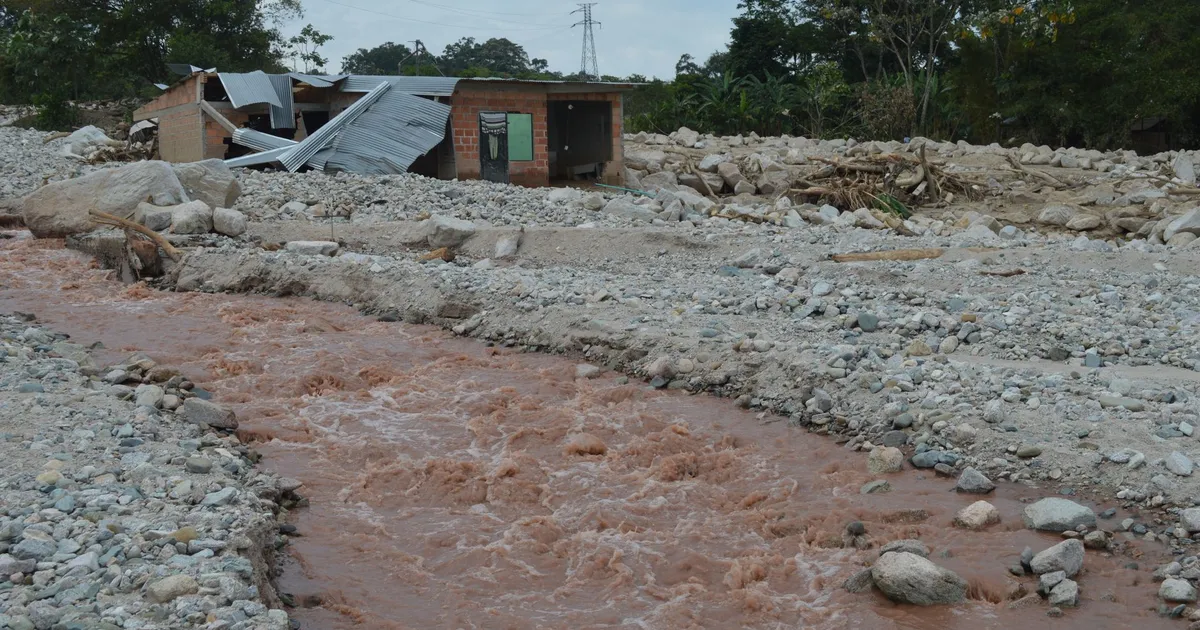
Three years on, the stickers haven’t moved
As of 25 June 2026, 234 properties across Tairāwhiti remain stickered after a run of severe weather events: 40 red-stickered as unsafe and 194 yellow-stickered with restricted access. The breakdown is the damning part. Just 41 of those stickers date from the January 2026 storm; the remaining 193, more than 80% of the total, trace back to Cyclone Gabrielle in February 2023.
None of the 234 are eligible for government buyouts. Owners must work through their insurers alongside council processes that, three years on, have produced no exit. This is stranded capital, plain and simple: property nobody can occupy, sell, insure cleanly or borrow against.
Businesses stuck digging silt by hand
Bill Martin has run the Te Araroa Holiday Park for 21 years and does not expect to be open in time for summer after flooding and a landslide left parts of the park yellow-stickered. He says agencies made commitments they walked back: “NZTA promised us something, and then they changed their minds. The council promised they’re going to get rid of the silt and logs, and then changed their minds.”
The council’s recovery manager Naomi Whitewood said a silt disposal site was set up at the Te Araroa transfer station in March and that “responsibility for removing silt from private property remains with landowners”. Martin says he was never told the site existed.
Nina McClutchie, who owns the 35 Eat Street cafe inside the park and lost her on-site accommodation, describes reopening from “ground zero”: “We just spend our days digging.” The psychological overhang is now a business risk in itself. As soon as rain is forecast for the East Coast, she says, bookings evaporate.
The holiday park sits roughly halfway between Opotiki and Gisborne, a key stop on the East Cape circuit. When it stays shut, the whole corridor loses passing trade. A regional recovery bid worth $29.7 million submitted to government in early 2026 warned that without intervention “a short-term weather event becomes long-term economic scarring”, putting roughly 30,000 hectares of Māori land returning $10 million a year at risk of becoming uneconomic.
A system with no exit door
Tairāwhiti is not an outlier. It is the preview. On the same day the sticker count was reported, IAG, the country’s largest insurer, published a report identifying 42 gaps in New Zealand’s natural hazard risk framework. IAG’s Bryce Davies said the current approach was “too slow and not fit to meet the challenge” and described the response as “very ad hoc, very fragmented”. There is no national plan to reduce risk, no cost-sharing framework, and no mechanism to relocate communities out of harm’s way.
The Insurance Council was blunter still, warning that without clear policy and investment, “properties remain trapped in uncertainty, unable to access insurance or plan recovery”. That is a precise description of Te Araroa. A separate RNZ analysis the same day found the same failures had been flagged in reviews going back to 1986 with little reform, as councils spend scarce funds rebuilding in place rather than addressing underlying risk.
The capital freeze is spreading
The numbers behind the strain are steep. IAG logged 33,174 storm claims in the year to February 2026, a 256% jump on the prior year, with major storms now hitting once every eight days against a 15-year average of once every 19. A Treasury Cabinet paper from January 2026 confirmed home insurance premiums have grown at three times CPI since 2011, including a 40% rise in two years.
The Climate Change Commission counts roughly 556,000 properties at inland flood risk worth $235 billion. For any business owner near a river or coast, the lesson from Tairāwhiti is that a sticker can outlast your insurance, your financing and your patience.
Prevention is cheaper, and ignored
The evidence that getting ahead of risk pays is overwhelming. The Awanui flood scheme in Kaitaia cost $15 million and has avoided an estimated $50 million in damage. Yet since 2010, 97% of government natural hazard spending went to response and recovery and just 3% to prevention. The 2023 events alone cost the economy up to $14.5 billion and triggered 118,037 claims.
Until the country builds a coherent framework for cost-sharing, relocation and risk reduction, the sticker count won’t fall. It will simply move to the next region the weather hits. Tairāwhiti’s 234 frozen properties are not a recovery backlog. They are what a missing system looks like.
Sources
- More than 200 properties still stickered from severe weather events in Tairāwhiti (2026-06-25)
- ‘Ad hoc and piecemeal’: Insurer IAG slams govt’s approach to natural hazards in new report (2026-06-25)
- IAG warns insurance will ration climate risk government won’t manage (2026-06-25)
- ‘Disaster inertia’: why must NZ keep relearning the same lessons from extreme events? (2026-06-25)
- Act now or pay later: Hazard resilience policies a must in the 26′ election (2026-06-25)
- Cabinet Paper ECO-26-SUB-0003: Insurance Affordability and Natural Hazards Insurance Act Review (2026-01-28)
- ICNZ North Island Weather Events Report (2025-02)
- Gisborne $29.7m recovery funding bid awaits government decision