

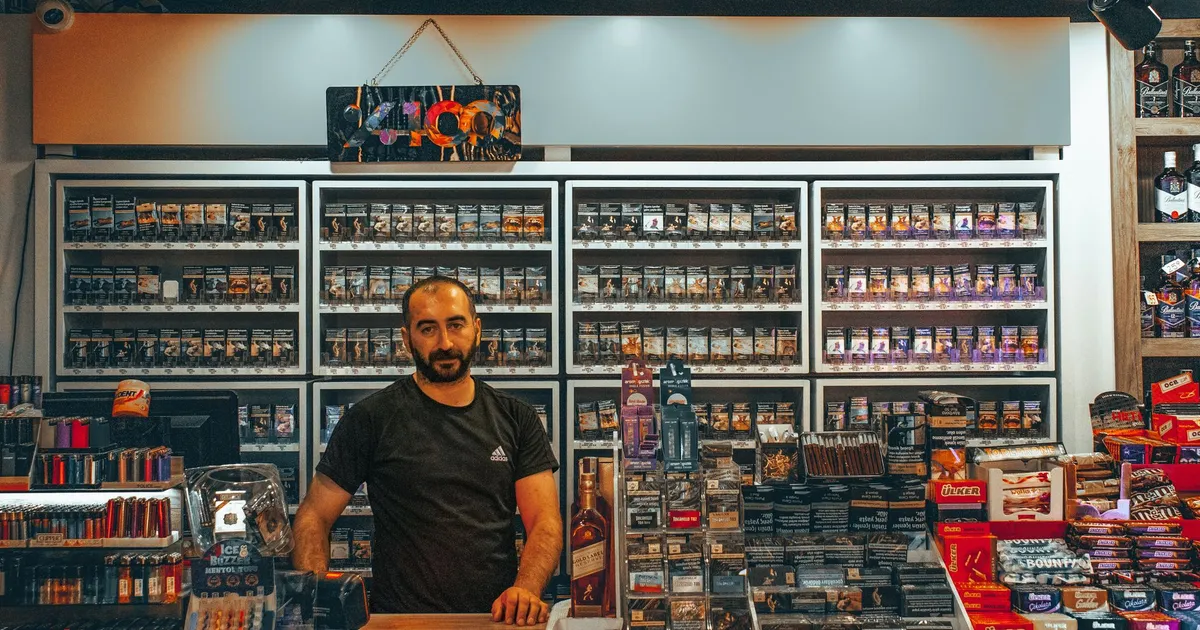
An RNZ investigation found journalists could walk into Auckland dairies and find shelves stocked with non-compliant tobacco product with no packaging prosecutions brought in the past 12 months. Meanwhile, Customs has seized 8.3 million cigarettes in the first four months of 2026 alone, roughly 70,000 a day. The border agency is working hard. Domestic enforcement is not.
This is no longer a fringe problem. It is a structural failure that punishes every retailer who follows the rules.
The economics make crime irresistible
Excise duty rose to $279.95 per 1,000 sticks from 1 January 2026. A compliant pack of 20 retails for $35 to $40 once excise, GST and retail margin are stacked up. Customs Minister Casey Costello confirmed this month that illicit packs were selling for as little as $12. That is less than half the excise component alone.
The margin for criminal suppliers is enormous. The margin for compliant retailers competing against them is collapsing. In June 2025, Retail NZ estimated that more than 27% of all tobacco smoked in New Zealand in 2024 was illicit, up from roughly 3.3% in 2010. Seizure volumes tell the same story. The 2025 haul of 11.1 million cigarettes was up from 9.2 million in 2024, 8.48 million in 2023 and 4.8 million in 2022. The 2026 run rate already exceeds every full-year total on record.
Three agencies, one problem, no outcome
The penalties on paper are not trivial. Retailers face up to six months’ imprisonment and a $20,000 fine. Importers and distributors who breach packaging rules face fines of up to $600,000. None of this matters if nobody enforces them.
The jurisdictional tangle is the core problem. Retail NZ Chief Executive Carolyn Young identified it in April 2026: “We know there are illicit tobacco shops popping up in New Zealand, but the current legislative settings are not nearly enough, with Health, Customs and Police all responsible for different parts of enforcement and low-level penalties for wrongdoing.”
Health officials can spot non-compliant packaging but cannot seize product or close a business. Customs can intercept at the border but has no jurisdiction once goods clear it. Police treat retail tobacco offending as low priority. The Ministry of Health says it prefers an “educational approach” before escalating. After a year of zero prosecutions with product sitting openly on shelves, the education programme is not working.
Compliant retailers are subsidising their competitors
This is the angle most coverage misses. A dairy owner who pays full excise, displays mandated health warnings and maintains supplier documentation is competing directly against a neighbour selling untaxed product at a third of the price. The compliance cost is real. The enforcement of that compliance on everyone else is absent.
Retail NZ’s April 2026 statement was blunt: “We hold grave concerns about the impacts the illicit tobacco market is already having on legitimate tobacco retailers.” Young called for an immediate crackdown and drew the Australian comparison directly: “Australia is in the midst of an illicit tobacco crisis. Its failure to take decisive action when it was clear an illegal market was taking hold of the tobacco market has resulted in organised crime groups leading a significant rise in violent retail crime.”
Australia’s illicit share is now estimated at 50 to 60%. New Zealand hit 27% in 2024. Australia’s crisis point came somewhere between 20% and 30%. The window to avoid the same trajectory is closing fast.
A taskforce that has not yet produced results
In mid-2025, the government announced a multi-agency action group combining Customs, police and health officials. Costello framed it as formalising police involvement given criminal gang networks. Retail NZ welcomed it but called for further investment in border protection, tougher penalties for importers and sellers, a ban on online tobacco sales, and an independent expert panel on enforcement tools.
The Customs Annual Report 2025 showed the agency processed over 31.8 million import transactions that year, with 98.1% of goods cleared within five minutes. Tobacco competes for enforcement attention alongside methamphetamine seizures totalling over six tonnes. Resources are finite. But the domestic side of the equation, where product actually reaches consumers, remains the gaping hole.
The government built an excise regime that creates a massive incentive for criminal supply. It then divided enforcement across three agencies with no single point of accountability. The result is predictable: seizures at the border climb while prosecutions inside the country flatline. Every month without a credible domestic enforcement response is another month where compliant retailers absorb the cost and criminal operators pocket the margin. If this government believes in the rule of law and fair competition, it needs to prove it somewhere other than on paper.
Sources
- Newstalk ZB: Cigarette-smuggling surge: 8.3 million seized by Customs this year (2026-06-21)
- RNZ: Black market cigarettes selling in dairies but no packaging prosecutions in 12 months
- RNZ: Illicit tobacco action group to combine powers of customs, police and the health sector (2025-06)
- RNZ: Cheap blackmarket cigarettes with no health warnings concerning for experts
- NZ Customs: Excise and Excise-equivalent Duties Table (Tobacco Products Indexation) 2025 (2025-11)
- NZ Customs Service Annual Report 2025 (2025)