

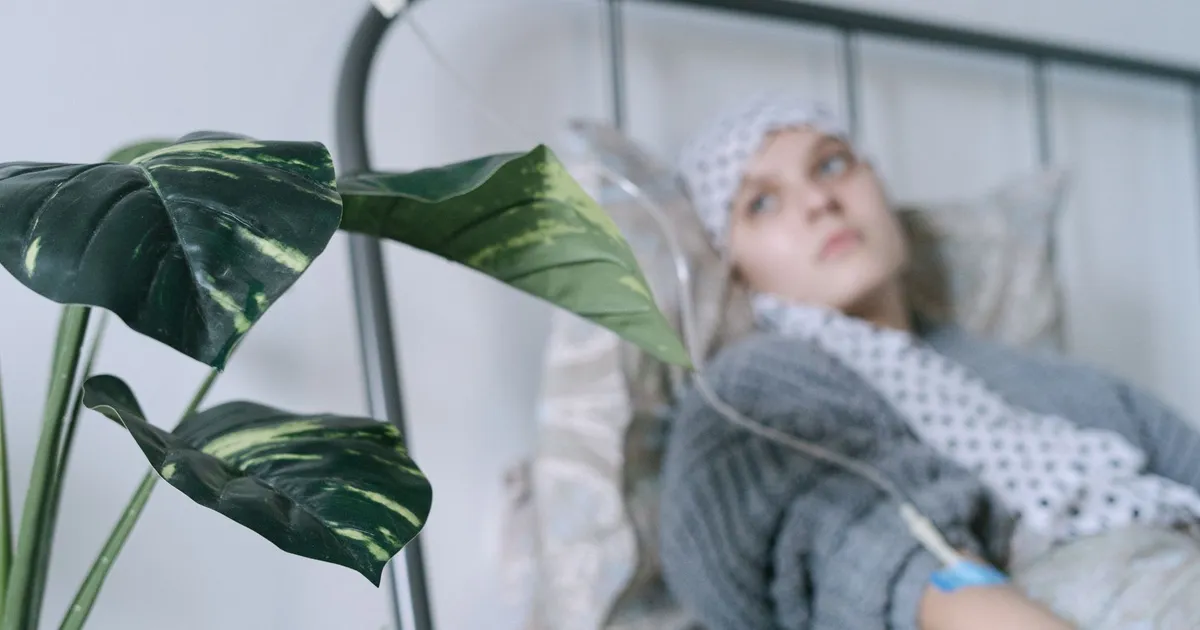
Catherine Cooke is a 53-year-old Auckland business adviser and mother of two. In late 2024 she was diagnosed with early-stage triple negative breast cancer. The only targeted treatment is Keytruda, a drug funded in 40 countries including Australia, Canada and the United Kingdom. In New Zealand, Pharmac funds it for advanced cases only. Cooke sold her business to cover earlier costs, then put her home on the market to fund the $85,000 course.
This is not a health story. It is a balance sheet story. When the public system declines to fund a drug, the cost does not disappear. It transfers, landing on households, savings, and the businesses connected to them.
Treat early or pay later
Pharmac’s own Cancer Treatments Advisory Committee recommended funding Keytruda for both early and advanced TNBC in October 2023. A full year passed before the agency funded the drug for advanced cases only. Early-stage patients remain unfunded as of mid-2026.
The clinical evidence is not ambiguous. In February 2025, Breast Cancer Foundation NZ CEO Ah-Leen Rayner said patients receiving early Keytruda are “34% less likely to die and 32% less likely to have the cancer spread beyond the breasts”, with 87% still alive after five years.
Rayner also made the fiscal logic plain: “It makes no sense that we’re not making Keytruda available to patients when they’re in the early stage of disease. When the cancer has spread beyond the breast, the cost of treatment goes up, it’s more aggressive, the impacts on the health system are far greater.”
Around 350 women are diagnosed with TNBC each year. About 100 could benefit from early-stage Keytruda. Without it, one in three will see their cancer become incurable within five years.
$54 million bought nothing new
Budget 2026 allocated an additional $54 million for Pharmac over four years. Rayner’s response was blunt: “An additional $54 million for Pharmac over four years does little more than maintain the status quo. That’s simply not good enough when too many New Zealanders with breast cancer are still being forced to shoulder the cost of unfunded medicines themselves.”
The broader picture is worse. Health economists Dr Jacqueline Cumming and Dr Bill Rosenberg calculated the government needed an additional $1.405 billion for Vote Health in Budget 2026 just to maintain current service levels. Rosenberg said in May 2026: “This is the amount that would just keep the current health system running at its current state, which many people would say is running down.”
The structural gap is not new. ASMS analysis published in September 2025 showed New Zealand’s per capita publicly mandated health expenditure fell from 90% of a 16-country OECD average in 2009 to 85% in 2018. The slide has been accumulating for over a decade.
The cost lands on households and employers
Wellington patient Amanda Broughton faced a $103,000 bill for the same drug in late 2024. Her private insurance covered only the cost of administering the dose, not the drug itself. Of the $103,000, $15,450 went directly to the government in GST. The government taxes patients to fund a health system that will not fund their treatment.
Travel costs compound the burden. The National Travel Assistance scheme reimburses cancer patients just 34 cents per kilometre, a rate updated once in 17 years. Cancer Society southern head of cancer services Craig Watson said in May 2026: “It’s already hard times and this is going to make it a lot harder.”
For employers, the downstream effects are concrete. Cooke was a working business adviser at 53, prime productive age. She told RNZ in January 2025: “I want to sit down with her woman-to-woman to let her know that early intervention not only saves lives but will save the government money long-term.” A Papamoa retiree separately spent $36,000 on unfunded cancer drug Enhertu after cancelling her retirement plans.
Penny-wise fiscal conservatism that costs more
A centre-right government should understand the return on investment case here better than anyone. Funding Keytruda at the early stage keeps working-age people in the workforce, paying tax, running businesses, and staying off long-term disability support. Refusing to fund it means treating more expensive metastatic disease later, with worse outcomes and higher system costs.
The numbers are small. One hundred patients a year. A drug course of $85,000 each. Total annual cost somewhere in the range of $8.5 million, a rounding error in a health budget measured in billions. Against that, the alternative is households liquidating assets, businesses losing owners and key staff, and the public system picking up the tab for advanced cancer treatment that could have been prevented.
Pharmac’s caution is institutional. Budget constraints are real. But when 40 countries fund a drug and New Zealand does not, the question is no longer whether the evidence supports it. The question is how many more homes need to be sold before the maths becomes too obvious to ignore.
Sources
- Auckland woman in her 50s selling her home to pay for unfunded breast cancer treatment costing $85k (2025-02)
- ‘I want to sit down with her’: Cancer patient demands meeting with Nicola Willis (2025-01)
- Auckland woman paying $85k for cancer treatment petitions Government for funding (2025-02)
- ‘I’m fundraising to cover tax’: Cancer patient questions GST on drugs (2024-11)
- Budget 2026: Keeping the lights on is no long-term solution for medicines access (2026-05-27)
- Projected health funding falls short to maintain status quo (2026-05-27)
- New Zealand’s health financing and expenditure (ASMS) (2025-09)
- Rising cost of getting to cancer treatment (2026-05-20)
- Breast cancer: Papamoa retiree with ‘incurable’ diagnosis calls for Enhertu drug funding (2025-01)