

The distress signal
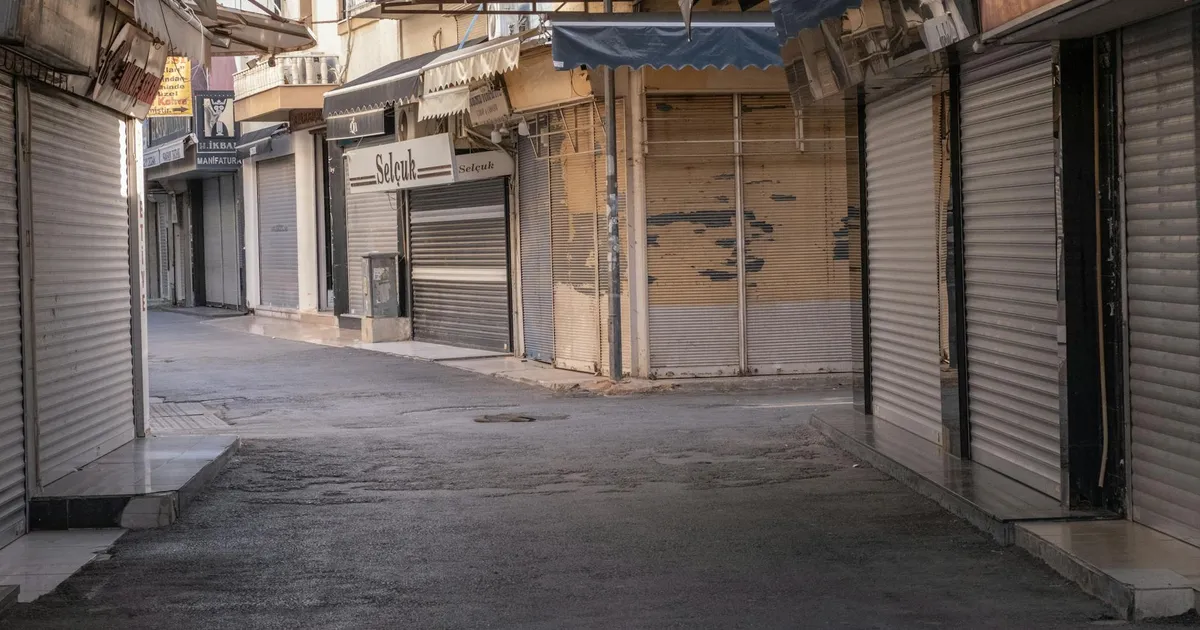
When a provincial council starts debating free parking hours, it is not making transport policy. It is responding to a distress call from local business. Whangārei’s CBD now has 50 vacant shops across 10 main streets, up 25% from 40 vacancies in January 2024. Commercial broker Peter Peeters has noted some spaces have sat empty for three to four years. The roll call of closures reads like a retail obituary: Merric, eKo, Life Pharmacy Orrs, EB Games, Rodney Wayne, Jeanswest, Pack & Send, and more.
Whangārei ranked bottom of 11 centres in Colliers’ Commercial Property Investor Confidence study. The district council’s response has been to tender a 10-year parking services contract covering ticketing, enforcement and real-time availability technology, while considering free parking for shoppers as one option. It has also allocated $11.4 million for a new parking building planned for construction between 2027 and 2030.
The businesses are hurting. The question is whether the council is treating the disease or just the symptom.
Parking is not why customers disappeared
The most revealing data point in Whangārei’s decline has nothing to do with meters or time limits. When The Co-operative Bank closed its CBD branch, its spokeswoman Catherine Bateman said fewer than 10% of customers had interacted with it in person or by phone in the year before closure. That is not a parking problem. That is a permanent behavioural shift.
Retail NZ chief executive Carolyn Young put it bluntly: “People do that online now. So foot traffic may never return back to the level that it was.”
Whangārei is not an outlier. Auckland’s CBD strip vacancy rose from 0.9% in June 2019 to 11%, peaking at 14.4% in 2021. Wellington’s CBD vacancy nearly doubled from 4.2% to 9.3%. These are structural numbers driven by online retail, remote work and national chain consolidation. No amount of free parking reverses them.
The council’s own transport policy is making things worse
While debating how to lure shoppers back, the council has simultaneously been repelling them. T2 priority lanes introduced on Bank St and Kamo Rd have drawn fierce criticism from affected businesses. Reports indicate that Essence Cafe owner Paul Rinton estimated losing $30,000 a year from lost morning trade, with overall revenue dropping to Covid levels. Villa Hairdressing owner Teresa McInerney argued the lane was underutilised because there was little morning congestion and it was too narrow for buses anyway.
The damning detail: a report to the Whangārei Passenger Transport Working Group found no improvement in bus running times with the T2 lanes in place. The council characterised this as expected teething problems. Businesses losing customers to $100 fines might characterise it differently.
In February 2025, Vince Cocurullo, writing on behalf of the council, acknowledged the competitive bind: “For inner-city business and property owners, the balancing act is hard too, especially when there are shopping areas just outside the city centre where parking is available and free.” That is a remarkably honest admission that council pricing is actively pushing customers to competitors.
What the data actually says about parking and retail revenue
Here is where the free parking argument gets uncomfortable for its advocates. A March 2026 analysis of people-centric urban parking models found that walkers and transit users contribute up to 66% of local retail and hospitality revenue, while drivers contribute less than 20%. The mechanism is the “Linger Factor”: pedestrians interact with multiple storefronts and spend approximately 66% more than car-dependent shoppers who drive to one destination and leave.
The same research found that converting a single car park into an outdoor dining parklet can increase its daily economic generation from $550-$950 to $1,600-$1,660. And constructing a single structured parking space costs $20,000 to $65,000. That should give any ratepayer pause about an $11.4 million parking building.
None of this means parking is irrelevant. In a car-dependent provincial city like Whangārei, access matters. But the gap between what businesses believe is driving their decline and what the data shows is wide. Parking friction is real. It is also a second-order problem behind structural forces that no council can reverse with meters and concrete.
The real question for provincial CBDs
The sharper question for business owners is not whether Whangārei should offer free parking. It is whether any provincial CBD can survive the structural shift to online retail, and what role local government policy can realistically play.
The answer from the evidence is: a modest one, and probably not through parking. Councils that want to help their CBDs need to address safety, reduce regulatory friction for new tenants, stop introducing transport experiments that punish existing businesses, and accept that some of the foot traffic is never coming back. Spending $11.4 million on a parking building that opens in 2027 while businesses are closing in 2026 is a council with its timelines badly misaligned with the crisis on the ground.
Sources
- Whangārei CBD vacancies hit 50 as banks and shops retreat (2026-04-19)
- The future of car parking in the Whangārei district – Vince Cocurullo (2025-02-23)
- Strategic Report: Transitioning to a People-Centric Urban Parking Model (2026-03-19)
- Whangārei stores report Covid-level slump because of T2 lane parking fines
- Whangārei stores report Covid-level slump because of T2 lane parking fines (NZ Herald)
- Carparks – Whangarei District Council