

The submission window most businesses don’t know about
Auckland congestion charging has been debated for years. It is no longer theoretical. Parliament unanimously passed the enabling legislation in November 2025, and the Ministry of Transport is now consulting on the draft regulations that will determine how the scheme actually works. That consultation window closes on 25 June 2026. Actual tolling is realistically 2028 to 2030 away, but the cost architecture is being locked in now.
For any business running vehicles into Auckland at peak times, this is the moment to pay attention. Once the regulations are finalised, the pricing structure is set.
The freight surcharge nobody is talking about
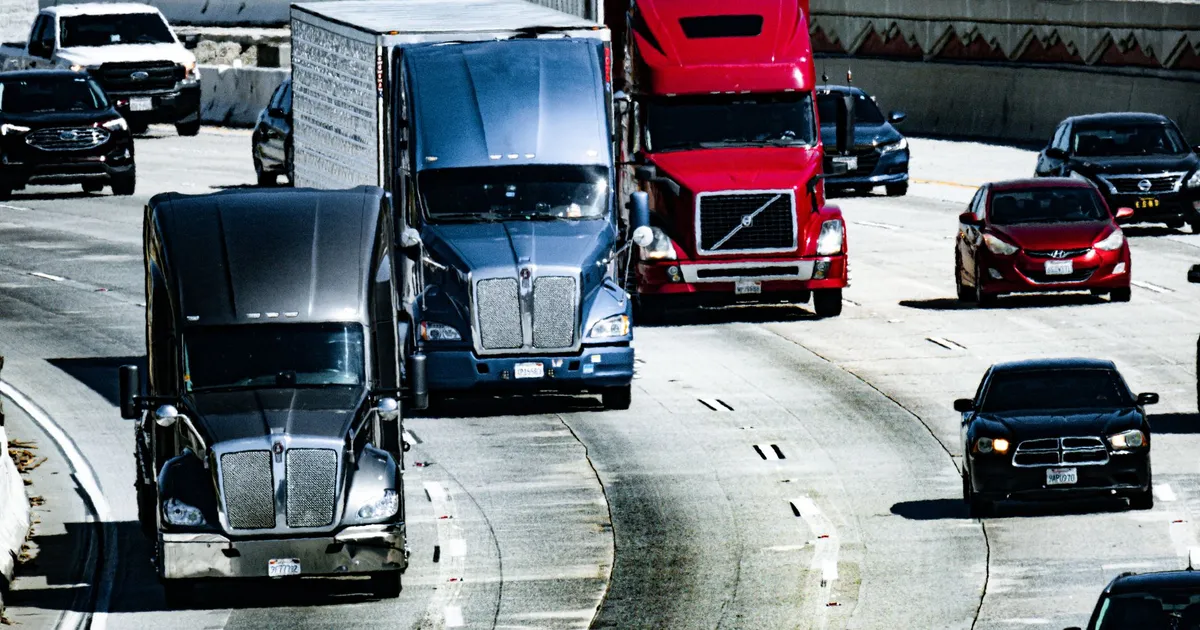
The draft regulations propose grouping vehicles by size and charging trucks four times the car rate. On paper, that sounds proportional. Bigger vehicle, bigger impact on road wear, bigger charge. In practice, it is a blunt instrument aimed at the one road user category with the least ability to change behaviour.
Transporting NZ’s Policy and Advocacy Head Billy Clemens put it plainly: “When trucks are travelling at peak times, it’s because they absolutely have to. Trucking companies realistically won’t be able to avoid peak-time charges, so these significant charges will be paid and pushed onto businesses around the country.”
The Ministry of Transport’s own road price elasticity research, published in October 2025, supports this. Across 386 observations from 46 international studies, the mean price elasticity was -0.47, meaning a 10% price increase reduces road demand by roughly 4.7%. For freight, where delivery windows are dictated by customers, building sites, and supermarket opening hours, that elasticity is lower still. A charge designed to shift behaviour will instead simply add cost.
The Chartered Institute of Logistics and Transport frames the risk directly: the key design question is whether pricing signals meaningfully improve corridor reliability for freight or primarily increase operating costs where demand is relatively inelastic. For most freight operators, it will be the latter.
The case for acting is overwhelming
None of this means congestion charging is wrong. The economics are brutal without it. An EY and ARUP report commissioned by Mayor Wayne Brown estimates traffic congestion will cost Auckland $2.6 billion annually by 2026, split between $1.9 billion in delay costs and $0.7 billion in macro-economic drag. The average Auckland commuter loses 66 hours a year sitting in peak-time traffic. Auckland ranked 77th worst globally for congestion out of 500 cities in 2024.
In early 2025, EMA Head of Advocacy Alan McDonald said an NZIER study found time-of-use charging would give tradies roughly two extra jobs per day, recovered from time currently lost in traffic. He cited international results: London’s congestion charge cut traffic by around 15% since 2003, and Stockholm’s reduced city centre traffic by about 20% since 2007.
Auckland already has its own proof of concept. After the Port of Auckland lifted daily truck container collection charges, there was a 50% increase in night traffic through the port, taking those trucks off congested daytime roads. Pricing works when alternatives exist.
The design flaw that could turn a good idea into a supply chain tax
The problem is not congestion charging itself. Pricing scarce road capacity is textbook user-pays, exactly the kind of economically rational reform a centre-right government should champion. The problem is charging freight operators four times the car rate when they have no realistic ability to shift to off-peak travel.
University of Auckland modelling published in January 2026 identified a second risk: a simple cordon charge could increase emissions if drivers take longer detours to avoid toll points. Dr Hyesop Shin also warned the burden falls unevenly, with lower-income workers facing significant impacts if they lack public transport alternatives.
As Newsroom noted in March 2025, the only point of a congestion charge is to ease congestion. If the freight surcharge cannot change freight behaviour, it is not easing congestion. It is raising revenue from captive road users and passing the bill to every business in New Zealand that receives a delivery.
What businesses should do before 25 June
The Ministry of Transport’s submission window closes on 25 June. For freight operators, logistics companies, tradies, and any business with a fleet running into Auckland at peak times, this is the last practical opportunity to push back on the 4x truck surcharge or advocate for design features that account for inelastic demand. The legislation provides no exemptions beyond emergency services and buses. No tradies, no couriers, no cleaners.
Auckland desperately needs congestion pricing. But a scheme that charges trucks four times more without giving them any realistic way to avoid the charge is not congestion management. It is a cost-of-doing-business increase dressed up as transport reform. The regulations being written right now will determine which version New Zealand gets.
Sources
- Auckland congestion charging delayed despite $2.6b cost – B2B News (2026-04-10)
- The Ministry of Transport’s proposed congestion charges are being labelled a cash grab – NZCity (2026-05-04)
- Have your say on new time of use regulations – Ministry of Transport (2026-04-29)
- New traffic charges could backfire, expert warns – University of Auckland (2026-01-28)
- Time-of-use charging – Auckland Transport (2025)
- Domestic Transport Costs and Charges Study – Road Price Elasticities – Ministry of Transport (2025-10-27)
- EMA Backs Congestion Charging As Auckland’s Traffic Woes Worsen – Scoop (2025-03)
- A pragmatic step toward congestion charging – Newsroom (2025-03-11)
- Legislation allowing congestion charging passes third reading in Parliament – RNZ
- Auckland Mayor Wayne Brown says motorists will be spared peak-hour charges for now – NZ Herald
- Navigating the road ahead for time-of-use charging – CILT