

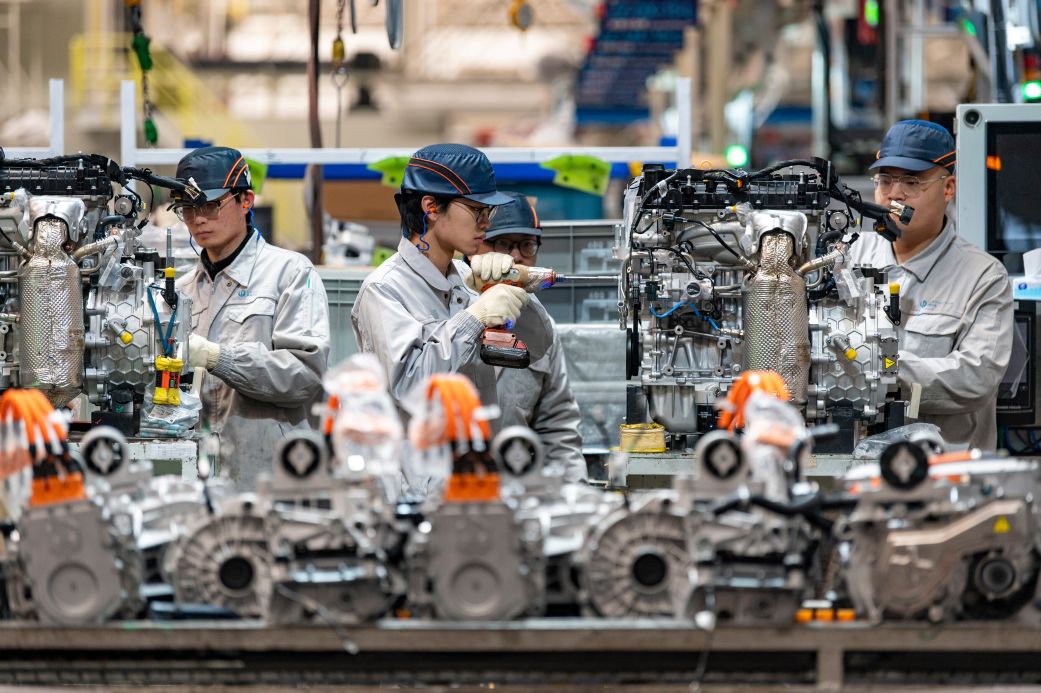
One year after U.S. President Donald Trump’s tariffs disrupted trade, China’s manufacturing plants and harbours bustle with pre-Lunar New Year activity. This rush has driven up shipping costs as producers hurry shipments.
Chinese firms typically accelerate output early each year to meet orders before the extended Lunar New Year holiday. This year’s surge matches past peaks, shrugging off tariff pressures.
Renaud Anjoran, founder and CEO of Guangdong-based electronics firm Agilian Technology, said his factory was operating at nearly full capacity after a year of stop-start tariff threats: “We are very busy.”
“It’s back to the situation where it’s like tariffs don’t exist. American customers are not thinking of [buying from] other places,” Anjoran said. Some clients paid extra to rush goods before the break. Over half his Dongguan plant’s output goes to the U.S., matching pre-tariff levels.
China Beige Book reports “Factories saw orders, production and earnings jump ahead of the Chinese New Year holidays.” It forecasts sharp January output growth, with domestic and export orders accelerating. Official data follows in March.
Major ports handled 40% more containers in the week to 1 February than last year, per HSBC analysts—the fastest rise in over a year, beating 2025’s 10% weekly norm.
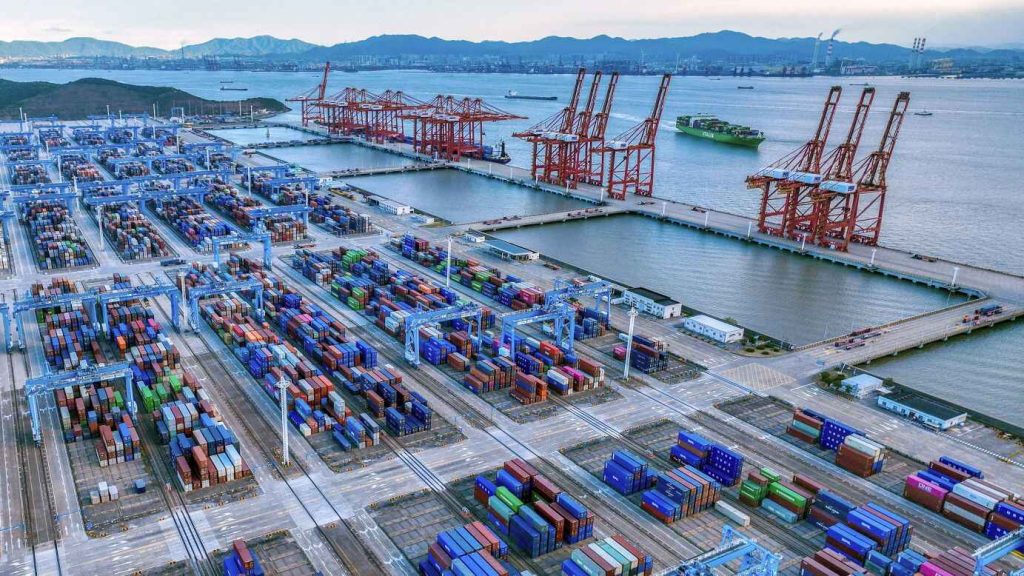
In Ningbo, terminals ran “beyond capacity, with individual vessels overbooked by more than 20%, and container gate-in has been suspended,” said Jay Guo of Ningbo China Institute for Supply Chain Innovation. Road congestion hiked lorry rates 80%; many halt work Friday to next Thursday.
“CNY-focused advisories for shippers in Europe, North America, and Asia report a clear pre-holiday pull-forward of bookings from China,” noted supply chain expert Wolfgang Lehmacher. Lunar New Year’s later date aids the low-base effect.
Freight rates soared as Shanghai’s Containerized Freight Index hit 1,400-1,656 in early January, above the 15-year average, per HSBC. U.S. container volumes topped 2024-2025 levels; air freight rose too.
A one-year U.S.-China trade truce post-October summit stabilised lower tariffs. China cut direct U.S. exports in 2025, boosting Southeast Asia and Europe instead.
Firms diversify via “China-plus-one” in Asia and nearshoring, yet keep China core, Lehmacher said. Southern factories buzzed with global buyers, including Americans, said Shanghai consultant Cameron Johnson. “Fairly busy” automotive and consumer sectors cleared backlogs after 2025’s tariff chaos.