

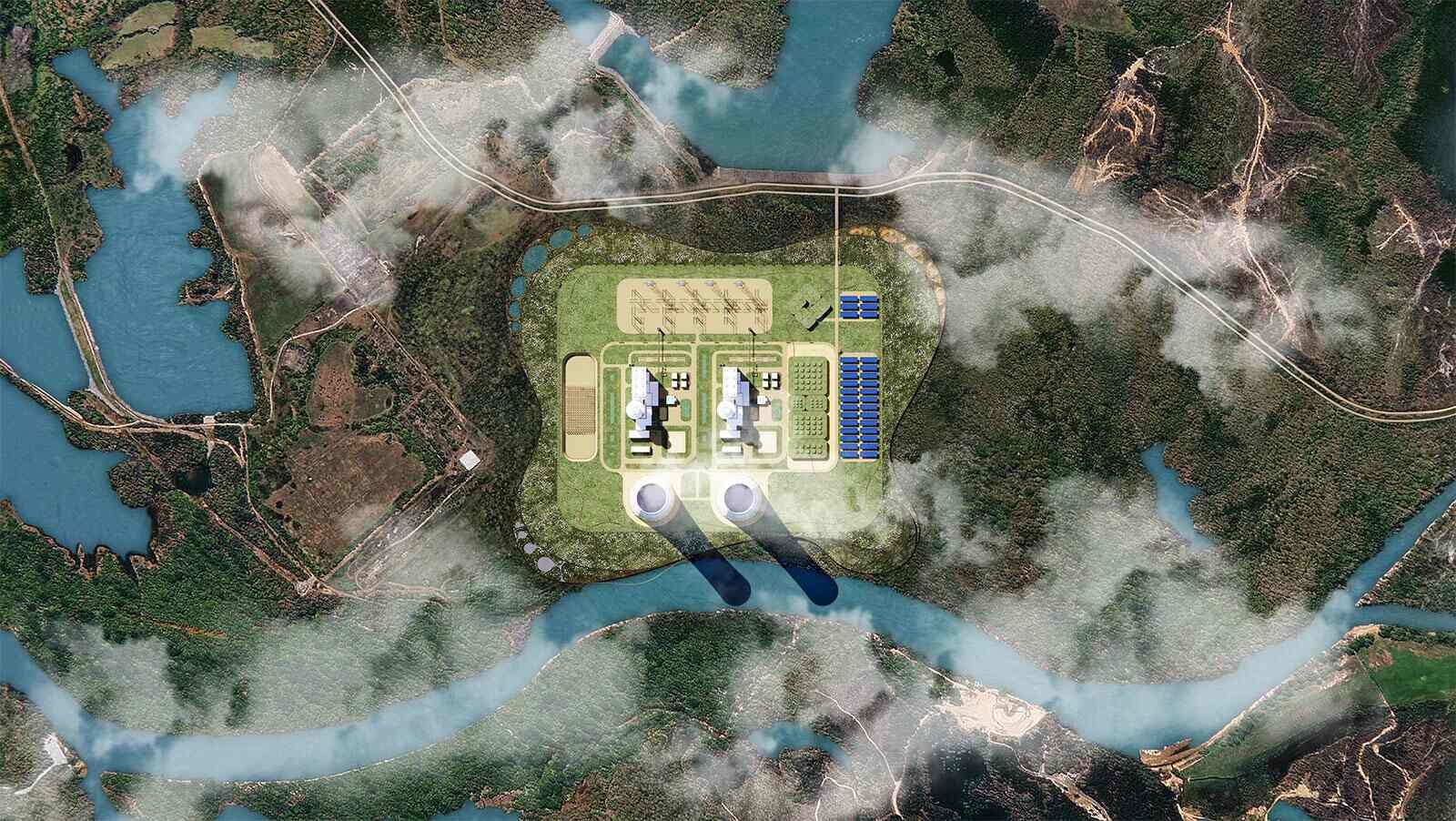
The Nuclear Company has recently raised $51.3 million in a Series A funding round, increasing its total capital to $70 million.
The company, established in 2023 by experienced entrepreneurs Jonathan Webb, Kiran Bhatraju, and Patrick Maloney, is focusing on constructing multiple large-scale reactors using established and proven designs rather than pursuing novel or small modular reactor (SMR) technologies. Their strategy centres on sites already possessing the necessary regulatory permits or licences, a rare commodity in the United States with fewer than a dozen such locations identified.
These approved sites are capable of supporting reactors with capacities exceeding one gigawatt each, and The Nuclear Company aims to develop an initial fleet producing a combined 6 gigawatts of power. This approach diverges from the growing trend of SMRs, which, despite their flexibility and lower upfront costs, face regulatory and commercial challenges. The company’s confidence in traditional large reactors is bolstered by the rising electricity demand, particularly from data centres in the U.S., where consumption is projected to quadruple by 2030.
This surge in electricity demand displays a transformation in the global energy industry. According to the International Energy Agency, global nuclear power generation is expected to increase by nearly 3% annually through 2026, driven by reactor restarts and new builds in countries such as France, Japan, China, India, and South Korea. Worldwide, around 65 reactors are currently under construction, with plans for approximately 90 more, showing a robust global expansion of nuclear power.
Simultaneously, the SMR sector is gaining momentum, with over 80 designs under development worldwide. Notable projects include NuScale’s VOYGR modules, GE Hitachi’s BWRX-300, and Rolls-Royce’s SMRs, all striving to deliver cost-effective and flexible nuclear solutions.
However, commercial deployment remains limited, with pilot projects like Russia’s floating nuclear plant and China’s HTR-PM providing valuable operational insights. In the U.S., the Tennessee Valley Authority is leading efforts to accelerate SMR deployment, supported by an $800 million bid from the Department of Energy, aiming for commercial operation of the Clinch River SMR by 2033.
Major technology companies are increasingly investing in nuclear energy to secure reliable, low-carbon power for their data centres. Google, for instance, has partnered with Kairos Power to develop 500 megawatts of SMRs and recently agreed to fund three new advanced reactor sites with Elementl Power. Amazon and Meta are also active participants, with Amazon contributing to a $700 million funding round for X-energy’s SMR projects, and Meta soliciting proposals for up to 4 gigawatts of new nuclear capacity.
Despite this optimism, nuclear power faces considerable challenges. Solar energy, often paired with large-scale battery storage, offers a cheaper and faster-to-deploy alternative that appeals to many data centre operators. Additionally, recent legislative developments threaten nuclear subsidies; the U.S. House Ways and Means Committee has proposed removing tax credits for nuclear power under the Inflation Reduction Act, which could affect the financial viability of new plants expected to come online in the 2030s.
On the advanced reactor front, TerraPower’s Natrium project exemplifies progress in innovative nuclear technology. This 345-megawatt sodium-cooled fast reactor, featuring integrated energy storage, broke ground in Wyoming in 2024 and is advancing through regulatory review. Partnerships with data centre operators and energy developers aim to create replicable deployment models across the U.S. and internationally.
Globally, countries such as Turkey are also expanding their nuclear ambitions. The Akkuyu Nuclear Power Plant, developed by Russia’s Rosatom, is expected to begin operations in 2025, marking Turkey’s entry into nuclear energy production. Additional projects in Sinop and Thrace are under negotiation, involving partners from Russia and China.