

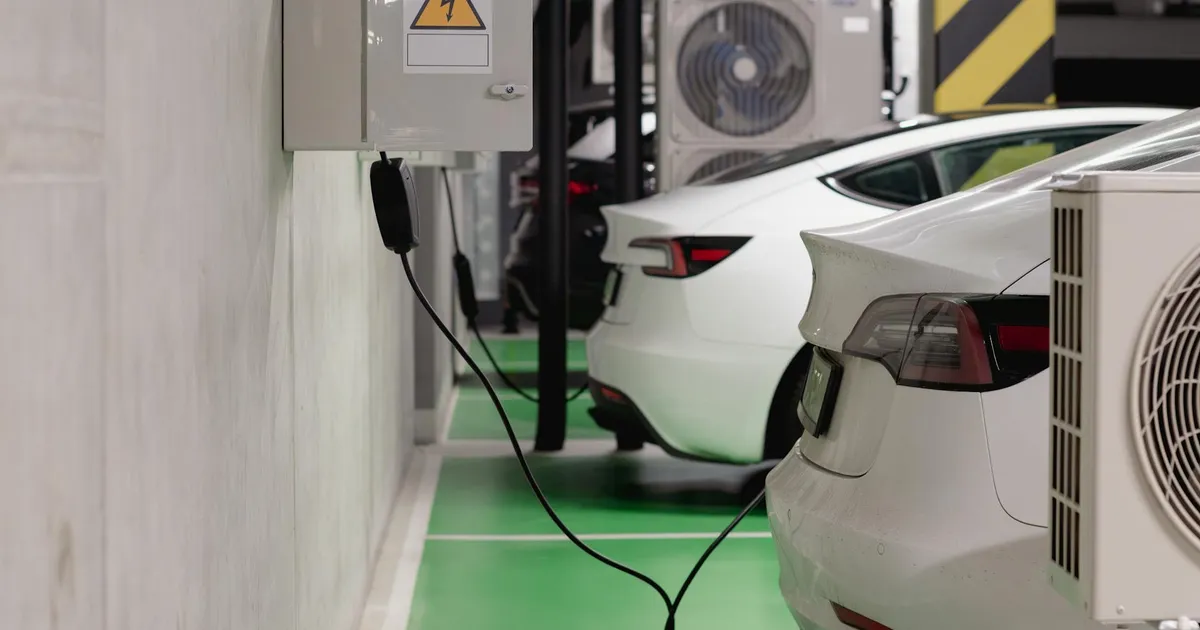
The market didn’t get freedom, it got paralysis
There was a defensible centre-right argument for unwinding New Zealand’s clean car subsidies. Feebate schemes distort price signals. Mandates impose costs on importers. Let the market allocate capital where it sees value.
But dismantling a policy framework is only half a decision. The other half is replacing it with something businesses can plan around. On that count, the government has delivered nothing. The Clean Car Discount is gone. The Clean Vehicle Standard has been gutted by nearly 80% and may be abolished entirely. The flagship infrastructure pledge is 30 months old with zero signed contracts. And EV sales have collapsed.
This is not a story about whether EVs are good or bad. It is a story about what regulatory whiplash costs businesses that have to commit real capital years in advance.
From 26,000 sales to 9,000 in two years
The numbers are stark. In 2023, the final year of the Clean Car Discount, New Zealand registered 26,000 battery electric vehicles, representing 10% market share. By 2025, that had crashed to just over 9,000 BEVs and barely 4% share.
The fleet data tells the same story from a different angle. The Environmental Health Intelligence NZ fleet analysis put total EVs at 113,715 in 2024, with growth slumping from over 50% during the subsidy years to under 10%. EV ownership per capita flatlined at 21.5 per 1,000 people for the first time.
At the Port of Auckland, EV arrivals dropped 30% in December 2025 year-on-year. Non-plug-in hybrids are filling the gap, with 2,700 units registered that month alone. The market is not choosing boldly. It is hedging.
174 chargers a month, starting from almost zero
National campaigned in 2023 on delivering 10,000 public EV chargers by 2030 under a $257 million scheme. It was the pro-business alternative to Labour’s mandates: infrastructure, not regulation.
The execution has been dismal. The request for proposals closed in July 2025 with six compliant submissions. As of March 2026, Climate Change and Energy Minister Simon Watts says the government is in the “final stages” of entering contracts, but none have been signed. To hit the 2030 target, 174 charging points would need to go live every month, a rate that exceeds what was built in all of 2025.
The structural problem is the funding model. The government switched from grants to concessionary loans. Kirsten Corson, chair of Drive Electric, told Newsroom the loan scheme makes only a 1-2% difference to the business case for a charging station, compared with roughly 30% under the previous grant model. A Cabinet paper from April 2025 already warned ministers that more funding would be required to hit the target.
The businesses paying the price
The damage is not hypothetical. Ed Harvey, founder and CEO of Evnex, said in February 2026 that the policy reversal has “done huge damage to the industry. There were a lot of fledgling businesses that were building, whether it be EV charging infrastructure, like us, or battery recycling, or EV service specialists that were starting to grow quite well back in 2022/23.”
Harvey did not mince words: “The New Zealand government’s lack of strategy and ambition around electrification is nothing short of embarrassing.”
Fleet operators face a different version of the same problem. Roughly 70% of new car sales go to businesses. Fleet replacement cycles run three to seven years. A company that committed to an EV transition in 2022 based on the Clean Car Discount and a tightening emissions standard is now operating without the policy scaffolding that justified that decision.
Energy planners are equally stuck. Professor Nirmal Nair, an energy systems expert at the University of Auckland, wrote in March 2026 that “policies matter, and if we want higher EV uptake, we need to make intentional choices as a country.” Lines companies and electricity retailers cannot model EV demand when the government cannot say whether the Clean Vehicle Standard will exist next year.
Australia is pulling ahead while NZ drifts
The international dimension makes the drift more costly. Australia is strengthening its New Vehicle Efficiency Standard, creating what the industry calls a “gravity effect.” Manufacturers direct their most efficient vehicles to compliant markets and send what is left to countries without standards. Norway’s EV dominance, as Professor Nair noted, “didn’t happen by accident” but through decades of consistent policy.
New Zealand is choosing the opposite path, not through deliberate strategy but through indecision dressed up as market freedom.
Certainty is the product businesses actually need
The original regulatory impact statement for scrapping the Clean Car Discount showed the scheme paid out $553 million in rebates against $269 million in charges. Whether that was good value is a legitimate debate. But the government has had 30 months to answer the question “what replaces it?” and the answer is still silence.
Fleet managers, charging operators, grid planners, and vehicle importers do not need subsidies. They need a framework that will survive longer than one electoral cycle. Until the government provides that, the market it claims to trust will keep doing the rational thing: nothing.
Sources
- Newsroom: EV boom hits the brakes (2026-02-10)
- Newsroom: Govt looks to market to reach 10,000 EV charger goal (2026-03-10)
- University of Auckland: EVs could cut fossil fuel dependence – but is our grid ready? (2026-03-16)
- Environmental Health Intelligence NZ: Number of Vehicles in New Zealand Fleet (November 2025) (2025-11)
- Ministry of Transport: Regulatory Impact Statement — Discontinuing the Clean Car Discount (2023-11-30)
- RNZ: Government considering scrapping entire clean car standard
- EVs & Beyond: Government considers scrapping Clean Vehicle Standard entirely