

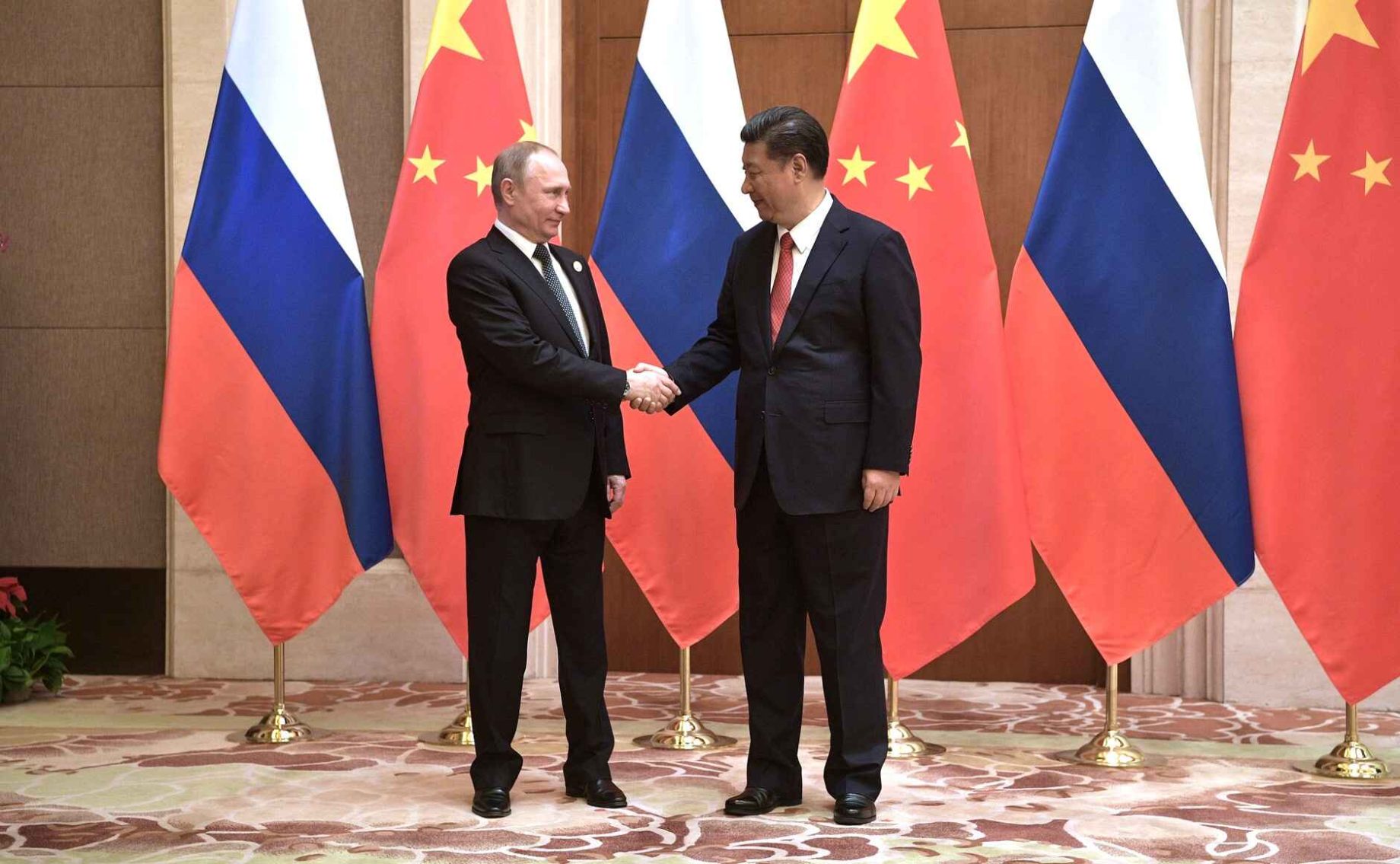
Russian President Vladimir Putin has arrived in China for talks with President Xi Jinping, in a visit that underscores the growing strategic value of the relationship between Moscow and Beijing as both countries face pressure from the United States and its allies.
The two-day trip comes as Russia remains under heavy Western sanctions over the war in Ukraine, while China continues to manage an increasingly tense relationship with Washington. Putin’s arrival also follows a recent visit to Beijing by U.S. President Donald Trump, allowing Xi to present China as a power able to engage with rival capitals while pursuing its own diplomatic agenda.
The meeting coincides with the 25th anniversary of the 2001 Treaty of Good-Neighborliness and Friendly Cooperation, which helped rebuild trust between the two countries after decades of hostility. During the Cold War, the Soviet Union and Maoist China shifted from ideological allies to rivals, with tensions along their long shared border at times raising fears of military conflict. Today, that frontier is increasingly linked to trade, energy, and security cooperation.
Putin and Xi have worked to cultivate a close personal relationship, often describing each other as friends. Their partnership has become more important since Russia’s full-scale invasion of Ukraine in 2022, which left Moscow more dependent on non-Western markets and pushed it to deepen economic ties with China.
“Russia and China look confidently towards the future,” Putin said in remarks carried by Russian state media ahead of the visit.
He said the two countries were “actively developing cooperation in politics, economics, defence, expanding cultural exchanges, and fostering interpersonal interaction.”
“In essence, jointly doing everything to deepen bilateral cooperation and advance global development for the wellbeing of both nations,” Putin added.
For Moscow, China has become a crucial economic partner. Beijing is a major buyer of Russian oil and gas, and Chinese companies supply Russia with machinery, vehicles, electronics, and industrial goods that have become harder to obtain because of sanctions. However, the relationship remains uneven. China is far less dependent on Russia than Russia is on China, giving Beijing greater leverage in trade and energy negotiations.
China also has strong reasons to maintain the partnership. Russia offers access to vast energy resources through overland routes, reducing Beijing’s reliance on sea lanes that could be exposed to disruption during regional crises. Recent tensions involving Iran and the Strait of Hormuz have only reinforced those concerns.
The long-delayed Power of Siberia 2 pipeline is expected to remain a key issue in the talks, as it would deepen energy flows from Russia to China through Mongolia. Beyond energy, both countries often align diplomatically at the United Nations and have expanded joint military exercises.
The partnership is not a formal alliance, but it has become increasingly durable. Russia needs China’s markets, technology, and political support. China needs Russia as an energy supplier, strategic partner, and counterweight to U.S. influence.