

Eight million hectares of unsolved problem
New Zealand’s Department of Conservation manages about 8.6 million hectares of public conservation land. Active predator control covers roughly 1.8 million hectares, leaving 6.7 million hectares infested with no active management. That gap is not a staffing problem or a funding shortfall in any conventional sense. It is a technology problem. And the organisations trying to close it have, almost by accident, built a technology stack with serious commercial applications well beyond killing rats.
The most visible deployment is the Te Manahuna Aoraki Project (TMAP), led by Zero Invasive Predators (ZIP). Announced in November 2025, it targets nine pest species across 310,000 hectares of the Upper Mackenzie Basin and Aoraki/Mount Cook National Park. The terrain is brutal, the weather worse, and human access expensive. That is exactly why the technology had to be built.
The product is the automation, not the conservation
What ZIP has developed reads less like a conservation toolkit and more like an integrated remote operations platform.
Their AI thermal cameras, called the H2Lure system, activate on body heat, identify target species using machine learning, and send snapshots to base within 24 hours. The commercially relevant number: they need servicing every nine months, compared to every six weeks for traditional trail cameras. That is a roughly six-fold reduction in per-unit labour cost. At landscape scale, it is the difference between a programme that works economically and one that does not.
The H2Zero automated bait delivery device dispenses rodent toxin gel through bait tunnels and currently operates for three months autonomously, with a six-month prototype in development. The design brief is simple: reduce human visits to near zero.
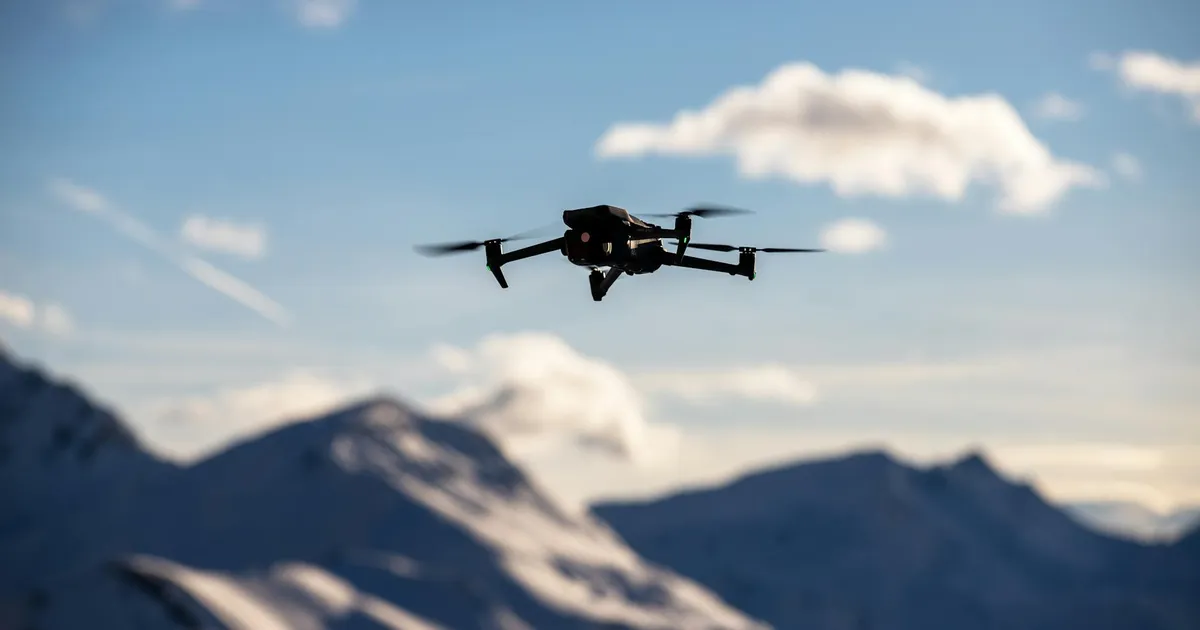
In December 2025, ZIP demonstrated what drone-guided pest control looks like in practice. Using thermal cameras and drones to locate hedgehogs across 4,000 hectares of fenced high-country farmland near Mistake Valley, the team removed approximately 1,300 hedgehogs. ZIP predator ecologist Nick Foster explained the advantage: “Hedgehogs absolutely glow on a thermal camera. They look like a pinprick of heat, and they’re really easy to find if they’re out in the open.”
Meanwhile, poisoned sausage bait trials targeting feral cats and stoats across Canterbury, Auckland Island, and the Eyre Mountains have consistently delivered reductions of more than 80 percent.
The economics demand scale
ZIP has deployed $50 million of public and private funding to remove predators from 113,000 hectares over five years. Predator Free Trust chief executive Jessi Morgan has estimated the total cost of a fully predator-free New Zealand at $8 to $10 billion at current technology and cost levels. Individual traps cost upwards of $500 each. The maths only works if unit costs fall dramatically through manufacturing scale, and that scale only comes from selling internationally.
Traditional aerial 1080 remains the workhorse. In 2024, 65 aerial operations covered 1,052,056 hectares, the highest area treated since reporting began. But 1080 is suppression, not eradication. You pay every cycle. ZIP’s model is designed to pay more upfront and stop paying forever. That trade-off only makes financial sense if the upfront cost keeps falling.
Exports are real but undersold
The commercial traction already exists. GoodNature’s A24 self-resetting trap has historically exported to 40 countries, with international sales reportedly accounting for 85% of revenue. Envico’s drones have been deployed on 27 island eradication projects worldwide. These are established positions, not speculative pipelines.
The results underpin the sales pitch. In the Malte Brun Range, where alpine pest removal began in 2022, kea numbers have noticeably increased. TMAP Project Manager Simone Smits said in November 2025: “When we remove these threats, nature bounces back.” Research indicates lizard populations recover within five years of predator removal.
Regulation is still catching up
The Wildlife (Authorisations) Amendment Bill, introduced in 2025, exists because a High Court judgment significantly limited DOC’s ability to authorise incidental harm to wildlife during pest control. The bill clarifies the Director-General’s powers, but its very necessity illustrates that the legal infrastructure around this sector is still being constructed. For commercial operators, that means both regulatory risk and the chance to shape the rules.
The window is not permanent
New Zealand has something most countries cannot replicate: 8.6 million hectares of demanding terrain, government funding, a clear success metric, and a decade of operational data. That is an unmatched proving ground for remote sensing, species identification, automated response, and minimal-intervention landscape management. The technology applies to invasive species control, biosecurity, agriculture, and environmental monitoring globally.
But proving grounds only matter if someone commercialises the output. The Predator Free 2050 brand keeps this story in the conservation box when it belongs in the export and technology conversation. At $8 to $10 billion to finish the domestic job, the only way the economics work is if the world is buying the tools. Right now, the world is interested. The question is whether New Zealand moves fast enough to own the market it created.
Sources
- Aim to eliminate pests from Aoraki/Mount Cook National Park – DOC media release (2025-11-11)
- Final countdown: hedgehog clear out in the Mackenzie Basin – Predator Free NZ Trust (2025-12-02)
- What does high-tech predator elimination actually look like? – Predator Free NZ Trust (2026-02-03)
- Pushing down the cost of predator control one sausage at a time – Newsroom (2026-02-17)
- Pest-free a pipe dream until we stump up the cash – Newsroom (2025-12-09)
- Aerial 1080 use in Aotearoa New Zealand 2024 – EPA Annual Report (2025-12)